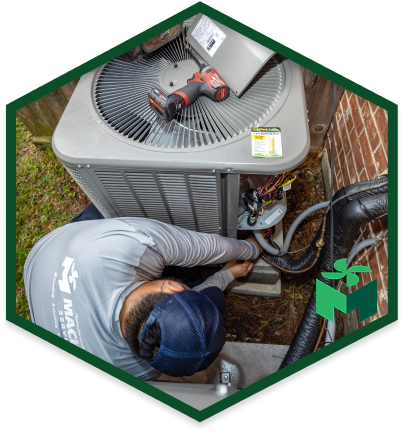
Comprehensive HVAC Solutions for Texas Weather
The climate in West University Place demands a robust HVAC system that can handle intense heat and sporadic winter chills. A functioning system is about more than temperature control; it is about humidity management and indoor air quality.
Air Conditioning Services
In a region where high humidity is the norm, your air conditioner works double-time to remove moisture from the air. When an AC unit fails, indoor humidity levels can spike rapidly, leading to discomfort and potential mold growth. Services cover the full spectrum of cooling needs — view current specials for savings:
- Refrigerant Leak Detection and Recharge: Locating leaks in the coils and safely recharging the system to manufacturer specifications.
- Compressor and Fan Motor Repair: Replacing failing motors that cause the unit to hum without blowing cold air.
- Condensate Drain Cleaning: Clearing clogs that cause water damage or trigger safety float switches to shut down the unit.
- Thermostat Integration: Installing and troubleshooting smart thermostats for better zoning and energy control.
Heating Systems
While winters are generally mild, cold snaps can be severe. Ensuring your furnace or heat pump is ready for sudden temperature drops is essential for safety.
- Heat Exchanger Inspection: Checking for cracks that could lead to carbon monoxide leaks.
- Ignition and Pilot Control: Repairing electronic ignition systems or pilot lights in gas furnaces.
- Heat Pump Reversing Valves: Fixing issues where the system fails to switch between heating and cooling modes.
Electrical Services and Safety Upgrades
Electrical work requires precision and a deep understanding of load calculations. Many older homes in the area may still utilize outdated wiring or panels that are insufficient for modern technology. Mackey Services provides licensed electricians to handle everything from minor repairs to major infrastructure upgrades — explore financing options available.
Panel Upgrades and Circuitry
Modern homes run high-demand appliances like EV chargers, induction cooktops, and high-efficiency HVAC units. If your lights flicker when the AC turns on, or if breakers trip frequently, the panel likely needs attention.
- Breaker Panel Replacement: Swapping out old fuse boxes or obsolete panels (like Federal Pacific) with modern, safe breaker boxes.
- Dedicated Circuits: Installing new lines specifically for high-wattage appliances to prevent overloading general circuits.
- Rewiring: Replacing aluminum wiring or knob-and-tube wiring often found in historic properties to reduce fire risk.
Surge Protection and Safety
Thunderstorms are frequent in this region, bringing lightning strikes and power surges that can destroy sensitive electronics instantly.
- Whole-Home Surge Protection: Installing devices at the main panel to divert excess voltage away from your home’s wiring.
- GFCI and AFCI Outlets: Installing code-mandated outlets in wet areas (kitchens, baths) and bedrooms to prevent shocks and electrical fires.
- Smoke and CO Detectors: Hardwiring interconnected safety alarms to ensure comprehensive coverage.
How Installation and Replacement Works
When a repair is no longer feasible, or when you choose to upgrade for efficiency, the installation process is handled with strict adherence to manufacturer guidelines and local codes. Improper installation is the leading cause of premature system failure, so every step is calculated to ensure longevity.
The HVAC Installation Process
- Load Calculation: Technicians perform a Manual J load calculation to determine the exact cooling and heating capacity your home requires. Oversized units cycle too frequently, while undersized units run constantly without reaching the set temperature.
- Ductwork Assessment: Existing ducts are inspected for leaks or disconnects. If the ductwork is compromised, a new high-efficiency unit will not perform as rated.
- System Selection: Recommendations are provided based on SEER2 ratings, noise levels, and budget. Options often include single-stage, two-stage, or variable-speed compressors.
- Installation: The old unit is reclaimed and removed. The new system is leveled, connected, and sealed.
- Commissioning: The system is charged, tested for airflow, and verified to match factory performance benchmarks before the job is marked complete.
The Electrical Installation Process
- Capacity Planning: An assessment determines if the existing service (e.g., 100-amp vs. 200-amp) can support new additions like hot tubs or EV chargers.
- Permitting: Necessary permits are pulled to ensure all work will pass municipal inspection.
- Rough-In and Finish: For remodeling, wiring is run behind walls (rough-in) before fixtures and switches are installed (finish).
- Labeling and Testing: The electrical panel is clearly labeled, and every circuit is tested for polarity, grounding, and voltage drop.
When Replacement Beats Repair
Deciding between repairing an existing system or investing in a replacement is a common dilemma. While repairs are often cheaper upfront, they can be cost-prohibitive in the long run if the equipment is nearing the end of its lifecycle.
Guidelines for HVAC Replacement
Consider replacement if the following conditions apply:
- The 50% Rule: If the cost of the repair approaches 50% of the value of a new system, replacement is generally the better financial move.
- Age of Equipment: Air conditioners over 10-12 years old and furnaces over 15 years old have significantly lower efficiency ratings than modern units.
- Refrigerant Type: If your system uses R-22 (Freon), which has been phased out, repair costs for leaks will be exorbitant. Modern systems use eco-friendly refrigerants.
- Comfort Issues: If some rooms are always hot while others are freezing, or if humidity remains high despite the AC running, the unit may have lost compression or be improperly sized.
Guidelines for Electrical Replacement
Electrical components do not “wear out” in the same way mechanical parts do, but they do become obsolete or unsafe.
- Panel Obsolescence: If your panel is a known fire hazard brand or utilizes screw-in fuses, insurance companies may require replacement.
- Lack of Grounding: Two-prong outlets indicate a lack of grounding wire, which is a safety hazard for modern electronics and appliances.
- Insulation Damage: If wiring insulation is brittle, cracked, or shows signs of scorching, partial or full rewiring is necessary to prevent arcing and fire.
Local Notes: Permits, Utilities, and Seasonality
Operating in West University Place requires specific knowledge of local infrastructure and regulations. Compliance is not optional; it ensures the safety of your home and the validity of your insurance coverage.
Permitting and Codes
The City of West University Place typically enforces strict building codes that align with the International Building Code and the National Electrical Code.
- Major Electrical Work: Panel changes, service upgrades, and generator installations almost always require a permit and a subsequent inspection by city officials.
- HVAC Change-outs: Replacing a condenser or furnace requires permitting to ensure the equipment meets current energy efficiency standards and is installed safely.
- Rebate Eligibility: Utility providers like CenterPoint Energy often offer rebates for upgrading to high-efficiency HVAC systems or smart thermostats. Proper permitting and professional installation are usually prerequisites for claiming these funds.
Regional Seasonality Factors
- Hurricane Prep: Electrical systems should be checked before hurricane season (June-November). This includes testing backup generators and ensuring transfer switches function correctly to prevent back-feeding the grid.
- Humidity Control: Due to the humid subtropical climate, HVAC systems must be sized correctly to remove moisture. Dehumidifiers are often recommended as add-ons to the central system to improve comfort without over-cooling the home.
- Winterizing: While freezes are rare, checking pipe insulation and heating elements before January is critical to avoid the burst pipes and system failures seen during extreme winter events.
Proof and Differentiators
Choosing a service provider for critical home systems is a decision based on trust and technical competence. The difference between a functional repair and a recurring problem often lies in the training and integrity of the technician — browse our reviews from local neighbors.
Technical Expertise
Technicians are trained to handle complex diagnostics. In the HVAC field, NATE certification demonstrates a technician’s knowledge of real-world working knowledge of HVACR systems. For electrical work, holding a valid Master or Journeyman license is the baseline for ensuring all work meets NEC standards. This expertise ensures that the root cause is addressed, not just the symptom.
Operational Integrity
- Upfront Pricing: You receive a full price for the job before any work begins. This eliminates the uncertainty of hourly billing where costs can spiral if a job takes longer than expected.
- Fully Stocked Trucks: The goal is to complete the repair in a single visit. Trucks are stocked with universal parts to reduce the need for supply house runs.
- Respect for Property: Technicians use shoe covers and drop cloths to protect flooring and clean up the workspace thoroughly upon completion.
Warranty and Protection
Repairs and installations come with warranties on both parts and labor. This protection provides peace of mind that should a component fail prematurely, it will be rectified without additional cost to you. Manufacturer warranties on new HVAC equipment are registered on your behalf to ensure full coverage.
Why Choose Us
Selecting a trusted provider for your home’s HVAC and electrical needs ensures safety, efficiency, and long-term peace of mind. Here’s what sets us apart:
- Experienced Technicians: NATE-certified HVAC technicians and licensed Master/Journeyman electricians with years of hands-on expertise
- Transparent Pricing: Upfront flat-rate quotes with no hidden fees, ensuring confidence before work begins
- Fully Stocked Trucks: Most repairs completed in a single visit without waiting for parts
- Respect for Your Home: Shoe covers, drop cloths, and meticulous cleanup for minimal disruption
- Licensed and Insured: All work fully compliant with West University Place codes and safety standards
- Warranty Protection: Parts and labor warranties plus registered manufacturer coverage for new HVAC equipment
- Local Reputation: Read our reviews from satisfied West University Place neighbors for proof of our reliable service
- Maintenance and Specials: Options available to protect your investment year-round and save on routine service