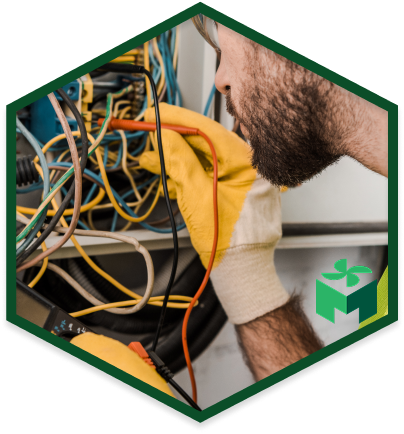
What Our Surge Protection Service Includes
When you schedule an installation, you are not just buying a piece of hardware; you are purchasing a comprehensive upgrade to your home’s electrical safety profile. We handle every aspect of the integration to ensure your system is code-compliant and effective.
- Main Panel SPD Installation: We install a Type 1 or Type 2 surge protection device directly to your main electrical panel or meter base. This serves as the primary line of defense against external surges entering from the utility grid.
- Grounding System Audit: A surge protector is only as good as the ground it connects to. We inspect your existing grounding electrode system. If your ground rod is corroded or the connection is loose, we repair or replace it to ensure low resistance.
- Cable and Data Line Protection: Power surges do not only travel through electrical wires; they can also enter through coaxial cables and telephone lines, frying modems and TVs. We offer options to bridge these entry points for total coverage.
- Verification and Testing: Once installed, we simulate checks to confirm the device is active and that the indicators (usually LED lights) are functioning correctly.
- Manufacturer Warranty Registration: We assist in documenting the installation to ensure you qualify for the connected equipment warranties offered by the SPD manufacturers.
Installation Process: Quick, Effective, and Minimally Invasive
We understand that you cannot afford to be without power for long, especially given the heat in Texas. Our installation process is streamlined to minimize disruption while maximizing safety standards. We operate with precision to get your system secured typically within a single visit.
- Initial Safety Check: Upon arrival, the technician performs a safety scan of your electrical panel to identify any immediate hazards, such as overheating breakers or loose bus bars, which could interfere with the installation.
- Power Isolation: We coordinate a brief, controlled power shut-off to ensure the safety of our technicians and your home while working inside the main panel.
- Breaker Reconfiguration: If necessary, we rearrange existing breakers to make space for the surge protection breaker or to position it closest to the main switch for optimal performance.
- Hardwiring the Device: The SPD is mounted either internally or externally depending on your panel type. The wires are cut as short and straight as possible to reduce resistance and improve reaction time.
- Ground Connection: We firmly secure the neutral and ground wires, double-checking torque settings to prevent future loosening due to thermal expansion and contraction.
- System Restoration and Labeling: Power is restored, and the panel is labeled clearly to indicate the presence of the surge protection device, satisfying future inspection requirements.
- Final Walkthrough: The technician demonstrates how to check the status lights on the unit so you can verify protection is active at a glance.
Surge Protection vs. Standard Fixes: When Upgrading Makes Sense
Homeowners often wait until damage has occurred before considering protection. You might be debating whether to simply replace a fried appliance or invest in prevention. It is vital to understand that the cost of a whole-home surge protector is often less than the replacement cost of a single major appliance, such as a washing machine or a central air conditioning board.
Standard fixes, like replacing a tripped breaker or buying a new power strip, are reactive. They deal with the aftermath or offer minimal defense. Power strips degrade over time; their joule rating (capacity to absorb energy) diminishes with every small spike they absorb. Eventually, they function merely as extension cords with no protection capabilities, leaving you vulnerable without you realizing it.
Furthermore, modern appliances are filled with sensitive microprocessors. In the past, a refrigerator was just a motor and a compressor. Today, it has logic boards and digital displays. These components are intolerant of voltage fluctuations. If you have noticed lights flickering when your AC turns on, your home is experiencing internal surges. Mackey Services recommends upgrading to whole-home protection if you have upgraded your appliances in the last five years or if your home was built prior to modern code requirements for surge mitigation.
Local Regulations and Seasonal Considerations for Surge Protection
The electrical environment in Friendswood and the greater Texas region presents unique challenges. Our area is prone to high humidity, intense heat, and frequent electrical storms. This specific climate accelerates the wear and tear on external electrical components and grounding systems.
- Hurricane and Storm Season: From June through November, the risk of lightning-induced surges increases dramatically. A direct hit isn’t necessary to cause damage; a strike miles away can send a pulse through the utility lines into your home.
- Grid Instability: Texas summers put a massive strain on the electrical grid. The cycling of power (rolling blackouts or brownouts) creates surges when power is restored. When the grid comes back online, the rush of voltage can blow out unprotected circuits immediately.
- National Electrical Code (NEC) Updates: Recent updates to the NEC now require surge protection for all new dwelling units and during certain service upgrades. Ensuring your home complies with these standards is essential for safety and helps avoid complications during future home inspections or sales.
- Corrosion Factors: High humidity can lead to oxidation on grounding connections. Our local service protocols include checking for this specific environmental degradation to ensure the surge has a clear path to the earth.
Internal vs. External Surges: Understanding the Threat
While lightning is the most dramatic threat, it accounts for a smaller percentage of surge-related damage than most people realize. The majority of power spikes originate from inside the home. Every time a high-draw motor turns on or off—such as your air conditioner, pool pump, or dryer—it sends a small surge back through your electrical panel to other circuits.
Over time, these “micro-surges” degrade the circuit boards in your LED lights, smart TVs, and computers. This is known as “electronic rust.” You may not see a sudden puff of smoke, but the lifespan of your devices is significantly shortened. A whole-home protector filters these internal fluctuations, balancing the load and preserving the longevity of your expensive electronics.
Why Choose Us? Certifications, Quick Service, and Robust Warranties
Selecting the right partner for your electrical safety ensures that the hardware installed performs exactly as specified. Improper installation, such as leaving wires too long or using the wrong gauge, can render a surge protector useless. We adhere to strict installation protocols that prioritize reaction time and clamping voltage accuracy.
We utilize industrial-grade equipment that is not available at big-box hardware stores. The units we install offer higher joule ratings and lower response times. Furthermore, many of the devices we provide come with significant connected equipment warranties from the manufacturer. This means if the device fails to stop a surge and your equipment is damaged, the manufacturer may cover the cost of replacement—a layer of financial protection you do not get with DIY solutions.
Our team is fully licensed and insured, familiar with the specific load calculations required for homes in this region. We do not use subcontractors; every technician is vetted and trained to handle high-voltage systems safely. By choosing Mackey Services, you are ensuring that your home’s electrical defense system is robust, grounded, and ready to handle whatever the weather or the grid throws your way.