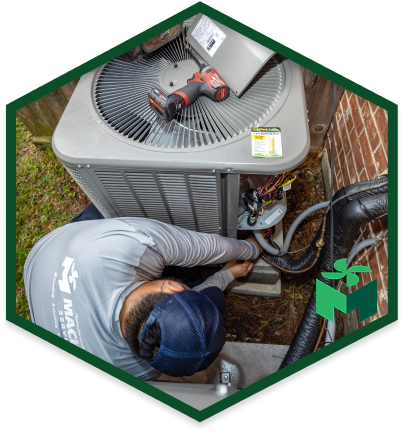
What You Can Expect: Fast Service and Transparent Assessments
When you request service, the priority is clarity and speed. You are not looking for vague estimates; you need to know exactly what is broken, how long it will take to fix, and what the final cost will be. The service process is designed to eliminate guesswork.
The Assessment Protocol
Upon arrival, a licensed professional performs a comprehensive evaluation of the affected system. For HVAC units, this involves checking refrigerant levels, testing the thermostat calibration, inspecting the ductwork for leaks, and evaluating the compressor’s amperage draw. For electrical calls, the process involves load testing the main panel, checking for loose connections that cause arcing, and verifying that grounding systems meet current safety standards.
Clear Explanations
Once the inspection is complete, you receive a detailed breakdown of the findings. This is not a sales pitch; it is a technical report on the health of your infrastructure. If a part has failed, you will see exactly why. If a circuit is overloaded, the data will be presented clearly.
Upfront Action Plans
Before any tool touches your equipment for repairs, you authorize the work based on a finalized quote. This ensures there are no surprise fees on the final invoice. Whether the solution involves a simple capacitor replacement, a breaker swap, or a complex rewiring job, the scope of work is defined entirely before execution begins.
Installation and Repair Processes—What Happens Next
The approach to fixing or installing systems varies significantly depending on the complexity of the issue. However, the workflow adheres to strict industry best practices to ensure longevity and safety.
HVAC Repair and Installation Workflow
Restoring a heating or cooling system involves precision. Simply swapping out a unit without checking the supporting infrastructure often leads to premature failure.
- Load Calculation: For new installations, technicians perform a Manual J load calculation. This determines the exact cooling and heating capacity required for your specific square footage and insulation levels. An oversized unit will short-cycle and fail to dehumidify, while an undersized unit will run continuously without reaching the target temperature.
- Ductwork Inspection: Existing ducts are checked for leaks and proper airflow. Leaky ducts can result in a loss of up to 30% of conditioned air, forcing the system to work harder.
- Refrigerant Handling: If a repair involves refrigerant, strict protocols are followed to capture and recharge the system to manufacturer specifications, ensuring optimal efficiency.
- Commissioning: The final step involves testing static pressure and temperature differentials to verify the system is performing at its rated SEER (Seasonal Energy Efficiency Ratio).
Electrical Service Workflow
Electrical work requires a zero-tolerance policy for error. Every connection must be tight, and every wire must be properly gauged.
- Circuit Analysis: Technicians map out the circuits to ensure the load is balanced across the panel phases. This prevents main breakers from tripping during peak usage times.
- Code Compliance Checks: Older homes often lack GFCI (Ground Fault Circuit Interrupter) protection in wet areas or AFCI (Arc Fault Circuit Interrupter) protection in bedrooms. These are installed to meet modern safety codes.
- Panel Upgrades: If a panel replacement is necessary, the process involves coordinating with the utility provider to disconnect power, replacing the meter base if needed, and installing a new buss bar and breakers that can handle modern electrical demands.
- Grounding Verification: A proper path to ground is essential for surge protection. The grounding electrode system is tested to ensure it can safely dissipate electrical faults.
Deciding Between Repair and Replacement: What You Need to Know
One of the most difficult decisions homeowners face is whether to pour money into an aging system or invest in a new one. Mackey Services helps you navigate this decision using objective data rather than pressure tactics.
The 50% Rule
A common industry standard used to guide this decision is the 50% rule. If the cost of the repair approaches 50% of the value of a new system, replacement is generally the smarter financial move. This is particularly true if the equipment is out of warranty.
Age and Efficiency Considerations for HVAC
Heating and cooling systems typically have a lifespan of 10 to 15 years. If your unit is over 10 years old and requires a major component like a compressor or heat exchanger, repair is rarely cost-effective.
- Efficiency Gains: Modern systems have much higher SEER ratings than units made a decade ago. upgrading from a 10 SEER unit to a 16 SEER unit can reduce cooling costs significantly, offsetting the monthly cost of financing a new installation.
- Refrigerant Types: Older units use R-22 refrigerant, which is phased out and incredibly expensive to replace. If an R-22 unit develops a leak, replacement is almost always the only viable option.
Safety and Capacity Factors for Electrical Systems
Electrical decisions are often driven by safety and capacity rather than efficiency.
- Panel Capacity: If your home still utilizes a 60-amp or 100-amp panel, it likely cannot support central AC, EV chargers, and modern appliances simultaneously. Upgrading to 200 amps is an investment in the home’s usability and resale value.
- Wiring Materials: Homes built in certain eras may contain aluminum wiring or knob-and-tube wiring. These are considered fire hazards by insurance companies. Replacing these systems is not just a repair; it is a necessary modernization for asset protection.
Local Expertise: Permits, Seasons, and Utility Savings
Operating in South Houston requires specific knowledge of local building codes, utility providers, and environmental challenges. A generic approach does not work when dealing with the specific humidity and storm risks of the Gulf Coast.
Navigating Permits and Inspections
Major HVAC installations and electrical panel changes require permits to ensure the work is safe and legal. Attempting these projects without permits can lead to fines and complications when selling the home later.
- Compliance: All work is performed in strict accordance with the National Electrical Code (NEC) and local municipal amendments.
- Coordination: The administrative burden of pulling permits and scheduling city inspections is handled entirely by the service provider. You do not need to visit city hall or manage paperwork.
Adapting to the Climate
The local climate dictates specific equipment needs. High humidity means that air conditioners must be sized perfectly to remove moisture from the air.
- Dehumidification: In many cases, standard AC units are supplemented with whole-home dehumidifiers to maintain indoor air quality and comfort without overcooling the space.
- Storm Preparation: Given the vulnerability to tropical storms and hurricanes from June to November, whole-home surge protection is a critical electrical service. It protects sensitive electronics and appliances from voltage spikes caused by lightning or grid fluctuations.
Utility Providers and Rebates
Working with local entities like CenterPoint Energy and Texas Gas Service is part of the process.
- Rebates: High-efficiency heat pumps and air conditioners often qualify for utility rebates. Guidance is provided to help you identify and claim these savings.
- Gas Lines: For homes utilizing gas heating, proper pressure testing and sediment trap installation are critical for safety and compliance with utility standards.
Why Customers Trust Mackey Services: Our Commitments and Credentials
Choosing a service provider is a decision based on trust and technical competence. You need a partner who stands behind their work and possesses the verified skills to execute complex tasks correctly the first time — read our reviews to verify.
Verified Technical Expertise
Technicians are not just general handymen; they are specialists in their respective trades.
- NATE-Certified: HVAC professionals hold North American Technician Excellence (NATE) certifications, the gold standard for the industry. This ensures a deep understanding of thermodynamics, airflow, and refrigeration cycles.
- Licensed Electricians: Electrical work is performed by state-licensed electricians who undergo rigorous training and continuing education to stay current with code changes.
Guarantees and Warranties
Peace of mind comes from knowing that the investment is protected.
- Labor Warranties: Installation and repair work is backed by labor warranties. If a connection loosens or a weld fails, it is corrected at no cost to you.
- Manufacturer Warranties: As authorized dealers for major brands, full manufacturer warranties on parts and equipment are registered and honored.
Respect for Your Property
Inviting a technician into your home requires trust. The service experience is designed to be as non-intrusive as possible.
- Cleanliness: Technicians use drop cloths and shoe covers to protect flooring and furniture. Work areas are cleaned thoroughly upon completion.
- Professionalism: Uniformed personnel arrive in marked vehicles, providing a sense of security and professionalism from the moment they pull into the driveway.