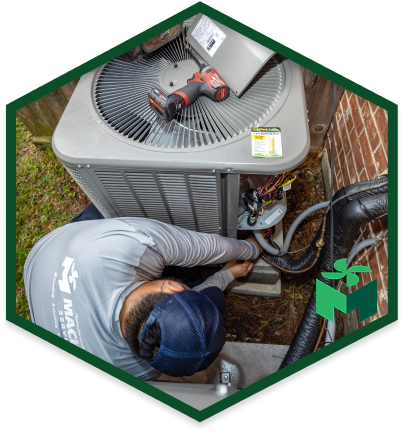
Our Installation Service: Fast, Reliable, and Ready for Texas Weather
When you choose professional installation, you are investing in the correct integration of complex technology with your existing heating and cooling infrastructure. Our service focuses on seamless compatibility and immediate functionality. We move beyond simple wire-swapping; we ensure the smart device effectively communicates with your furnace, air conditioner, or heat pump.
- System Compatibility Assessment: We verify that your current HVAC equipment—whether single-stage, multi-stage, or heat pump—is fully compatible with the chosen smart thermostat model, such as Ecobee, Nest, or Honeywell.
- C-Wire Verification and Installation: Smart thermostats require a constant power source (Common Wire) to maintain Wi-Fi connectivity and screen display. If your home lacks a C-wire, we install the necessary adapters or run new wiring to ensure reliable power without draining batteries or stealing power from the HVAC unit.
- Wi-Fi and App Configuration: We do not leave until the device is online. We assist in connecting the unit to your home network and guide you through the initial setup on your smartphone or tablet.
- Sensor Placement: For systems utilizing room sensors, we strategically place them in hot or cold spots to ensure an even average temperature throughout the home, rather than just in the hallway.
- Post-Installation Calibration: We test the system to ensure the thermostat reads temperature and humidity accurately and cycles the HVAC equipment correctly, preventing short-cycling or relay failure.
Streamlined Installation Process for Quick Comfort
Our approach to installation is designed to minimize disruption to your day while ensuring technical accuracy. We understand that upgrading your thermostat is often part of a larger desire to improve home comfort immediately. The process is structured to identify potential electrical issues before they become problems and to hand over a fully functioning system.
- First, a technician arrives to inspect your current wiring and HVAC control board. This step is critical because many older homes in Texas may not have the wiring standard required for modern smart devices. We identify if a “power extender kit” is needed or if hardwiring is the better long-term solution.
- Next, we safely disconnect the old unit, labeling every wire to ensure no cross-connections occur. We then mount the new backplate, using a level to ensure a clean aesthetic, and seal any holes in the wall behind the thermostat to prevent wall drafts from affecting the temperature reading.
- Then, the wiring is connected to the new terminal block. This is where professional expertise is vital, as miswiring can blow the low-voltage fuse on your furnace or damage the smart thermostat itself. We double-check all connections against the manufacturer’s schematics.
- Following this, the faceplate is attached, and the system is powered on. We walk through the initial software setup, configuring equipment settings like “heat pump reversing valve” orientation or “fan control” logic.
- Finally, we demonstrate how to use the interface, set up schedules, and integrate the device with voice assistants like Alexa or Google Home if desired. We ensure you are comfortable modifying settings before we depart.
Deciding Between Thermostat Repair and a Smart Upgrade
Homeowners frequently face the dilemma of whether to troubleshoot an existing, glitchy thermostat or replace it entirely. While repair might seem cheaper upfront, an old thermostat limits the efficiency of even the newest HVAC system. There are specific scenarios where replacement is the clear financial and functional winner.
- Drifting Temperatures: If your current thermostat displays one temperature but the room feels significantly hotter or colder, the internal sensors are likely failing. Recalibrating old mechanical or early digital thermostats is rarely successful long-term. A smart thermostat uses precision digital sensors and can often average readings from multiple rooms to solve this.
- High Energy Bills: If energy costs are rising but usage habits haven’t changed, your thermostat might be causing the system to run inefficiently—short cycling or overshooting the target temperature. A smart upgrade provides usage reports, showing exactly when and why the system is running, allowing you to trim wasted run-time.
- Zoning Issues: If you have hot and cold spots, a single-point thermostat cannot solve the problem. Smart thermostats with remote sensors allow the system to prioritize occupied rooms, fixing comfort imbalances that a standard repair cannot address.
- Lack of Connectivity: In the modern era, the inability to control climate remotely is a significant disadvantage. If you travel frequently or have irregular work hours, a non-connected thermostat guarantees energy waste. Upgrading gives you the power to shut the system off after you leave and turn it on before you return.
- System Short Cycling: If your AC turns on and off rapidly, it puts immense stress on the compressor. While this can be a mechanical issue, it is often caused by a faulty thermostat anticipator or deadband setting. Smart thermostats have adjustable thresholds to protect equipment from this damaging behavior.
Texas Climate Considerations and Your Thermostat
Operating a smart thermostat in the Friendswood area requires specific settings to handle the local climate effectively. The combination of intense radiant heat and high Gulf humidity creates a unique load on air conditioning systems. A standard “set it and forget it” approach often fails here, resulting in clammy, cold interiors or overworked units.
Smart thermostats offer “cool to dehumidify” features that are essential for this region. By allowing the AC to run slightly past the target temperature if humidity is high, the system removes excess moisture, improving comfort without needing a separate dehumidifier. This feature requires correct configuration during installation to ensure it doesn’t freeze the evaporator coil.
Furthermore, seasonality in Texas can be unpredictable. We often experience weeks where heating is needed in the morning and cooling in the afternoon. Smart thermostats feature “auto-changeover” modes that seamlessly switch between heating and cooling based on a deadband temperature range. This prevents the homeowner from manually switching modes daily during the volatile spring and autumn months.
Local energy providers also frequently offer demand-response programs or rebates for smart thermostat users. These programs allow the utility to make minor adjustments during peak grid stress events in exchange for bill credits. Proper installation ensures your device is eligible for these programs and can communicate effectively with the grid if you choose to opt-in.
Technical Expertise Behind Every Installation
The difference between a DIY installation and a professional service lies in the handling of electrical nuances and system longevity. Smart thermostats are sensitive electronic devices. Incorrect voltage handling or poor wire stripping can lead to intermittent failures that are difficult to diagnose. We treat the thermostat as a critical component of the HVAC ecosystem, not just a wall accessory.
We ensure that the thermostat settings match the specific mechanics of your HVAC unit. For example, setting a smart thermostat to “gas heat” when you have an “electric furnace” leads to the fan not engaging correctly, potentially overheating the heating elements. Mackey Services technicians are trained to identify the exact equipment type—whether it’s a heat pump with auxiliary heat or a dual-fuel system—and configure the thermostat logic to maximize equipment life and efficiency.
Additionally, we handle the aesthetic aspect of the upgrade. Removing an old, large horizontal thermostat often reveals unpainted walls or large holes. We provide trim plates and ensure the mounting is secure, so the sensitive electronics are not subjected to vibration from slamming doors, which can impact calibration.