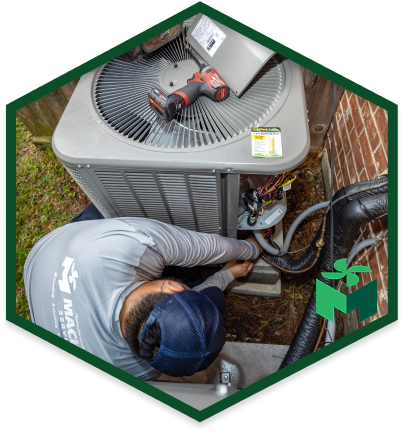
How Our Installation and Service Process Works
We follow a systematic approach to every job to ensure consistency and quality. You should know exactly what to expect from the moment a technician arrives at your property until the final safety check is completed.
- Technical Assessment: The process begins with a load calculation or electrical audit. For HVAC, we measure the square footage, insulation levels, and window exposure to determine the exact BTU capacity required. For electrical work, Mackey Services technicians calculate the total amperage load to ensure the existing panel can support new additions without tripping breakers.
- Transparent Quotation: Once the assessment is complete, we provide a detailed scope of work. This includes a breakdown of labor, materials, and permit fees. You receive a fixed price, so the final invoice matches the initial quote, regardless of how long the job takes.
- Code-Compliant Execution: Our team secures all necessary municipal permits before starting work. During installation, we adhere to strict safety protocols. This involves using drop cloths to protect your flooring, shutting off power or gas at the source, and following manufacturer specifications for every component installed.
- Verification and Testing: We do not leave until the system is proven to work. For AC units, this means measuring temperature splits and static pressure. For electrical circuits, we test voltage drop and ground continuity.
- Site Cleanup and Walkthrough: We remove all old equipment and debris from the site. Finally, we walk you through the new system, explaining how to operate the thermostat, where to reset breakers, and how to perform basic maintenance like changing filters.
When to Repair vs. When to Replace Your System
Deciding between a repair and a full replacement is a financial and logistical calculation. While repairs are often the lower upfront cost, they can be more expensive in the long run if the system is near the end of its lifespan.
Guidelines for HVAC Systems
- The 50% Rule: If the cost of the repair approaches 50% of the value of a new system, replacement is generally the better investment.
- Age of the Unit: Most heat pumps and air conditioners last 10 to 15 years. If your unit is over 12 years old and requires a major component like a compressor or blower motor, investing in a new, high-efficiency unit will likely lower your monthly utility bills enough to offset the installation cost over time — view current specials.
- Freon/Refrigerant Type: If your system relies on R-22 (Freon), which is phased out and extremely expensive to source, a refrigerant leak is a strong signal to upgrade to a system that uses R-410A or newer, eco-friendly refrigerants.
- Comfort Consistency: If some rooms are freezing while others are hot, or if the humidity remains high despite the AC running, the unit may be improperly sized or failing mechanically. A replacement allows for proper sizing based on current load calculations.
Guidelines for Electrical Systems
- Safety Hazards: Unlike HVAC, electrical issues often present immediate danger. If you hear buzzing from the panel, smell burning plastic, or see scorch marks on outlets, immediate replacement of the affected components is non-negotiable.
- Frequent Tripping: If using a hair dryer and the microwave simultaneously trips a breaker, your panel is overloaded. Adding more breakers to a maxed-out panel is unsafe; a service upgrade is required.
- Renovation Plans: If you are planning a kitchen remodel or adding a hot tub, your existing electrical infrastructure likely needs an upgrade to handle the increased load. It is more cost-effective to replace the panel before starting the renovation than to retrofit it later.
- Lack of GFCI/AFCI Protection: Modern codes require Ground Fault Circuit Interrupters (GFCI) in wet areas and Arc Fault Circuit Interrupters (AFCI) in living areas. If your home lacks these, upgrading your breakers or outlets is a critical safety improvement.
Critical Local Considerations for Slash, TX Homeowners
Operating mechanical and electrical systems in this specific region requires attention to environmental factors that do not apply elsewhere. The local climate and regulatory environment dictate how systems should be installed and maintained.
- Humidity Management: The high humidity levels in Slash significantly impact HVAC performance. An oversized AC unit will cool the air too quickly without running long enough to remove moisture, leading to a clammy, uncomfortable home and potential mold growth. We size systems specifically to handle the latent heat load (humidity) prevalent in this area.
- Corrosion Risks: Humidity and proximity to coastal influences can accelerate corrosion on outdoor condenser coils and electrical service entry cables. We recommend and install equipment with enhanced corrosion protection and inspect outdoor wiring for oxidation that could cause voltage drops or fires.
- Storm Resilience and Power Surges: Spring brings peak rainfall and thunderstorms. This weather pattern increases the risk of power surges and flooding. Outdoor units must be elevated on hurricane pads to prevent water damage, and whole-home surge protection is essential to guard against lightning-induced spikes.
- Permitting and Compliance: Local municipalities enforce strict codes regarding electrical work and HVAC change-outs to ensure public safety. Unpermitted work can lead to fines, insurance claim denials, and complications when selling your home. We handle the entire permitting process, scheduling inspections to ensure all work meets city and state standards.
- Insulation and Attic Ventilation: In this climate, attic temperatures can soar, forcing your HVAC system to work harder. We evaluate attic ventilation and duct insulation to ensure that the cool air you pay for isn’t gained or lost before it reaches your living space.
Why Homeowners Trust Us for Critical Systems
Selecting a service provider for high-stakes repairs involves more than comparing prices. It requires trust that the technician in your home is qualified, vetted, and equipped to do the job right the first time — read our reviews.
- Licensed and Certified Technicians: We employ technicians who hold valid state licenses for electrical and HVAC work. Continuous training ensures they stay updated on the latest building codes, safety protocols, and equipment technologies.
- Diagnostic Accuracy: We do not guess. Our team uses calibrated instrumentation to diagnose issues based on data, not intuition. This prevents “parts cannon” repairs where multiple components are replaced unnecessarily in hopes of fixing the problem.
- Inventory Readiness: Our service vehicles are stocked with common parts, including capacitors, contactors, breakers, and switches. This allows us to complete most repairs in a single visit, restoring your service faster.
- Respect for Property: We treat your home with care. Technicians wear shoe covers, use work mats, and clean up the workspace thoroughly after completing the job. You should never have to clean up after a service call.
- Warranty and Guarantee: We stand behind our workmanship. Whether it is a new circuit installation or a compressor replacement, our services come with clear warranties on both parts and labor, ensuring you are protected if an issue recurs.