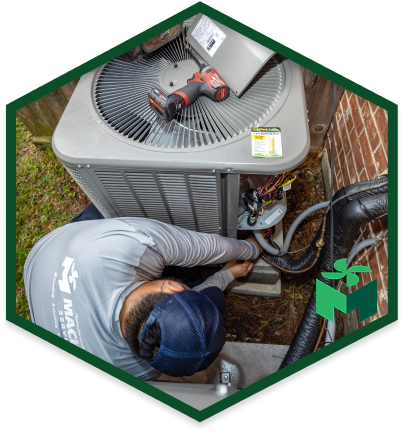
Complete Diagnostics and Efficient Solutions Today
Effective service goes beyond a quick patch; it requires a comprehensive understanding of your home’s infrastructure. When you request service, you receive a full evaluation of the affected system. This ensures that the repair we perform today prevents a recurrence next week.
For Heating and Cooling Systems:
- System Diagnostics: Technicians check refrigerant levels, measure airflow, and test electrical connections within the unit.
- Component Analysis: We inspect critical components such as the compressor, evaporator coil, and heat exchanger for signs of wear or impending failure.
- Air Quality Checks: We evaluate the condition of your filters and ductwork to ensure that the air circulating in your home is clean and unrestricted.
- Thermostat Calibration: Ensuring your controls are accurately reading temperatures to prevent short-cycling and energy waste.
For Electrical Systems:
- Load Testing: We assess your electrical panel’s capacity to handle modern appliances and HVAC loads without tripping.
- Circuit Tracing: Technicians identify the source of shorts or dead outlets using precision tracing equipment.
- Safety Inspections: We examine grounding systems, GFCI/AFCI protection, and exposed wiring to eliminate shock and fire hazards.
- Fixture and Device Testing: Switches, outlets, and lighting fixtures are tested for proper voltage and secure connections.
Mackey Services ensures that every diagnostic step is communicated to you. You will understand exactly what is working, what has failed, and what is at risk. This transparency allows you to make informed decisions about your property without pressure.
Our Hassle-Free Process: From Call to Comfort
Navigating home repairs should not be a complex chore. We have streamlined the service experience to ensure efficiency from the moment you pick up the phone until the technician leaves your driveway. The process is designed to respect your time and property.
- Priority Scheduling: When you contact us, our dispatch team works to accommodate your schedule, prioritizing safety hazards and complete system outages for the earliest available slots.
- Notification and Arrival: You receive a notification when the technician is en route, eliminating the need to wait around all day wondering when help will arrive.
- On-Site Assessment: Upon arrival, the technician listens to your observations and immediately begins a technical assessment of the equipment.
- Clear, Upfront Quoting: Before any tool touches a bolt for repair, you receive a detailed quote. This price includes labor and parts, ensuring the final bill matches the initial agreement.
- Execution of Work: The technician performs the repair or installation using code-compliant methods and high-quality parts designed to last.
- System Testing: We do not leave until the system is running through a full cycle—cooling, heating, or powering up—to verify the repair holds under load.
- Clean Up and Walkthrough: Work areas are cleaned, debris is removed, and the technician walks you through exactly what was done and how to operate any new equipment.
Deciding Between Repair and Replacement: A Simple Guide
One of the most difficult decisions homeowners face is whether to pour more money into an aging system or invest in a replacement. This decision affects your immediate budget and your long-term energy costs — check our current specials online. We provide the data you need to make the right choice based on the condition of your specific unit.
When to Repair:
- The 50% Rule: If the cost of the repair is less than 50% of the value of a new system, and the unit is not near the end of its lifespan, repair is often the smart financial choice.
- Minor Component Failure: If the issue is isolated to a single, replaceable part like a contactor, breaker, or fan blade, and the rest of the system is healthy, a repair will restore function effectively.
- Under Warranty: If your system is still under a manufacturer’s warranty, repairing it utilizes the coverage you have already paid for.
When to Replace:
- Age of Equipment: HVAC systems typically last 10–15 years. If your unit is in this range and requires a major repair (like a compressor), replacement is usually more economical. Electrical panels older than 25–30 years often cannot handle modern amperage demands.
- Frequency of Breakdowns: If you have called for repairs more than twice in the last year, the system is likely entering a cascade of failures. Continuing to repair it is throwing good money after bad.
- Efficiency Gap: Modern HVAC units and electrical systems are significantly more efficient than those manufactured a decade ago. Replacing an old 10 SEER AC unit with a modern 16+ SEER unit can result in energy savings that help offset the installation cost.
- Safety Concerns: For electrical work, if the panel is a brand known for fire risks (such as Federal Pacific or Zinsco), or if wiring is deteriorating aluminum, replacement is a non-negotiable safety necessity.
- R-22 Refrigerant: If your AC utilizes the phased-out R-22 refrigerant, repair costs for leaks are astronomical. Upgrading to a system that uses R-410A or newer refrigerants is the only viable long-term solution.
Local Expertise: Guiding You Through Seasonal Changes and Regulations
Operating in Santa Fe, TX, presents specific challenges that generic service providers often miss. The local climate is characterized by hot, humid summers where temperatures frequently exceed 100°F, and mild winters with high rainfall. These environmental factors dictate how systems must be installed and maintained.
- Humidity Management: In our region, an air conditioner does more than cool; it dehumidifies. Systems must be perfectly sized. An oversized unit will cool the air too quickly without removing moisture, leading to a clammy, uncomfortable home and potential mold growth. We calculate load requirements precisely to combat local humidity levels.
- Corrosion and Rainfall: High annual rainfall and coastal proximity can accelerate corrosion on outdoor condenser coils and electrical service masts. We use materials and coatings designed to withstand these corrosive elements, protecting your investment from premature rot and rust.
- Electrical Permits and Codes: Santa Fe and surrounding municipalities have specific codes regarding electrical panel clearances, grounding requirements, and disconnect boxes. Any major electrical work or HVAC replacement generally requires a permit to ensure insurance compliance and safety. We handle the permitting process, ensuring all work meets or exceeds local building standards.
- Surge Protection: The region is prone to thunderstorms which can send damaging voltage spikes through your wiring. We recommend and install whole-home surge protection to shield expensive electronics and appliances from local weather volatility.
Why Choose Us? See Our Credentials and Service Standards
You have options for service, but effective results come from technical expertise and operational integrity. We do not rely on high-pressure sales tactics; we rely on the quality of our diagnostics and the durability of our repairs.
- Licensed and Insured: We hold all necessary state licenses for both HVAC and Electrical work. Our insurance coverage protects your property during every job, removing liability from your shoulders.
- Technical Certification: Our team undergoes continuous training to stay current with the latest building codes, inverter technology in HVAC, and smart home electrical integration.
- Transparent Pricing: You will never receive a bill that surprises you. We price by the job, not the hour, so you know the cost before work begins, regardless of how long the repair takes—check our Transparent Pricing details.
- Stocked Vehicles: We minimize downtime by keeping our service vehicles stocked with the most common parts, breakers, and refrigerants. This commitment to preparation is how we achieve our high rate of same-day resolutions.