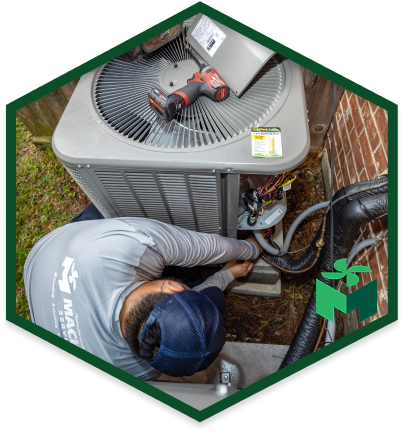
What You Can Expect From Our Service Visit
Understanding the scope of work helps homeowners make informed decisions about their property. When you engage a professional for HVAC or electrical work, the process moves beyond simple guesswork. We provide a structured approach to solving the root cause of the problem, ensuring that the fix lasts longer than a few weeks.
Comprehensive HVAC Diagnostics and Repair
The cooling and heating systems in this climate undergo immense strain. Our service includes a thorough inspection of the entire system, not just the unit that seems broken.
- Refrigerant Level and Pressure Checks: We measure superheat and subcooling levels to ensure the system is charged correctly according to manufacturer specifications. Incorrect charge levels significantly reduce efficiency and cooling capacity.
- Airflow Analysis: Technicians inspect ductwork for leaks, blockages, or collapsed sections that restrict air movement. Static pressure tests are performed to verify the blower motor is moving enough air across the coil.
- Electrical Component Testing: For HVAC units, we test capacitors, contactors, and relays. These are common failure points that can prevent a compressor or fan from starting.
- Drainage Inspection: In humid environments, condensate lines can clog with algae, leading to water damage. We clear these lines and check the functionality of float switches.
Electrical System Evaluation and Correction
Electrical work demands precision to ensure safety and code compliance. Our scope covers everything from minor repairs to major infrastructure upgrades.
- Panel Load Testing: We verify that your main breaker panel can handle the electrical load of modern appliances. This is crucial for older homes that may not support high-draw devices like EV chargers or modern HVAC systems.
- Circuit Tracing and Fault Finding: If an outlet is dead or a switch is unresponsive, we trace the circuit to find breaks in the wiring or loose connections that could cause arcing.
- Grounding and Bonding Verification: Proper grounding is essential for safety. We check the grounding system to ensure it meets current National Electrical Code (NEC) standards, protecting your home from surges and lightning strikes.
- Safety Device Inspection: We test GFCI and AFCI breakers and outlets to ensure they trip correctly during ground faults or arc faults, preventing shocks and fires.
How the Installation and Replacement Process Works
There comes a point where repair is no longer the most economical or safe choice. When installing a new HVAC system or upgrading an electrical panel, precision in the installation process determines the longevity and efficiency of the equipment. We follow a strict protocol to ensure every installation meets the highest industry standards.
The HVAC Replacement Sequence
Replacing a central air system or furnace is a major project that requires careful planning. We do not simply swap boxes; we engineer the solution for the specific home.
- Load Calculation: First, we perform a Manual J load calculation. This determines the exact heating and cooling requirements of the structure based on square footage, insulation, window orientation, and local climate data. Oversized units cycle too frequently, while undersized units run constantly without reaching the set temperature.
- System Selection: Next, we assist in selecting the equipment with the right SEER2 rating and heating efficiency. In humid regions, variable-speed systems are often recommended for their superior dehumidification capabilities.
- Removal and Prep: We safely recover any old refrigerant according to EPA regulations and remove the existing equipment. The area is prepped, and the plenum is inspected for fitment.
- Installation and Brazing: The new units are set in place. Refrigerant lines are brazed with nitrogen purging to prevent oxidation inside the copper lines. This step is critical for preventing future blockages in the expansion valve.
- Vacuum and Charge: We pull a deep vacuum on the system to remove all moisture and non-condensables before releasing the refrigerant charge.
- Final Commissioning: Finally, the system is started, and we measure airflow, temperature split, and amp draw to certify the installation is performing at peak efficiency.
Electrical Service Upgrades
Upgrading an electrical service involves coordination with local utilities and strict adherence to safety codes.
- Assessment and Permitting: First, we evaluate the current demand and future needs. Permits are pulled with the local municipality to ensure all work is inspected and legal.
- Panel Layout and Mounting: We mount the new panel and organize the layout for logical circuit distribution.
- Wire Termination: Wires are stripped and terminated into the new breakers with proper torque specifications. Loose connections are a primary cause of panel overheating.
- Grounding Upgrade: We drive new ground rods or bond to the water service as required by code to ensure a low-resistance path to the ground.
- Labeling and Testing: Finally, every circuit is clearly labeled, and the system is energized. We test voltage at every outlet to ensure stability before leaving the site.
When Replacement Beats Repair: A Decision Guide
Deciding between repairing an aging system or investing in a replacement is a common dilemma. While Mackey Services can repair most issues, there are mathematical and safety thresholds where replacement becomes the logical financial decision.
The 50% Rule and System Age
A general industry standard is the “50% Rule.” If the cost of the repair approaches 50% of the value of a new system, replacement is generally the better investment. This is particularly true if the equipment is over ten years old. In the harsh heat of Texas, HVAC systems often have a shorter lifespan than in milder climates. If a compressor fails on a 12-year-old unit, investing thousands in a repair is rarely wise because other components like the condenser coil or blower motor are likely near the end of their life as well.
Energy Efficiency and Technology Gaps
Older HVAC systems, specifically those rated 10 SEER or lower, consume significantly more electricity than modern 15+ SEER2 systems. Replacing an inefficient unit can result in immediate monthly savings on utility bills, effectively subsidizing the cost of the new unit over time. Furthermore, older systems may use R-22 refrigerant, which has been phased out and is prohibitively expensive to restock. Upgrading eliminates the reliance on obsolete chemicals.
Electrical Safety and Capacity
For electrical systems, the decision often revolves around safety and capacity rather than just functionality.
- Aluminum Wiring: Homes built during certain eras may feature aluminum branch wiring, which poses a fire risk due to thermal expansion and oxidation. remediation or rewiring is often necessary.
- Fuse Boxes and Obsolete Panels: Old fuse boxes or specific brands of panels known for failure (such as Federal Pacific or Zinsco) should be replaced immediately. These panels may not trip during an overload, creating a direct fire hazard.
- Lack of Capacity: If your lights dim when the AC kicks on, or if you rely on power strips because there aren’t enough outlets, your system is overloaded. A service upgrade adds the necessary amperage to run modern households safely.
Local Considerations: Permits, Utilities, and Climate
Operating in Rosharon and the surrounding Texas region requires specific knowledge of local environmental and regulatory conditions. Generic solutions often fail because they do not account for the unique demands of this area.
Climate Impact on Infrastructure
The high humidity in this region impacts both electrical and HVAC systems.
- Corrosion: Electrical panels and outdoor HVAC units are subject to accelerated corrosion due to moisture. We use NEMA 3R rated outdoor enclosures and advise on corrosion-resistant coatings for HVAC coils to extend equipment life.
- Dehumidification: Standard cooling often isn’t enough. We size systems to ensure they run long enough to pull moisture out of the air, or we recommend whole-home dehumidifiers. Excess humidity leads to mold growth and makes the indoor environment feel warmer than the thermostat reading.
Permitting and Code Compliance
All significant HVAC replacements and electrical upgrades require permits. This is not just a formality; it is a verification of safety.
- Inspection Coordination: We handle the logistics of pulling permits and scheduling city inspections. This ensures that the work remains compliant with the latest National Electrical Code (NEC) and International Mechanical Code (IMC) adoptions.
- Utility Requirements: Local utility providers have specific requirements for meter can placement and disconnect switches. We ensure all exterior electrical work aligns with utility provider standards to prevent service hookup delays.
Seasonal Preparation
The shift from hot summers to mild winters requires specific maintenance.
- Summer Prep: Capacitor checks are vital before summer, as heat is the number one killer of capacitors. We also clear debris from outdoor condensers to ensure maximum heat rejection.
- Winter Prep: While winters are mild, heating systems still need attention. We check heat exchangers for cracks (a carbon monoxide hazard) and test electric heat strips to ensure they engage during the few freezing nights of the year.
Certifications and Operational Standards
Selecting a contractor involves looking for objective indicators of quality and reliability. We focus on verifiable credentials and operational transparency.
- Licensing: All work is conducted under state-issued licenses for HVAC and Electrical work. This ensures liability coverage and adherence to state laws regarding trade practices.
- Training: Technicians undergo continuous training to stay updated on inverter-driven HVAC technology, smart home electrical integration, and changing safety codes.
- Warranty and Guarantees: We provide clear, written warranties on labor and parts. If a repair fails within the warranty period, we return to rectify it without additional service fees.
- Financing: We understand that infrastructure failure is often unbudgeted. We offer structured financing plans that allow homeowners to manage the cost of major replacements over time, rather than in a lump sum.
Why Choose Us
Choosing Mackey Services means partnering with a team that prioritizes speed, expertise, and reliability. Homeowners in Rosharon, TX, trust us because:
- Experience: Decades of combined HVAC, heating, and electrical service experience.
- Licensed and Certified: All technicians hold state licenses and receive continuous training in modern systems and safety codes.
- Fast Response: 24/7 availability for emergencies ensures problems are addressed immediately.
- Quality Assurance: Written warranties on labor and parts provide peace of mind.
- Transparent Pricing: Competitive rates and flexible financing options remove surprises.
- Customer Satisfaction: Hundreds of happy clients and positive Reviews reflect our commitment to excellence.
- Maintenance and Specials: Ongoing maintenance plans and seasonal Specials help extend equipment life and save money.