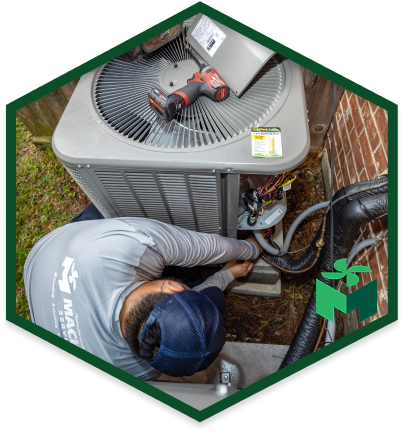
How Installation and Replacement Works
When a repair is no longer feasible or safe, moving forward with a replacement or new installation follows a structured, code-compliant process. This applies to installing new energy-efficient HVAC systems or upgrading outdated electrical panels. The process ensures that the new equipment is sized correctly for your home’s specific load requirements and installed to meet all local safety standards.
The Assessment and Sizing Phase
The process begins with a calculation, not a guess. For HVAC, a Manual J load calculation determines the exact cooling and heating BTUs required based on your home’s square footage, insulation levels, and window orientation. Oversized units cycle too frequently, failing to dehumidify, while undersized units run perpetually without cooling. For electrical work, a load calculation determines if your current service amperage (100 amp vs. 200 amp) can support modern appliances, EV chargers, and HVAC loads.
Site Preparation and Safety Measures
Before any equipment is removed, the workspace is secured.
- Technicians lay down drop cloths and wear shoe covers to protect flooring.
- Power and gas supplies are shut off and locked out to ensure safety during the transition.
- Old refrigerant is recovered into sealed cylinders according to EPA regulations, ensuring no environmental contamination.
- Existing electrical wiring is labeled to ensure correct reconnection to the new panel or unit.
Installation and Connection
The physical installation involves precise mechanical and electrical connections.
- For AC and heating, the indoor and outdoor units are positioned, leveled, and secured.
- Refrigerant lines are brazed with nitrogen purging to prevent oxidation inside the pipes.
- Ductwork connections are sealed with mastic to prevent air leakage.
- For electrical panels, the new enclosure is mounted, and grounding systems are brought up to current code requirements, including the installation of two ground rods if necessary.
- Circuit breakers are installed and balanced to distribute the electrical load evenly across the phases.
Commissioning and Testing
The job is not complete until the system is proven to run efficiently.
- HVAC systems undergo a static pressure test to verify airflow.
- Refrigerant charge is fine-tuned using subcooling and superheat methods.
- Electrical circuits are tested for voltage drop and polarity.
- Thermostats and control systems are programmed to your preferences.
- A final walkthrough demonstrates how to operate the new system and maintain basic components like filters or breakers.
When Replacement Beats Repair: A Decision Guide
Deciding between repairing an aging system or investing in a replacement is a financial and logical calculation. While repairs may seem cheaper upfront, recurring issues and inefficiency often make replacement the more prudent financial decision over a three to five-year horizon.
The 50% Investment Rule
A standard industry metric is the 50% rule. If the cost of the repair approaches or exceeds 50% of the value of the system (or the cost of a new system), replacement is generally the better option. Putting expensive parts, such as a compressor or a new motherboard, into a unit that is already 12 to 15 years old is often throwing good money after bad. The warranty on a repair is typically limited to that specific part, whereas a new installation covers the entire system for a decade — view current specials.
Age and Efficiency (HVAC)
HVAC technology has shifted drastically in the last decade. Units installed more than 10 years ago likely utilize R-22 refrigerant, which is phased out and incredibly expensive to replace. Furthermore, older units often operate at 10 SEER or lower. Modern units operate at 14 SEER2 or higher.
- Replace if: The unit is over 10 years old and requires a major component like a compressor or heat exchanger.
- Replace if: Your energy bills have spiked despite normal usage, indicating internal wear and loss of compression.
- Replace if: The system struggles to maintain the set temperature during the peak of the Pasadena summer.
Safety and Capacity (Electrical)
Electrical systems do not “expire” in the same way mechanical systems do, but they do become obsolete and unsafe.
- Replace if: You have a Federal Pacific or Zinsco panel. These brands have known design flaws that cause breakers to fail to trip during a surge, leading to fire hazards.
- Replace if: You are still using a fuse box or an ungrounded system (two-prong outlets throughout the house).
- Replace if: You are planning to add significant loads, such as a hot tub, EV charger, or a larger HVAC unit, and your current 100-amp service cannot support the draw.
- Replace if: You notice distinct burning smells near outlets, or if lights flicker whenever an appliance turns on. This indicates loose connections or deteriorating wiring insulation.
Local Notes: Permitting, Utilities, and Climate
Operating in Pasadena, TX, requires specific knowledge of local codes, climate challenges, and utility coordination. A service provider must be intimately familiar with the requirements set forth by the City of Pasadena Permit Department to ensure all work is legal, safe, and insurable.
Permitting and Code Compliance
In Pasadena, major mechanical and electrical work requires a permit. This is a protection for the homeowner, ensuring that a third-party city inspector verifies the work meets safety standards.
- HVAC: Changing out a condenser or furnace requires a permit to ensure the electrical disconnect is sized correctly and the gas piping is up to code.
- Electrical: Panel upgrades, generator installations, and rewiring projects strictly require permits and inspections.
- The Process: Professional technicians handle the permit application, scheduling, and meeting the inspector on-site. Homeowners are not left to navigate the bureaucracy alone.
Managing Humidity and Heat Load
The Gulf Coast climate presents unique challenges. High humidity means that air conditioners must run long enough to remove moisture from the air, not just lower the temperature.
- Sizing: “Bigger is better” is a myth in humid climates. An oversized unit cools too fast and shuts off before dehumidifying, leaving the home cold but clammy. Precise sizing is critical here.
- Sealing: Ductwork in unconditioned attics can sweat if not properly insulated, leading to drywall damage and mold growth.
- Dehumidification: In some cases, whole-home dehumidifiers are recommended to work in tandem with the AC system.
Electrical Grid and Weather Resilience
Texas weather can be unpredictable, ranging from extreme heat to freezing temperatures that strain the power grid.
- Surge Protection: With the fluctuation of power during storms and grid switching, whole-home surge protection at the panel level is highly recommended to protect sensitive electronics and appliance boards.
- Aluminum Wiring: Many homes built in the area during the late 60s and 70s may contain aluminum wiring. This requires specific connectors (AlumiConn or CO/ALR devices) to prevent oxidation and fire risks at connection points.
Proof and Differentiators
Choosing a service provider for critical home systems is about mitigating risk. You need assurance that the technician entering your home is vetted, trained, and capable of handling complex diagnostics — read our reviews.
- Technical Certification: Technicians undergo rigorous training to stay current with the latest building codes, refrigerant handling procedures, and electrical safety standards (NFPA 70).
- Holistic Approach: Because the company handles both HVAC and electrical, technicians understand the interplay between the two. An AC failure is often an electrical issue; having a technician who is cross-trained or supported by a multi-trade team ensures the problem is solved at the source.
- Respect for Property: Workspaces are left cleaner than they were found. Protective mats and coverings are standard procedure to prevent damage to flooring and furniture.
- Warranty Support: All installations and major repairs come with labor and parts warranties, providing peace of mind long after the truck drives away.
Reliability is the cornerstone of professional home services. When a system fails, the focus is on rapid deployment and technical precision to restore safety and comfort.