What Our Electrical Panel Upgrade Service Includes
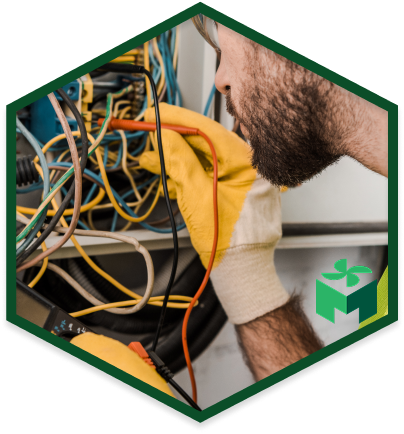
When you commit to an electrical panel upgrade, you are purchasing a complete overhaul of your home’s main distribution point, not just a simple box swap. Our service is comprehensive, covering every technical aspect required to bring your home up to the latest National Electrical Code (NEC) standards.
- Main Breaker Panel Replacement: We remove the existing enclosure and install a new, high-quality panel board rated for your required amperage (typically 200 amps). This includes the installation of a new main breaker that serves as the primary disconnect for the entire house.
- Circuit Breaker Installation: The service includes populating the new panel with appropriate circuit breakers. This involves installing standard breakers as well as Arc Fault Circuit Interrupters (AFCI) and Ground Fault Circuit Interrupters (GFCI) where required by code for areas like bedrooms, kitchens, and bathrooms.
- Grounding and Bonding System Upgrade: A crucial part of the upgrade involves inspecting and improving the grounding system. We drive new grounding rods if necessary and ensure the water and gas piping systems are properly bonded to the electrical system to prevent shock hazards.
- Service Entrance Cable Replacement: If the wires coming from the utility meter to your panel are frayed, undersized, or damaged by weather, we replace the service entrance conductors to ensure they can handle the increased load safely.
- Labeling and Circuit Identification: A new panel is useless if you don’t know what controls what. We meticulously trace and label every circuit in the new panel, providing a clear and legible directory for future maintenance or emergencies.
- Whole-Home Surge Protection: To protect your modern electronics, we often integrate whole-home surge protection directly into the new panel. This guards your appliances against voltage spikes originating from the utility grid or internal sources.
Our Step-by-Step Approach to Safely Upgrading Your Panel
We adhere to a rigorous process to ensure safety, efficiency, and minimal disruption to your daily life during the upgrade. Every step is calculated to meet safety regulations and ensure a high-quality installation.
- Initial Load Calculation and Assessment: Before any work begins, we perform a detailed load calculation. We inventory your major appliances, square footage, and future electrical needs (like EV chargers or pool heaters) to determine the exact amperage capacity your home requires. This ensures we don’t undersize or oversize the new system.
- Permitting and Utility Coordination: We handle all administrative work. This includes pulling the necessary electrical permits from the City of Pearland and coordinating with the local utility provider (often CenterPoint Energy) to schedule the temporary disconnection of power required to perform the work safely.
- Site Preparation and Protection: On the day of the installation, our technicians prepare the work area. We lay down drop cloths and protective coverings to keep your home clean. We also verify that all sensitive electronics are unplugged to prevent damage during the power transition.
- Old Panel Removal: Once power is cut by the utility provider, we disconnect all branch circuit wiring and remove the old panel enclosure. We inspect the existing wiring for any signs of heat damage or insulation deterioration that might need addressing before reconnection.
- Installation of New Infrastructure: We mount the new panel enclosure, ensuring it is level and securely fastened. New service entrance cables are installed, and the grounding system is updated. All existing branch circuits are routed into the new box, organized neatly, and terminated into the new breakers.
- System Testing and Verification: After the physical installation is complete and power is restored by the utility, we energize the system. We test every outlet and switch to ensure proper polarity, voltage, and grounding. We verify that GFCIs and AFCIs trip correctly under test conditions.
- Final Inspection: The final step involves meeting with the city electrical inspector. We walk them through the installation to verify that all work meets local and national codes. Once passed, the permit is closed out, and your system is officially certified safe.
Deciding Between Repair and Complete Upgrade: What You Need to Know
Homeowners often wonder if a full upgrade is necessary or if a repair will suffice. While repairs can solve localized issues, there are specific scenarios where replacement is the only financially and technically sound decision.
- Age of the Panel: If your panel is over 25 to 30 years old, it is reaching the end of its reliable service life. Internal components degrade over time due to heat cycles. Even if it seems to work, the mechanism inside the breakers may be stiff or seized, meaning they won’t trip when they need to. In this case, replacement is safer than repair — view our specials.
- Evidence of Heat or Moisture Damage: If you see rust on the panel enclosure, scorch marks on the bus bars, or melted insulation on wires, a repair is essentially a bandage on a broken leg. These signs indicate systemic failure. Corrosion causes resistance, which generates heat, creating a cycle that eventually leads to failure or fire.
- Lack of Expansion Space: If your current panel is full and uses “tandem” breakers (two circuits squeezed into one slot) to make room, you are at maximum capacity. If you plan to add a hot tub, a dedicated circuit for a home office, or a Level 2 EV charger, you cannot simply repair the existing panel to make it work. A heavy-up (amperage upgrade) is required.
- Obsolete Brands: As mentioned earlier, certain panel brands installed in the 1970s and 1980s have lost their UL listing due to high failure rates. If you have a split-bus panel or a brand known for safety defects, no reputable electrician will repair it because of the liability. Replacement is mandatory for safety.
- Persistent Electrical Issues: If you are repairing the same breaker multiple times, or if lights flicker across multiple rooms simultaneously, the issue is likely with the main bus bar or the service entry. Repairing individual breakers won’t fix a failing main distribution system.
Local Pearland Guidelines and Timing for Your Electrical Work
Operating in this region requires specific knowledge of local environmental factors and regulatory requirements. The humid subtropical climate, characterized by hot summers and wet transitional seasons, places unique stress on electrical components.
- Weather and Seasonality: High humidity and frequent rainfall, particularly in May and September, can accelerate corrosion on outdoor meter cans and panels. We use NEMA 3R rated outdoor enclosures that are specifically designed to withstand wind-driven rain and high humidity. Furthermore, the extreme summer heat means your electrical system is under maximum load for months at a time due to air conditioning. We recommend scheduling upgrades in the milder spring or fall months to avoid being without AC during the changeover, although we are equipped to handle emergency upgrades year-round.
- Permitting and Codes: The City of Pearland enforces strict building codes based on the NEC. Work performed without a permit is not only illegal but can also void your homeowner’s insurance policy. We manage the entire permitting process, ensuring that the work is registered with the city. This includes adhering to specific local amendments regarding grounding electrode systems and disconnect placements.
- Utility Coordination: Coordinating with CenterPoint Energy or your specific transmission provider is critical. Unlike minor interior electrical work, a panel upgrade usually requires the utility company to pull the meter. Attempting to bypass this step is dangerous and illegal. We have established relationships with local utility planners to streamline this scheduling, minimizing the time your home is without power.
- Flood Resilience: Given the region’s history with heavy storms, we assess the location of your panel. If your home is in a flood-prone area, we may recommend specific mounting heights or locations to ensure the critical electrical components remain above potential water levels, protecting your investment during severe weather events.
Certified and Trusted: Why Choose Us for Your Electrical Needs
Selecting the right contractor for a panel upgrade is a decision that impacts the safety of your home for decades. You need a partner who values technical precision, regulatory compliance, and transparent communication.
- Licensed and Insured: We operate with full state licensing and carry comprehensive liability insurance. This protects your property and ensures that every technician working on your home is a qualified professional, not an unsupervised apprentice.
- Code Expertise: We don’t just know how to wire a house; we understand the “why” behind the codes. Our team stays updated on the latest NEC changes and local Pearland amendments, ensuring your new panel passes inspection the first time.
- Safety-First Culture: Electrical work involves high voltage and significant risk. We utilize strict lockout/tagout procedures, wear appropriate personal protective equipment (PPE), and follow rigorous testing protocols. We treat your home’s safety with the same regard as we would our own.
- Transparent Pricing: You will receive a detailed quote outlining labor, materials, and permit fees before we touch a screwdriver. There are no hidden costs or surprise add-ons once the wall is open. We believe in providing clear, upfront information so you can make an educated decision.
Mackey Services is dedicated to providing high-quality, long-lasting electrical solutions. We understand that a panel upgrade is a significant investment, and we strive to deliver value through superior workmanship and reliable components.