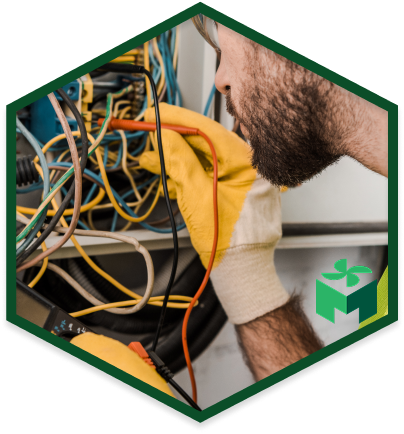
The Electrical Panel Installation Workflow
Replacing an electrical panel is a complex, technical procedure that involves coordination with local utilities and strict adherence to safety standards. We manage the entire lifecycle of the project to ensure minimal disruption to your daily routine.
Site Assessment and Load Calculation
The process begins with a detailed load calculation. We audit your current appliances and square footage to determine the exact amperage requirements. This ensures the new hardware is neither undersized for your needs nor an unnecessary over-expenditure. We also inspect the meter base and the service entrance cable—the wire connecting the utility pole to your meter—to verify they are in good condition.
Permitting and Utility Coordination
Before a single wire is touched, we secure the necessary electrical permits from the city. We also coordinate with the local utility provider to schedule a temporary power disconnect. This step is non-negotiable for the safety of our technicians and the protection of your home.
Safe Removal of Existing Equipment
Once power is cut, the old panel is dismantled. We carefully disconnect all branch circuit wires, labeling them to ensure they return to the correct positions. The old enclosure is removed from the wall, and the area is prepped for the new installation. If the previous panel was recessed into drywall or masonry, we adjust the opening to accommodate the new, likely larger, enclosure.
Installation and Grounding
The new enclosure is mounted and leveled. We install the main service entrance cables and torque them to manufacturer specifications. A critical part of this phase is driving new ground rods or bonding to the existing cold water pipe to establish a verified grounding electrode system. This is the primary safety mechanism for the entire house.
Circuit Termination and Protection
Branch circuits are routed into the new box. We strip wires to the correct length and terminate them into the new breakers. We install AFCI and GFCI breakers in required zones—such as bedrooms, kitchens, and bathrooms—to meet current safety codes.
Testing and Inspection
Power is restored, and every circuit is tested for voltage drop, polarity, and load capacity. We verify that safety devices trip when they should and hold when they should. Finally, we schedule the required municipal inspection to close out the permit and certify the installation.
Deciding Between Repair and Full Replacement
Homeowners often ask if a problematic panel can simply be repaired. While swapping a single bad breaker is a viable repair, there are specific scenarios where full replacement is the only financially and technically sound decision.
Age of the Equipment
Electrical panels have a lifespan of approximately 25 to 40 years. If your home in Friendswood was built before 1990 and still has the original panel, the internal components have likely degraded. Bus bars oxidize, and breaker springs lose tension, leading to slow trip times. If the equipment is nearing the end of its design life, repairing individual components is a temporary fix that wastes money better spent on a modern system — check our specials for upgrade deals.
Dangerous Panel Brands
Certain brands of panels installed between the 1960s and 1990s are documented safety hazards. If your home contains a Federal Pacific Electric (FPE) Stab-Lok panel or a Zinsco panel, immediate replacement is required. These panels have inherent design flaws where breakers frequently fail to trip during an overload, causing the wires to melt and ignite. Insurance companies often refuse to cover homes with these specific panels. In this case, repair is not an option; the hardware itself is defective.
Evidence of Overheating
If you see burn marks on the metal bus bars, melted insulation on wires, or discoloration on the breakers, the panel has suffered heat damage. Heat compromises the structural integrity of the metal and the conductive properties of the connections. You cannot “repair” heat-damaged metal; the entire unit must be replaced to prevent fire risks.
Renovation and Expansion Plans
If you are planning a kitchen remodel, adding a hot tub, or finishing a basement, your existing panel may physically lack the space for new circuits. “Tandem breakers” (two circuits in one slot) can sometimes solve space issues, but they do not increase the total power capacity of the panel. If you are maxing out your amperage, a service upgrade is mandatory to support the new electrical load without tripping the main breaker.
Friendswood Climate and Regulatory Considerations
Operating an electrical system in this region requires specific attention to environmental factors. The high humidity and intense heat common in the area can accelerate corrosion within the electrical panel, especially if the unit is located outdoors or in an unconditioned garage.
Fighting Corrosion and Humidity
Humidity is the enemy of electrical contacts. Over time, moisture in the air causes oxidation on aluminum and copper connection points. This oxidation creates resistance, which generates heat, creating a cycle that eventually leads to failure. We utilize anti-oxidant compounds on service entrance cables and recommend NEMA 3R rated outdoor enclosures with proper weather seals to withstand the driving rains often experienced during the spring storm season.
Heat Load Management
During summer months, electrical usage peaks due to continuous air conditioning operation. An undersized panel runs hot under this constant load. Breakers work on thermal-magnetic principles; if the ambient temperature in the garage is 100°F and the panel is running at max capacity, nuisance tripping can occur. Upgrading to a panel with higher amperage capacity allows the system to run cooler, reducing wear on the components and preventing outages during heatwaves.
Permits and Inspections
The City of Friendswood maintains strict adherence to the National Electrical Code. Any work involving the main breaker or service entrance requires a permit. This is not just red tape; it is a verification that the work was done correctly. Unauthorized panel work can complicate the sale of your home and void your homeowner’s insurance. We handle all interactions with the code enforcement department and the power transmission providers (like TNMP or CenterPoint) to ensure the disconnect and reconnect process is seamless.
Securing Your Home with Professional Electrical Standards
Your electrical panel is the gateway for all energy entering your home. Entrusting its replacement to a qualified team ensures that your lights stay on, your appliances are protected, and your property remains safe from electrical fires — read our reviews.
We do not cut corners on materials or workmanship. We utilize industrial-grade components from trusted manufacturers like Square D, Siemens, and Eaton, ensuring availability of replacement parts for decades to come. Our technicians are trained to identify potential issues in the branch wiring that might be revealed during the panel swap, offering a holistic view of your home’s electrical health.
Our approach prioritizes the long-term viability of your electrical system. We size the panel not just for today’s usage, but for the future demands of electric vehicles and smart home integration. By verifying grounding systems and installing advanced arc-fault protection, Mackey Services upgrades your home’s safety profile significantly.