

Why a Furnace That Won’t Heat Demands Immediate Attention
Waking up to a freezing house during a Texas cold snap makes no heat from furnace diagnosis in League City a critical skill. Unexpected temperature drops can quickly reveal furnace problems, from strange noises to a complete lack of warm air. When your heating system fails, you need to know what’s happening and whether you can fix it yourself or need professional help.
Quick Answer: Start Here
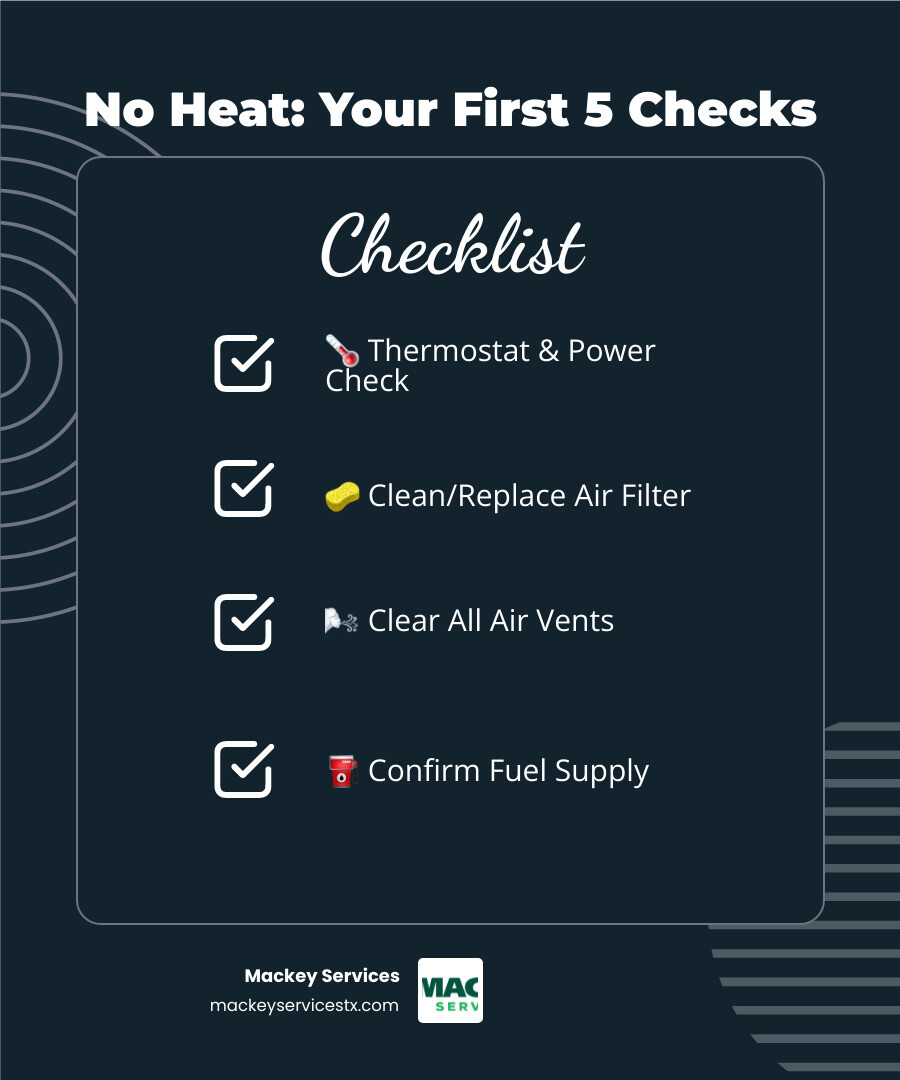
If your furnace isn’t producing heat, follow these five checks immediately:
- Thermostat – Verify it’s set to HEAT, the temperature is above room temp, and the fan is on AUTO.
- Power – Check circuit breakers and the furnace power switch.
- Filter – Replace if clogged, as this is a top cause of furnace shutdowns.
- Vents – Ensure all supply and return vents are open and unblocked.
- Fuel – Confirm the gas valve is open or your propane tank has fuel.
For expert help with any heating issue, explore our complete heating services or schedule a heating repair in League City with our certified technicians.
Many no-heat situations stem from simple issues like dirty filters or incorrect thermostat settings that homeowners can resolve. However, serious problems like gas leaks, cracked heat exchangers, or failed ignition systems require immediate professional attention for your safety.
The First Five Checks: Simple Fixes Before You Call
Before calling for emergency help, walk through the most common reasons a furnace fails. These simple checks are the foundation of any no heat from furnace diagnosis League City homeowners should know and can often restore heat without a service call.
Start With Your Thermostat: The Brain of Your System
Your thermostat is command central, so always start there. A wrong setting is a common and easily fixed issue.
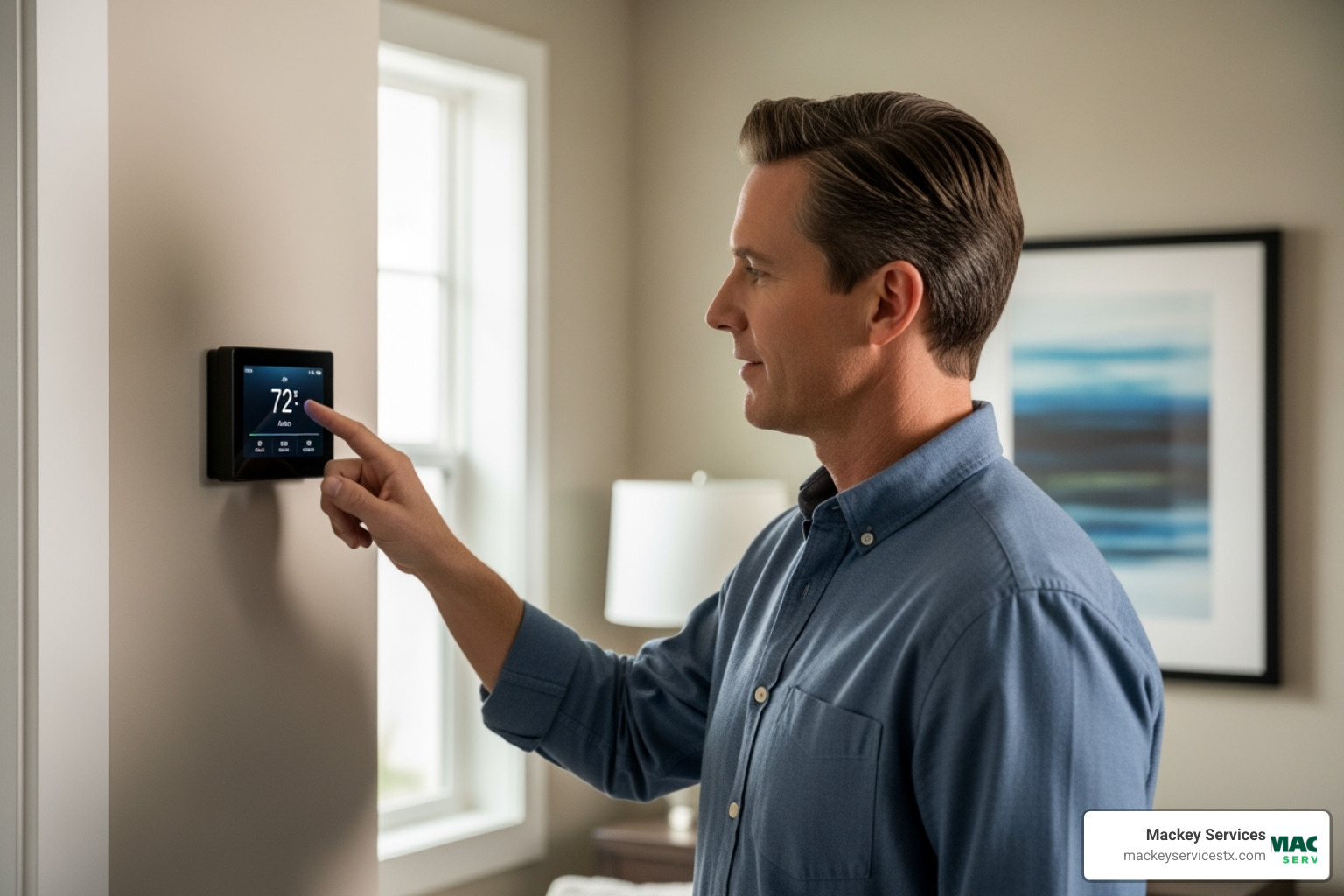
First, confirm it’s set to HEAT mode. Next, ensure the temperature is set at least a few degrees higher than the current room temperature. Also, check the fan setting. It should be on AUTO, not ON. When set to ON, the fan runs continuously, blowing air even when it’s not heated. If your thermostat display is blank, try replacing the batteries.
Check Your Power Sources
No power means no heat. Your furnace has a dedicated power switch, usually on or near the unit, that looks like a light switch. Make sure it’s in the ON position. Next, go to your circuit breaker panel and find the breaker for your FURNACE or HVAC. If it’s tripped (in the middle position), flip it completely OFF, then firmly back to ON. If it trips again, stop. This signals a serious electrical problem that needs a professional.
Replace That Clogged Air Filter
A dirty air filter is the single most common cause of furnace failures. It chokes airflow, causing the furnace to overheat and shut down as a safety measure.
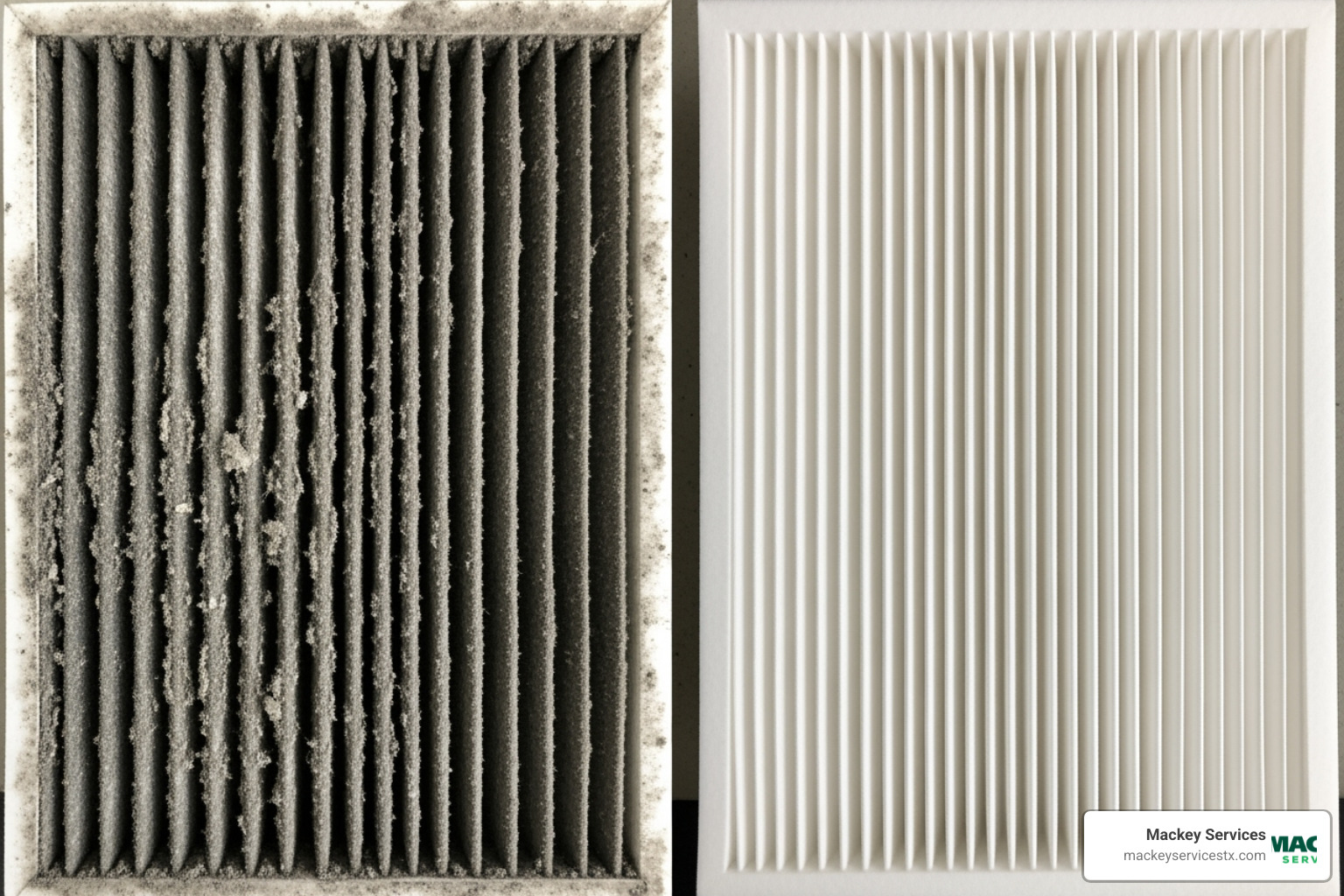
Find your filter, usually in a slot near the furnace. Pull it out and hold it to a light. If you can’t see light through it, it’s time for a new one. When installing the new filter, make sure the arrow on the frame points toward the furnace, following the direction of airflow.
Clear Those Blocked Vents
Warm air needs a clear path. Walk through your home and check that supply registers (where warm air blows out) and return air grills (where air is pulled back in) are not blocked by furniture, rugs, or drapes. Blocked vents starve your furnace for air and can lead to shutdowns.
Verify Your Fuel Supply
Your furnace can’t make heat without fuel. For gas furnaces, find the manual gas valve on the pipe leading to your unit. The handle should be parallel to the pipe, indicating it’s open. If you use propane, check the tank level to ensure you haven’t run out.
Step-by-Step No Heat From Furnace Diagnosis in League City
If the basic checks don’t solve the problem, your next steps for a no heat from furnace diagnosis in League City depend on your system type. Gas furnaces, electric furnaces, and heat pumps all have unique components that can fail. Understanding the differences helps you know what to look for. For more details on common issues, our guide on identifying the most common problems with furnaces offers valuable insights.
Here’s a quick breakdown based on your system type:
| Furnace Type | Common No-Heat Causes | DIY Checks | When to Call a Pro |
|---|---|---|---|
| Gas | Pilot light/ignitor failure, dirty flame sensor, gas valve, pressure switch, cracked heat exchanger | Check pilot light, clean flame sensor (with caution), confirm gas valve is open | Gas smell, repeated ignition failure, error codes, unusual noises, suspected cracked heat exchanger |
| Electric | Tripped breakers, heating element failure, sequencer issues, limit switch | Check dedicated breakers for heating elements, ensure power to unit | Persistent electrical issues, burning smell, no heat after breaker reset, error codes |
| Heat Pump | Iced outdoor unit, auxiliary heat failure, reversing valve, low refrigerant, defrost cycle issues | Check for heavy ice on outdoor unit, ensure auxiliary heat is enabled, clear debris | Outdoor unit heavily iced for over an hour, no auxiliary heat, persistent cold air, error codes |
Sometimes the furnace runs, but the air from the vents is cold. This often means the heating process itself has failed.
Gas Furnace Troubleshooting: Pilot Lights and Ignitors
Gas furnaces require a flame to generate heat. This is created by either a pilot light (older systems) or an electronic ignitor (newer systems).
If you have an older furnace with a standing pilot light, the small flame should be burning continuously. If it’s out, you may be able to relight it. Turn off the gas and wait five minutes for any residual gas to clear. Then, follow the manufacturer’s instructions, which usually involve turning a knob to “PILOT,” holding it down, and using a long lighter to ignite the flame. If you smell gas or are uncomfortable, stop and call a professional.
Modern furnaces use electronic ignitors. When the thermostat calls for heat, you should hear a click, see a bright orange glow or a spark, and then hear the burners ignite.
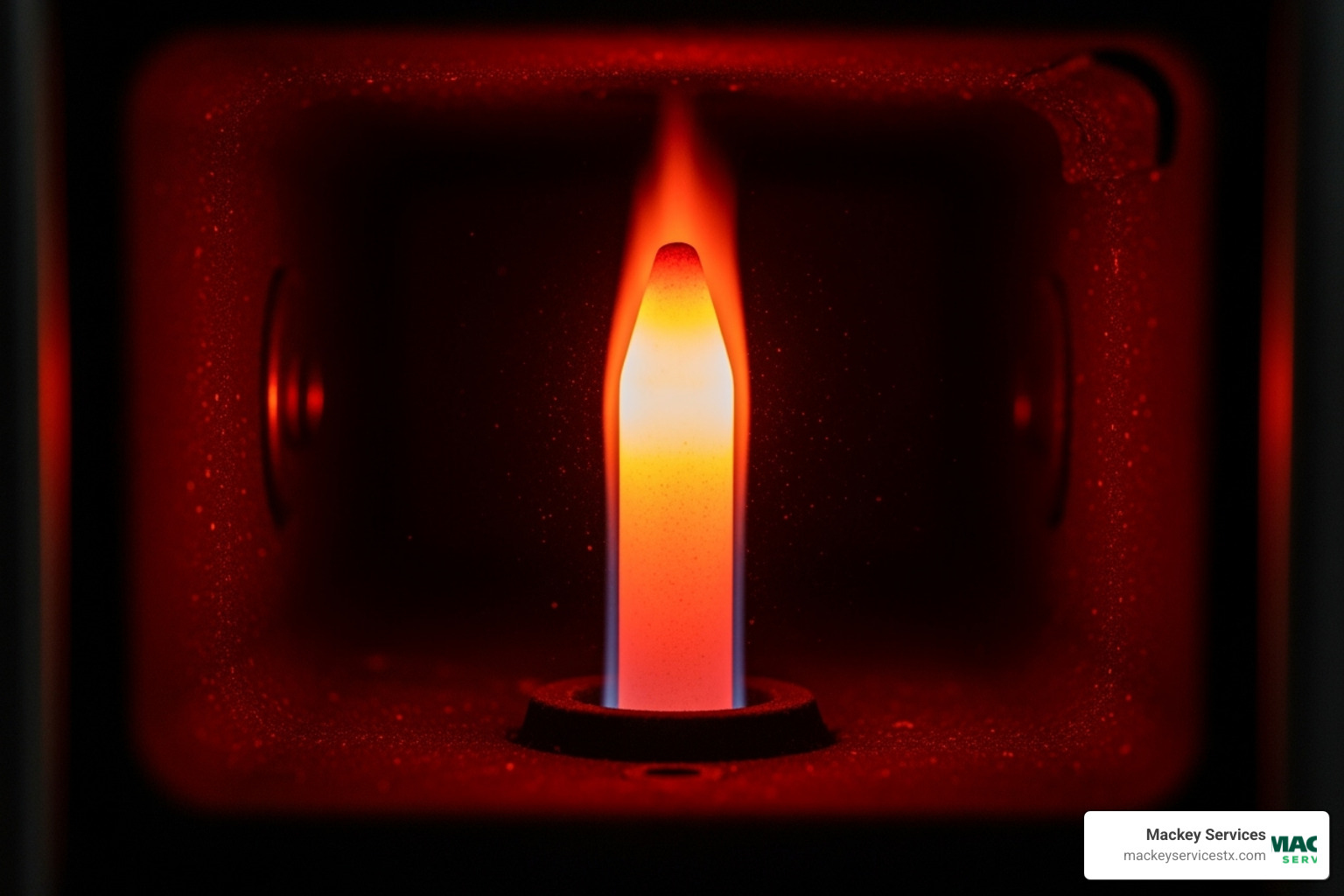
A cracked ignitor won’t glow, or it will glow but fail to light the burners. Another common issue is a dirty flame sensor, a small metal rod that confirms the flame is lit. If it’s dirty, it can’t “see” the flame and will shut the gas off for safety. This often causes the furnace to cycle on and off a few times before locking out. If you’re comfortable, you can clean it by turning off the power and gas, removing the sensor, and gently wiping it with fine steel wool.
A healthy gas flame should be mostly blue. An orange flame indicates a combustion problem and requires professional attention. Learn more about why an orange furnace flame is always a sign of trouble.
Electric Furnace & Heat Pump Issues
Electric systems use electrical resistance to create heat, leading to different potential problems.
Electric furnaces have powerful heating elements that often have their own high-amperage circuit breakers. Check your panel for any tripped breakers. If they trip again after a reset, call a professional to diagnose the electrical fault.
Heat pumps are ideal for League City’s mild winters but can be confusing. They move heat from outside to inside.
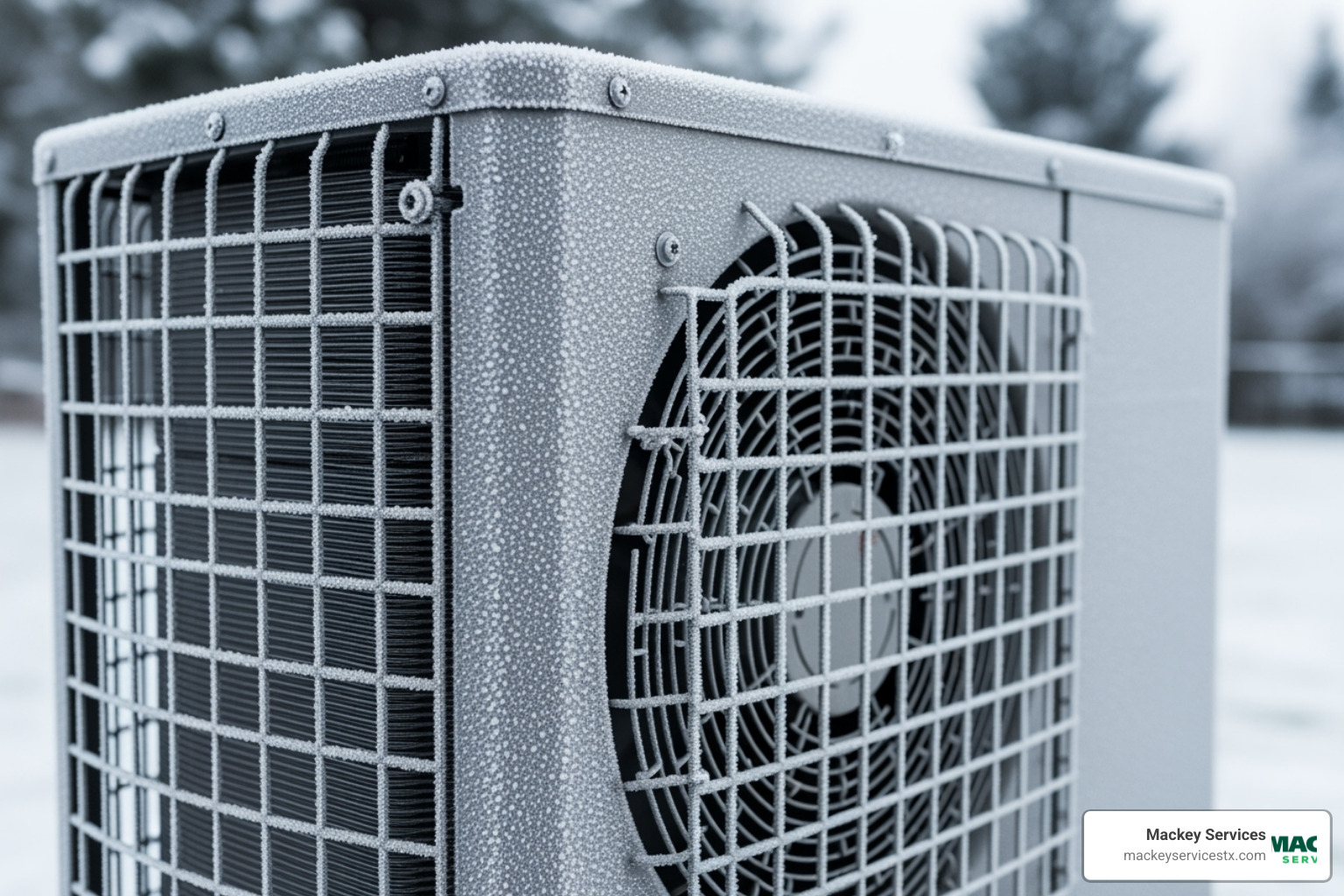
It’s normal for the outdoor unit to develop a light frost, which the system melts during a defrost cycle. However, if the unit becomes encased in thick ice, it’s a sign of a problem like low refrigerant or a faulty defrost control. If your unit is heavily iced over, turn it off and call for service.
Your heat pump’s backup is its auxiliary heat (electric strips). If it’s very cold out and your system is blowing cold air, the auxiliary heat may not be engaging due to a setting or component failure.
Understanding Diagnostic Error Codes for a no heat from furnace diagnosis in League City
Modern furnaces use a control board with an LED light to communicate problems via blink patterns. A legend inside the furnace access panel explains these error codes. Knowing the code can speed up professional repairs. Common codes include:
- Steady or Slow Blinking Light: Normal operation.
- Two Blinks: Pressure switch fault, often due to a blocked vent.
- Three Blinks: Ignition lockout, pointing to an ignitor or flame sensor issue.
- Four Blinks: Open high limit switch, usually from overheating caused by a clogged filter.
Note the blink pattern before calling for service. This information helps us diagnose the issue faster.
Safety First: When to Stop DIY and Call a Professional
While DIY diagnosis is useful for a no heat from furnace diagnosis in League City, some situations demand a professional for your safety. A furnace involves combustible fuel, high-voltage electricity, and carbon monoxide. Know when to stop and call for help.
The Rotten Egg Smell: Your Nose Knows Danger
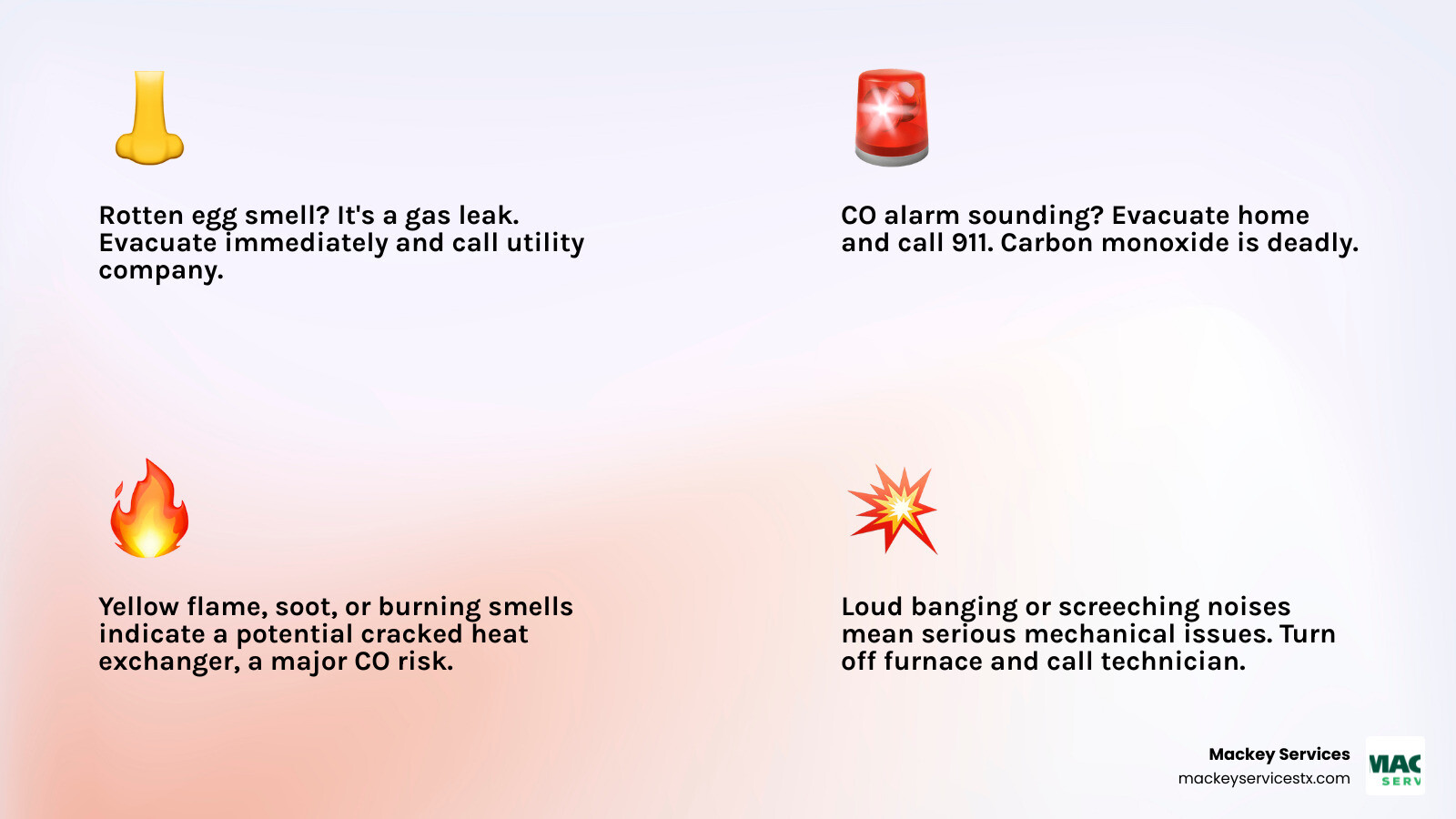
If you smell rotten eggs or sulfur, you may have a gas leak. Do not flip any switches or use any electronics. Evacuate everyone from the house immediately. Once you are safely outside, call your gas utility’s emergency line, then call us for service.
When Your Furnace Sounds Like a Horror Movie
Loud banging, grinding, or screeching noises indicate a serious mechanical failure, such as a failing blower motor. These sounds will not fix themselves. Turn off your furnace at the thermostat and the power switch and call a professional to prevent catastrophic damage.
The Silent Killer: Cracked Heat Exchangers and Carbon Monoxide
Your heat exchanger keeps combustion gases separate from your breathing air. If it cracks, deadly, odorless carbon monoxide can leak into your home. Signs include a persistent burning smell, soot buildup inside the furnace, or a yellow, flickering flame. If you notice any of these, shut down your furnace immediately and call for an inspection.
That Alarm Isn’t Crying Wolf
If your carbon monoxide detector goes off, evacuate the house immediately and call 911. Treat every alarm as a real emergency.
Water Where It Shouldn’t Be
Water pooling around your furnace can indicate a clogged condensate drain or a more serious internal leak. Turn off the system and call us to diagnose the source before it causes water damage.
The Breaker That Won’t Stay On
If your furnace breaker trips repeatedly, stop resetting it. This indicates an electrical short or overload that is a fire hazard and requires professional diagnosis.
Help Us Help You Faster
When you call for service, tell our technician the symptoms, any error codes you’ve seen, and the troubleshooting steps you’ve already taken. This information helps us arrive with the right tools and parts, restoring your heat faster. For more on why certain repairs need an expert, read about the-importance-of-hiring-professionals-for-gas-furnace-repair.
Your safety is always our top priority. When in doubt, call us out.
Preventative Care: How Maintenance Prevents No-Heat Emergencies
The best way to handle a frantic search for “no heat from furnace diagnosis League City” is to prevent the problem from ever happening. Regular, professional maintenance is the key.
Think of your furnace like a car; it needs routine service to run reliably. An annual furnace tune-up, ideally scheduled in the fall, is your first line of defense against a heating emergency.
During a tune-up, our technicians thoroughly clean critical components like burners and flame sensors, inspect all electrical connections, and test system performance. Most importantly, we perform comprehensive safety checks that you can’t do yourself, including a detailed inspection of the heat exchanger for cracks and a test for carbon monoxide leaks.
A well-maintained furnace runs more efficiently, which lowers your energy bills and extends the system’s lifespan. The most common causes of furnace failure—like dirty filters and clogged sensors—are almost always preventable with routine care. Investing in an annual tune-up dramatically reduces the odds of your furnace failing on the coldest night of the year.
Learn more in your-guide-to-furnace-maintenance and see how common-furnace-problems-that-are-easily-avoided-with-routine-maintenance don’t have to be your problem. Ready to protect your comfort? Schedule your heating-tune-up-league-city with us today.
Frequently Asked Questions about No Heat From Furnace Diagnosis in League City
When your heat goes out, questions arise. Here are answers to the most common concerns we hear during a no heat from furnace diagnosis in League City.
Why does my furnace blow cold air?
This is a frustrating problem with several possible causes:
- Thermostat Fan Setting: If the fan is set to “ON” instead of “AUTO,” it will run constantly, circulating unheated air between heating cycles.
- Safety Lockout: The furnace may have overheated due to a clogged filter. As a safety measure, it shuts off the burners but keeps the fan running to cool down.
- Ductwork Leaks: Leaks in your return ducts can pull cold air from an attic or crawlspace into your system, cooling the air before it reaches you.
- Ignition Failure: If the burners fail to light, the system will only circulate cool, unheated air.
Why does my furnace keep turning on and off?
This is called “short cycling.” It’s inefficient and signals a problem. The most common cause is restricted airflow from a clogged air filter or blocked vents, which makes the furnace overheat and shut down. Other causes include a malfunctioning thermostat, a dirty flame sensor giving a false reading, or even a furnace that is too large for your home.
Is it normal for my heat pump to be covered in frost in winter?
Yes, a light coating of frost on your outdoor heat pump unit is normal in cold, humid weather. Your system has a built-in defrost mode that automatically melts this frost. During this cycle, you might see steam rising from the unit, which is normal.
However, if the unit is encased in a thick layer of ice that doesn’t melt, you have a problem. This could indicate a malfunctioning defrost control, low refrigerant, or poor airflow. Make sure the area around your outdoor unit is clear of debris. If heavy ice persists, it’s time to call a professional for service.
Restore Your Comfort in League City
A furnace that won’t heat during a League City cold snap is miserable. You are now equipped with the knowledge to handle the most common issues behind a no heat from furnace diagnosis in League City, from checking the thermostat and filter to understanding error codes.
While DIY troubleshooting can solve many problems, some situations demand professional expertise for your family’s safety. If you smell gas, hear loud mechanical noises, or your carbon monoxide detector goes off, treat it as an emergency and call for help immediately.
At Mackey Services, we’ve been serving the Greater Houston Area for 30 years. When you hit a wall with troubleshooting or simply want the peace of mind that comes with an expert eye, we are here to help. Our long list of happy customers reflects our commitment to your comfort and safety.
A cold house doesn’t have to stay that way. Don’t spend another night shivering. Schedule your heating repair in League City with us today, and we’ll get your home back to the warm, cozy haven it should be.