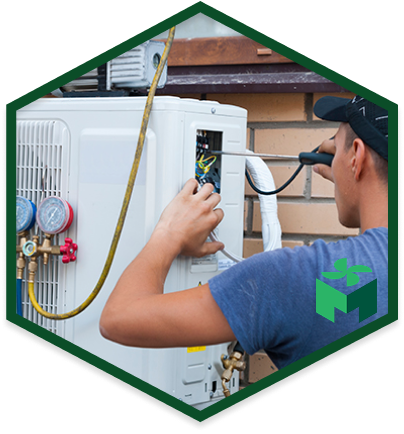
Your Installation Journey: Step-by-Step
Understanding the installation process helps homeowners prepare for our arrival and eliminates surprises. We follow a strict, standardized protocol to ensure longevity and performance. While every home is unique, the core steps remain consistent to guarantee a successful deployment.
Site Assessment and Unit Placement
The process begins with a final walkthrough to confirm the optimal location for both the indoor and outdoor units. The indoor unit is positioned high on a wall to ensure optimal air distribution, while the outdoor unit is placed on a solid surface where airflow is unobstructed. We also verify that the wall chosen for the indoor unit can support the weight and allows for proper drainage gravity.
Mounting the Indoor Bracket
Technicians secure a specialized metal mounting plate to the interior wall. This plate acts as the anchor for the air handler. We use a level to ensure the unit sits perfectly horizontal; a level unit is critical not just for aesthetics, but for the internal condensate drain pan to function correctly. If the unit is not level, water can pool and eventually leak inside the home.
Drilling the Passage
A single, three-inch hole is drilled through the wall to the exterior. We drill this hole with a slight downward slope toward the outside. This angle is essential because it allows gravity to assist the condensate water in draining away from the home. We use specialized tools to cut cleanly through drywall, siding, brick, or stucco, ensuring the structural integrity of the wall is maintained.
Running Lines and Connections
The refrigerant lines, drain tube, and communication wires are bundled together and fed through the wall. On the exterior, these lines are often encased in a protective cover (line hide) to shield them from the sun and weather, providing a neat, finished look. The connections are then torqued to manufacturer specifications to prevent refrigerant leaks.
Setting the Outdoor Unit
The condenser is placed on a pre-cast concrete pad or mounted on wall brackets to keep it off the ground. This elevation is particularly important in areas prone to heavy rain or pooling water. We secure the unit to the pad or brackets to ensure stability during high winds.
Pressure Testing and Vacuuming
Before releasing the refrigerant, we pressurize the lines with nitrogen to test for leaks. After confirming the system is sealed, we use a vacuum pump to remove all air and moisture from the lines. Moisture inside the lines can freeze or corrode the compressor, so this step is non-negotiable for system longevity.
Final Electrical and Startup
The electrical connections are finalized, and the system is powered on. We test all cooling and heating modes, check the airflow, and demonstrate how to use the remote control and programmable features.
Deciding Between Repairing and Replacing: What’s Best for You?
Homeowners often struggle with the decision to repair an aging window unit or central system versus investing in a new mini-split. While repairs might seem cheaper upfront, they are often a temporary fix for a dying system. A mini-split offers a permanent solution to specific comfort problems, particularly in room additions, converted garages, or master suites that never seem to get cool enough.
One of the primary indicators that replacement is the better option is the frequency of breakdowns. If your current cooling method requires service calls more than once a year, the cumulative cost of repairs will quickly outpace the monthly financing cost of a new mini-split. Additionally, older systems use obsolete refrigerants like R-22, which are incredibly expensive and difficult to source. If your current unit faces a compressor failure or a refrigerant leak, replacement is almost always the financially sound choice — view current specials for savings.
Consider the energy efficiency ratings (SEER). Older window units or central systems often operate at 10 to 13 SEER. Modern mini-splits installed by Mackey Services frequently operate between 20 and 30 SEER. This leap in efficiency means the new system consumes significantly less electricity to provide the same amount of cooling. If your energy bills spike disproportionately during the summer months, a high-efficiency replacement will pay for itself over time through utility savings.
Another critical factor is noise and comfort. Window units are loud and block natural light. Central systems may have leaky ducts that lose 30% of their conditioned air before it reaches the room. If you are dealing with hot spots, humidity issues that standard AC cannot handle, or excessive noise, a ductless replacement provides whisper-quiet operation and precise temperature control that repairs simply cannot achieve.
Local Guidelines and Seasonal Advice for Your New Mini-Split
Installing a cooling system in Friendswood requires attention to specific regional factors, including high humidity, salt air proximity, and storm risks. Ignoring these local variables can lead to premature equipment failure or code violations.
Humidity Control Strategies
The Gulf Coast region experiences intense humidity. Mini-splits are excellent dehumidifiers, but they must be sized correctly. An oversized unit will cool the room too quickly and shut off before it has removed the moisture, leaving the air feeling clammy. We ensure precise load calculations to keep the unit running long enough to pull moisture from the air, preventing mold growth and increasing comfort.
Hurricane and Storm Security
During hurricane season (June through November), high winds are a legitimate threat. Local building codes often require the outdoor condenser unit to be anchored securely. We utilize hurricane straps or bolt the unit directly to a concrete pad to prevent it from shifting or tipping during severe weather. Elevating the unit is also recommended to protect against localized flooding or standing water.
Corrosion Protection
While not directly on the beach, the air in the region can still accelerate corrosion on the condenser coils. We recommend checking the outdoor unit regularly for debris and ensuring the coil coating remains intact. Some homeowners opt for additional protective coatings on the fins to extend the lifespan of the equipment in humid, saline environments.
Permitting and Electrical Codes
Modifying your home’s electrical system to accommodate a mini-split requires a permit in most jurisdictions. This ensures the electrical load does not overwhelm your panel and that safety disconnects are installed correctly. We handle the permitting process to ensure your installation is compliant with city and state regulations, protecting your home’s value and insurance validity.
Seasonal Maintenance
Although winters are mild, the reversing valve on a mini-split allows it to provide heating as well. Before the cooler season arrives, it is vital to clean the air filters. Clogged filters restrict airflow, forcing the system to work harder and reducing its lifespan. Regular filter cleaning is the single most effective maintenance task a homeowner can perform.
Why Choose Us? Our Guarantees and Customer Promises
Selecting a contractor for your home improvement project is a decision based on trust and reliability. We differentiate ourselves through a commitment to technical excellence and respect for your property. We do not use subcontractors for our core installations; our team consists of trained technicians who understand the specific nuances of ductless technology.
Transparent Pricing Model
You will never encounter hidden fees or surprise charges on your invoice. We provide a transparent pricing model that covers labor, equipment, electrical work, and materials. The price we quote is the price you pay, allowing you to budget with confidence.
Property Protection Guarantee
We treat your home with the highest level of respect. Technicians use drop cloths to protect flooring and wear shoe covers while inside. We clean up all drilling dust and packaging materials, leaving your home exactly as we found it, only cooler.
Post-Installation Support
Our relationship does not end when the unit turns on. We stand behind our workmanship with strong labor warranties. If an issue arises related to the installation, we return to fix it. We also take the time to educate you on the remote control functions so you can maximize the efficiency and comfort of your new system immediately.
Licensed and Insured
We carry full liability insurance and state licensing. This protects you from liability in the rare event of an accident and ensures that all work is performed to the rigorous standards required by the state of Texas.
Secure your comfort today. Do not let another day of heat and humidity ruin your time at home. Trust Mackey Services to deliver a high-performance cooling solution tailored to your needs.