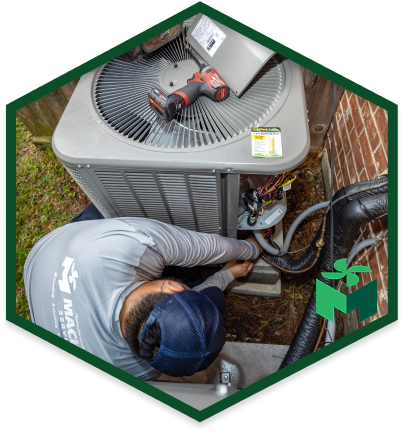
What Our Service Includes: Quick Diagnosis and Efficient Repair
We provide a comprehensive scope of work designed to identify the root cause of the failure rather than just treating the symptom. When a technician arrives, the objective is to restore system integrity through a methodical inspection of mechanical and electrical components.
HVAC System Services
The humidity in this region contributes to specific failures in climate control systems. Our diagnostic and repair process covers every critical component of your heating and cooling infrastructure.
- Refrigerant leak detection and recharge: Low refrigerant often indicates a leak that can freeze coils and strain compressors. We repair the leak and recharge the system to manufacturer standards.
- Electrical component replacement: Many HVAC failures start with faulty capacitors, contactors, or relays. We diagnose and replace components that interrupt thermostat communication.
- Airflow and ductwork analysis: Blocked or leaking ducts reduce efficiency. We evaluate static pressure and seal leaks for balanced airflow.
- Condensate drain cleaning: Humidity causes excess moisture. We clear drain lines and repair float switches to prevent water damage.
- Heating element and heat exchanger inspection: We inspect exchangers for cracks and test ignition sequences for consistent, safe operation.
Electrical System Services
Electrical work requires strict compliance with safety codes. Our services address emergency failures as well as system upgrades for modern electrical demands.
- Panel upgrades and breaker replacement: If your panel overheats or breakers trip constantly, we upgrade the service to safely handle current loads.
- Wiring and rewiring: We correct outdated wiring, including aluminum wiring remediation, to reduce fire risks and ensure proper grounding.
- Surge protection installation: Coastal storms bring lightning and surges. Whole-home protection safeguards appliances and electronics.
- Outlet and switch repair: We replace loose outlets, install GFCI protection, and resolve flickering lighting circuits.
Our Seamless Repair Process: From Call to Completion
We follow a structured workflow to ensure transparency, efficiency, and confidence at every stage.
- Initial assessment: Upon arrival, the technician conducts a safety check and runs diagnostics using multimeters, gauges, and electrical testing tools.
- Clear explanation and quote: You receive a detailed explanation of the issue, along with a flat-rate quote covering parts and labor.
- Execution of work: With your approval, repairs are completed immediately using fully stocked service trucks.
- System testing and verification: Systems are cycled through all modes to ensure the repair is durable and safe.
- Site cleanup: All debris, old parts, and packaging are removed.
- Final walkthrough: The technician reviews the completed work, warranty details, and answers your questions.
Deciding Between Repair and Replacement: What You Need to Know
Homeowners often struggle with whether to repair an existing system or invest in a replacement. Age, cost, efficiency, and long-term reliability all influence this decision.
The 50% Rule
If a repair approaches or exceeds 50% of the system’s value, a replacement is generally the more financially sound option. Investing heavily in an aging system often leads to additional breakdowns.
System Age and Efficiency
HVAC systems in this region typically last 10 to 15 years due to heavy workload. If your unit is over 10 years old and needs a major component, replacement offers better long-term value. New units also provide higher efficiency ratings that reduce utility costs. The same applies to electrical panels over 25 years old — a full upgrade improves safety and capacity.
Frequency of Breakdowns
Multiple repairs within two years typically indicate the unit has reached the end of its lifecycle. Continual fixes become costly and inconvenient, making replacement the more reliable option.
Home Comfort Consistency
If your system struggles with temperature consistency, indoor humidity, or causes lights to flicker when appliances run, the system is likely undersized or outdated. Replacing the system allows for accurate resizing and enhanced performance.
Understanding La Porte’s Permits & Seasonal HVAC Needs
Working in this region requires knowledge of local codes, climate conditions, and permitting processes.
Permitting and Code Compliance
Any electrical or HVAC work involving circuit changes, system replacements, or panel upgrades requires proper city permits. Municipal inspections ensure adherence to the National Electrical Code and local amendments. We handle all permitting and inspection scheduling.
Seasonal Preparation
Climate and weather patterns determine maintenance requirements.
- Hurricane preparedness: Electrical systems need grounding checks before storm season; generators require annual service.
- Humidity control: High humidity strains AC units. Spring coil cleaning, leak checks, and refrigerant adjustments are essential.
- Winter safety: Rare freezes test heating elements and gas furnaces. Heating strips and flues must be inspected for safe operation.
Why Choose Us? Licensed Experts Committed to Your Comfort
Selecting a contractor requires evaluating technical competence and operational reliability. Our team holds state licenses for both HVAC and electrical work, ensuring every service meets regulatory standards. Liability insurance and workers’ compensation further protect your property and investment.
We use advanced diagnostic tools such as thermal imaging for panel hot spots and digital manometers for airflow precision. Our technicians receive continuous training to stay aligned with evolving efficiency standards and smart home technologies.
We stand behind our workmanship with warranties on parts and labor. If a fixed issue reoccurs, we return to make it right — read our reviews. Choosing us means choosing reliability, safety, and long-term performance.