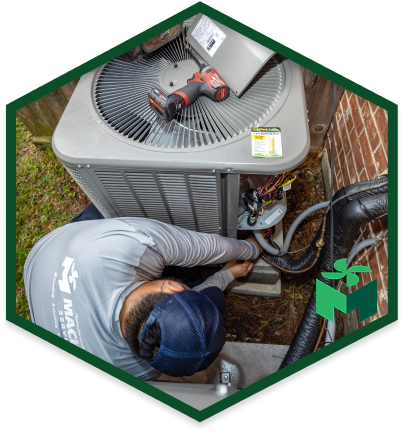
What Our Service Includes: Speed, Efficiency, and Transparency
When you request service, the objective is to minimize downtime and eliminate safety risks. The process begins with a dispatch of a fully stocked vehicle, ensuring that technicians have access to the most common parts for both electrical and HVAC repairs. This reduces the need for multiple trips and accelerates the restoration of your home’s systems.
Diagnostic and Repair Scope:
- Electrical Safety Inspection: Technicians examine the main electrical panel, checking for corrosion, loose connections, or signs of overheating. This includes testing circuit breakers to ensure they trip correctly under load and inspecting grounding systems which are vital during local storm seasons.
- HVAC System Analysis: For cooling issues, the focus shifts to refrigerant levels, compressor health, and airflow restrictions. In heating scenarios, the heat exchanger and ignition systems are tested for carbon monoxide leaks and efficiency.
- Component Isolation: We isolate the specific component causing the failure—whether it is a faulty capacitor in the condenser, a burnt wire in a junction box, or a seized motor.
- Drainage and Moisture Control: Given the high rainfall and humidity in the region, checking condensate drains for blockages is standard procedure to prevent water damage and biological growth within the system.
Operational Transparency:
- Upfront Explanations: Before any tool touches a bolt for repair, you receive a clear explanation of the problem. This includes the root cause, such as why a breaker keeps tripping or why the evaporator coil froze over.
- Flat-Rate Solutions: You are presented with repair options that include all labor and parts. There are no hidden fees for “emergency hours” once the quote is approved.
- Documentation: Every service call concludes with detailed documentation of what was done, the health of the system, and any recommendations for future maintenance to prevent unexpected breakdowns.
Your Guide to Our Hassle-Free Installation Process
There comes a point where a system is beyond reliable repair, or you simply need to upgrade to handle the energy demands of a modern household. Installation of new electrical panels, generators, or HVAC units is a rigorous process governed by safety codes and efficiency standards. We manage the entire project lifecycle, ensuring that the new equipment performs according to manufacturer specifications.
- Load Calculation and Sizing: First, we perform a detailed assessment. For HVAC, this involves a Manual J load calculation to determine the exact cooling and heating BTUs required for your specific square footage and insulation levels. For electrical work, we calculate the total amperage load of your home to determine if your panel requires an upgrade to support new appliances or HVAC units.
- Site Preparation and Protection: Next, we prepare the workspace. This involves laying down drop cloths to protect flooring and setting up safety perimeters around electrical panels or outdoor condenser units. We ensure that power is safely disconnected before any removal begins.
- Removal and Disposal: Then, we carefully disconnect and remove old equipment. We handle the environmentally safe disposal of refrigerant gases and old electrical components, ensuring compliance with EPA regulations.
- System Installation: Afterward, the new equipment is installed. This includes brazing copper lines for AC units, running new conduits for electrical circuits, and securing connections to prevent vibration or loosening over time.
- Testing and Commissioning: Finally, the system is commissioned. We do not just turn it on; we measure airflow, check voltage drops, and verify that the thermostat communicates correctly with the furnace and AC. For electrical panels, we label every breaker clearly and test the grounding system.
Deciding Between Repair and Replacement: A Quick Guide
Homeowners often struggle with the decision to repair a faltering unit or invest in a replacement. This decision should be based on data, safety, and long-term financial sense, rather than just the immediate cost of a repair.
When to Repair:
- The System is Young: If your HVAC unit is under 10 years old or your electrical wiring was updated recently, repair is usually the most cost-effective path.
- Minor Component Failure: If the issue is isolated, such as a bad contactor, a blown fuse, or a single damaged wire, swapping out the part restores full functionality without compromising the system.
- Warranty Coverage: If the unit is still under a manufacturer’s warranty, repair costs are significantly lower, making it the logical choice.
When to Replace:
- The 50% Rule: If the cost of the repair approaches 50% of the value of a new system, replacement is the smarter financial move — view our current specials online.
- Obsolete Technology: If you have an AC unit utilizing R-22 refrigerant (which is phased out and expensive) or an electrical panel from brands known for safety failures (like Federal Pacific or Zinsco), replacement is a safety necessity, not just a preference.
- Inefficiency and Energy Bills: Older HVAC systems and outdated electrical setups are inefficient. If you notice rising utility bills despite normal usage, modern high-efficiency equipment can offset the installation cost through monthly savings.
- Safety Hazards: Any signs of scorching on outlets, a burning smell from the heater, or a cracked heat exchanger dictate immediate replacement to prevent fire or carbon monoxide poisoning.
Local Insights: Weather Challenges and Permit Guidelines in La Marque
Operating in this specific region of Texas requires a deep understanding of environmental factors that generic service providers might overlook. La Marque experiences roughly 50 inches of rain annually, alongside high humidity levels that persist for most of the year. This environment is hostile to electrical and mechanical equipment.
Humidity and Corrosion:
The proximity to the coast means salt air and moisture can accelerate corrosion on outdoor condenser coils and electrical service masts. We utilize corrosion-resistant materials and recommend specific coatings for HVAC coils to extend their lifespan. Furthermore, the high humidity puts a heavy latent load on air conditioners. An oversized unit will cool the air too quickly without removing humidity, leading to a clammy indoor environment and mold growth in ductwork. Correct sizing is non-negotiable here.
Hurricane Season Preparation:
Late summer brings the threat of hurricanes. This reality drives the need for reliable backup power solutions. We frequently install transfer switches and standby generators to ensure homes remain functional during grid outages. Additionally, securing outdoor HVAC units with hurricane straps is a critical step in our installation process to prevent wind damage.
Permitting and Codes:
Electrical and HVAC work involves strict adherence to local building codes. Major installations, such as replacing a main breaker panel or installing a new central air system, require permits. This ensures that the work meets safety standards and protects your home’s resale value. Unpermitted work can lead to fines and complications during insurance claims. We handle the permitting process, coordinating with local inspectors to ensure all work passes inspection on the first attempt.
Why Choose Us: Licenses, Reviews, and Service Guarantees
Selecting a contractor for your home’s critical systems is a decision that impacts your safety and comfort for years. We differentiate ourselves through a commitment to technical excellence and verified credentials — read our customer reviews to learn more.
- Dual Expertise: Few companies offer true expertise in both HVAC and electrical trades. Our team allows you to solve complex, cross-system issues with a single call, ensuring that your AC has the clean power it needs to run efficiently.
- Licensed and Insured: We carry full licensing for both mechanical and electrical work. This protects you from liability and ensures that every technician on your property has undergone rigorous training and background checks.
- Warranty on Workmanship: We stand behind our repairs and installations with solid warranties. If a fixed issue recurs within the warranty period, we return to make it right at no cost to you.
- Focus on Safety: Our protocols go beyond getting the lights on or the air blowing. We perform safety checks on every visit, looking for potential fire hazards or gas leaks that could endanger your family.