
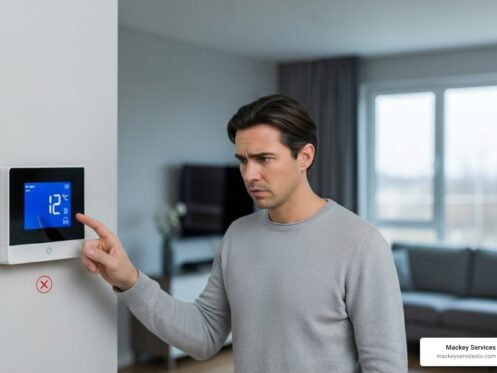
When Your Furnace Fails During a Pasadena Cold Snap
It’s cold and I have no heat from furnace pasadena. Who provides emergency heating repair? When your furnace stops working during cold weather, you need immediate help. Several HVAC companies in the Greater Houston area offer 24/7 emergency heating repair services, including licensed contractors with NATE-certified technicians who can respond quickly to restore warmth and safety to your home.
Quick action steps when you have no heat:
- Check your thermostat – Verify it’s set to “heat” mode and the temperature is higher than the current room temperature
- Inspect your circuit breaker – Make sure the furnace breaker hasn’t tripped
- Look at your air filter – A clogged filter can shut down your system
- Verify the furnace power switch – Ensure it hasn’t been accidentally turned off
- Call a licensed emergency HVAC service – If basic checks don’t solve the problem, professional help is needed
Even in the Greater Houston area’s generally mild climate, cold snaps happen, and when they do, a working heater becomes essential for your family’s comfort and safety. A furnace failure isn’t just an inconvenience—it can lead to frozen pipes, health risks for vulnerable family members, and worsening damage to your heating system if not addressed promptly.
For comprehensive furnace maintenance and repair services, or to schedule emergency HVAC service now, professional technicians are standing by to help.
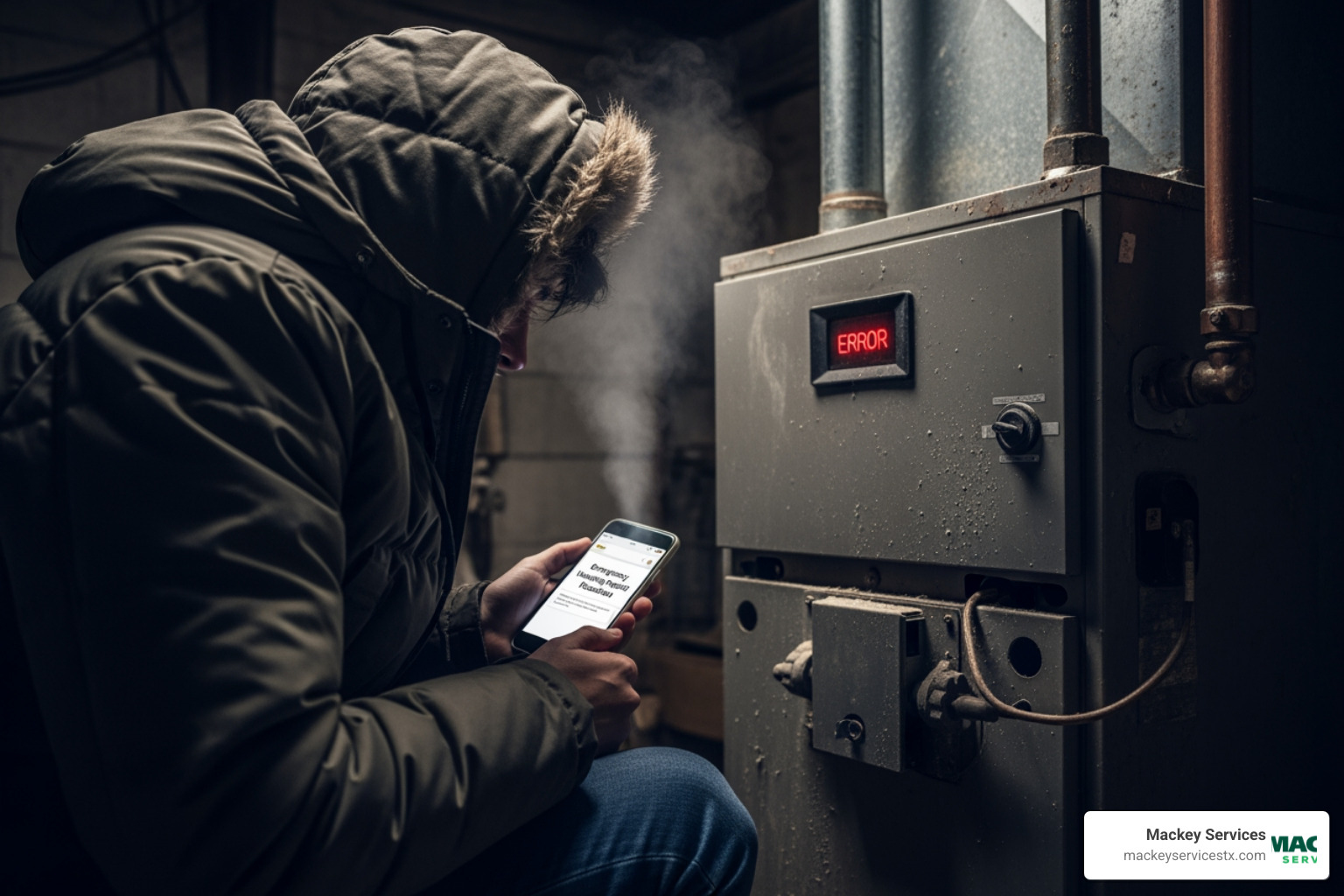
What are the Common Signs My Furnace Needs Emergency Repair?
When your furnace decides to take an unexpected vacation, it often sends out distress signals long before it completely shuts down. Recognizing these common signs can help us address issues before they escalate into full-blown emergencies, keeping our Pasadena homes warm and comfortable.
One of the most immediate indicators that something is amiss is inadequate heating. If your furnace is running but your home still feels chilly, or if you notice cold spots in certain rooms despite the thermostat being set high, your furnace might be struggling to distribute heat effectively. This could be due to issues like a clogged air filter or problems with the airflow system, which can strain other components and lead to larger issues if ignored.
Strange noises emanating from your furnace are another tell-tale sign. While furnaces aren’t silent, new or unusual sounds demand attention. Listen for:
- Banging sounds: Often indicates issues with the ductwork expanding and contracting, or problems within the blower motor.
- Squealing noises: Could point to a worn-out fan belt or issues with the blower motor bearings.
- Rattling: Might signal loose panels or components, or even a foreign object inside the unit.
Unusual smells are also critical warning signs. While a slight musty odor when the heater is first turned on after a season of disuse is often normal (just burning off accumulated dust), persistent or strong odors are not.
- A burning plastic smell or the odor of burning wires should prompt immediate action – turn off your system and call for professional help.
- A rotten egg odor is extremely serious, indicating a potential gas leak. If you smell this, evacuate your home immediately, call your gas company from a safe location, and then contact us for emergency repair.
Another common symptom is frequent cycling, where your furnace turns on and off too often in short intervals. This “short-cycling” isn’t just annoying; it can drastically shorten your furnace’s lifespan, increase energy bills, and indicates an underlying problem that needs professional diagnosis. It could be due to a clogged air filter, a malfunctioning thermostat, or even an improperly sized furnace for your home’s square footage.
Often, these issues stem from neglected maintenance. Regular upkeep is crucial, as issues like clogged filters and dirty components force the system to overwork, leading to premature failure. Our guide on common furnace problems that are easily avoided with routine maintenance highlights how simple preventative measures can save you from an emergency repair.
The Critical Warning Sign of a Yellow Pilot Light
Among all the warning signs, a yellow or flickering pilot light on a gas furnace is perhaps the most critical and demands immediate professional attention. A healthy pilot light should always be a steady blue flame. If we observe anything other than this, it’s a significant red flag.
This discoloration indicates incomplete combustion of natural gas, which can lead to the production of deadly, odorless carbon monoxide. Carbon monoxide is a silent killer, and its presence in your home is an extreme safety hazard. This dangerous condition can be caused by a dirty pilot opening or poor ventilation within the furnace.
If you ever see a yellow or flickering pilot light, do not attempt to fix it yourself. We urge you to take this warning sign seriously. Leave your home, ensure everyone is safe, and contact your gas company to shut off the gas supply. Then, call us for immediate professional attention. We cannot overstate the importance of prompt action when it comes to potential carbon monoxide leaks. While the external link provided discusses electric heaters, the underlying principle of recognizing critical warning signs like a yellow pilot light in a gas furnace is universally important for safety, as highlighted by our research which states: “A yellow or flickering pilot light on a gas furnace is a critical warning sign indicating incomplete combustion and potential carbon monoxide production, requiring immediate professional attention.” You can learn more about general heater operation and safety principles, which apply to various heating systems, by reviewing resources such as this guide on the ins-and-outs of heater operation (referring specifically to the pilot light information provided in the research snippet).
What to Do Immediately and Who Offers 24/7 Emergency Service in Pasadena
When your furnace suddenly goes out, especially during a cold spell, it can be a jarring experience. Our first priority should always be safety, followed by taking immediate steps to troubleshoot and then seeking professional help if needed.
Basic Checks to Perform if Your Furnace Stops Working
Before picking up the phone for an emergency service call, there are a few basic checks we can perform that might resolve the issue or at least provide valuable information to our technicians:
- Check thermostat settings: Ensure your thermostat is set to “HEAT” mode and that the desired temperature is several degrees higher than the current room temperature. Sometimes, a simple adjustment is all that’s needed.
- Replace thermostat batteries: If your thermostat is battery-powered and the display is blank or flickering, fresh batteries might bring it back to life.
- Inspect air filter: A severely clogged or dirty air filter can restrict airflow, causing your furnace to overheat and shut down as a safety measure. Replace it if it looks dirty. Neglected maintenance, including clogged filters, is a leading cause of heater failure.
- Check circuit breaker: Head to your electrical panel and look for a tripped breaker labeled “FURNACE” or “HVAC.” If it’s tripped, flip it completely off and then back on. If it trips again immediately, do not reset it repeatedly; this indicates an electrical problem requiring professional attention.
- Ensure furnace power switch is on: There’s usually a light switch-like toggle near your furnace. Make sure it’s in the “ON” position. It’s often accidentally turned off by homeowners or children.
- Verify gas valve is open: For gas furnaces, locate the gas shut-off valve on the gas line leading to the furnace and ensure it’s in the “ON” or open position (parallel to the pipe).
If these basic checks don’t bring your furnace back to life, it’s time to call in the experts.
Who offers 24/7 emergency furnace repair services in Pasadena?
When you find yourself saying, “It’s cold and I have no heat from furnace pasadena. Who provides emergency heating repair?” the answer often lies with local HVAC companies that prioritize customer comfort and safety. Many HVAC companies, including our own, understand that heating emergencies don’t adhere to a 9-to-5 schedule. That’s why we offer 24/7 availability for emergency heating services across the Greater Houston Area, including Pasadena, League City, and Friendswood.
Our commitment to providing prompt and reliable service means we have local technicians ready to respond to urgent issues like a furnace failure during cold weather. Companies like ours offer quick response times because we know that every minute without heat in the winter counts. Whether you’re in Pasadena, League City, or Friendswood, our goal is to get your heating system back up and running as quickly and efficiently as possible. We are proud to offer HVAC same-day service for immediate needs, ensuring that you and your family don’t have to endure uncomfortable temperatures for long.
It’s cold and I have no heat from furnace pasadena. Who provides emergency heating repair?
Understanding what constitutes an emergency furnace repair is crucial. It’s not just about discomfort; it’s often about safety and preventing further damage. When we talk about, “It’s cold and I have no heat from furnace pasadena. Who provides emergency heating repair?” we’re looking for swift, professional intervention for situations that demand immediate attention.
What Factors Determine if a Furnace Repair is an Emergency?
Not every furnace issue requires a middle-of-the-night service call, but many certainly do. We consider several factors when determining if a furnace repair is an emergency:
- Safety hazards: This is our top concern. Any indication of a gas leak (like a rotten egg smell) or a carbon monoxide alarm going off immediately escalates the situation to an emergency. Electrical issues, such as sparks, burning smells, or frequently tripping breakers, also fall into this category as they pose fire risks.
- Extreme cold weather: If temperatures are dropping significantly, especially below freezing, a lack of heat becomes an emergency. Beyond discomfort, this can lead to serious problems like frozen pipes.
- Vulnerable household members: The presence of infants, the elderly, or individuals with health conditions (such as respiratory illnesses or weakened immune systems) makes a furnace failure an immediate emergency. Their bodies are less able to regulate temperature, putting them at higher risk from cold exposure.
In these scenarios, the goal is not just to fix the furnace but to restore a safe and healthy environment as quickly as possible. This highlights the importance of hiring professionals for gas furnace repair, especially when safety is on the line.
What are the Risks of Not Addressing a Furnace Failure Promptly?
Delaying furnace repair, particularly in emergency situations, can lead to a cascade of problems that are far more costly and dangerous than the initial fix.
- Frozen pipes: One of the most common and expensive risks of prolonged heating loss in cold weather is frozen water pipes. As temperatures drop, the water inside uninsulated pipes can freeze and expand.
- Burst pipes: This expansion can cause pipes to burst, leading to significant water damage to your home’s structure, flooring, and belongings. Repairing burst pipes and the resulting water damage can be a major headache and expense.
- Worsening furnace damage: A small, easily repairable issue can quickly escalate into a more complex and expensive problem if ignored. For example, a minor electrical fault could lead to a complete system breakdown, or a struggling motor could seize up entirely.
- Complete system failure: Continuous operation with a fault can push your furnace beyond repair, necessitating a full replacement rather than a simpler fix.
- Fire hazards: Electrical issues or gas leaks that are not addressed promptly can lead to fires or explosions, posing severe threats to life and property.
- Health risks from cold: Exposure to cold temperatures, particularly for vulnerable individuals, can lead to hypothermia, exacerbate existing health conditions, and generally compromise well-being.
Ignoring a furnace failure is never a good idea. Our goal is to prevent these risks by providing prompt, reliable emergency repair services.
What Qualifications Should I Look for in an Emergency Heating Repair Service?
When facing a heating emergency, choosing the right service provider is paramount. We want to ensure that the technicians arriving at our Pasadena home are not only capable but also trustworthy and professional. Here are the key qualifications we recommend looking for:
- Licensed Contractors: A state license is a non-negotiable requirement. In Texas, HVAC contractors must be licensed by the Texas Department of Licensing and Regulation (TDLR). This proves that the company and its technicians meet the state’s standards for competency and safety. It’s crucial for homeowners to always verify a contractor’s license is active and in good standing.
- Insured and bonded: This protects us, the homeowner, in case of accidents, damages, or incomplete work during the repair process. It’s a sign of a responsible and reputable company.
- NATE-certified technicians: NATE (North American Technician Excellence) certification is a voluntary, industry-recognized certification that signifies a technician’s advanced knowledge and competency in HVAC systems. NATE-certified technicians are trained to diagnose and repair equipment of all brands, ensuring a high level of expertise.
- Years of experience: A long-standing presence in the community often indicates a proven track record of reliability and expertise. With over 30 years of experience, we bring a deep understanding to every job, ensuring we’ve seen and successfully tackled a wide range of furnace issues.
- Positive customer reviews: Online reviews on platforms like Google, Yelp, or the Better Business Bureau offer insights into a company’s customer service, professionalism, and the quality of their work. Look for consistent praise regarding their responsiveness, diagnostic skills, and overall customer satisfaction.
- 24/7 service guarantee: For emergency situations, knowing that a company offers round-the-clock service is essential. This ensures that help is available whenever a crisis strikes, not just during business hours.
By looking for these qualifications, we can confidently choose an emergency heating repair service that will restore warmth and safety to our homes efficiently and effectively.
How to Prepare for the Emergency Repair Technician
When we’ve called for emergency furnace repair, there are a few things we can do to make the technician’s visit as smooth and efficient as possible. This preparation not only helps us feel more in control but also allows the technician to diagnose and resolve the issue more quickly.
Can I Perform Any Temporary Fixes Myself While Waiting for Emergency Repair?
While waiting for our emergency heating repair technician, our priority is to stay warm and safe. There are some safe temporary heating methods we can employ:
- Using space heaters safely: If you have electric space heaters, use them in occupied rooms. Ensure they are placed on a flat, stable surface, away from anything flammable (curtains, furniture), and never leave them unattended, especially overnight. Plug them directly into wall outlets, not extension cords, to prevent overloading circuits.
- Closing off unused rooms: This helps concentrate the available heat (from space heaters or residual warmth) in the areas you are using, making them feel warmer.
- Layering clothing and blankets: Simple, old-fashioned methods work! Wear multiple layers of clothing and use plenty of blankets to stay warm.
- Avoiding unsafe heating methods: Critically, do not use your oven for heat. Ovens are not designed for space heating and can produce dangerous levels of carbon monoxide, posing a severe health risk. Similarly, avoid using outdoor grills or unvented combustion appliances indoors.
These temporary measures are meant to keep us comfortable until professional help arrives. They are not substitutes for a properly functioning furnace. Regular maintenance, as outlined in your guide to furnace maintenance, can help prevent the need for these temporary fixes in the first place.
What information should I have ready when calling for emergency furnace repair?
When you call us for emergency furnace repair, having specific information readily available can significantly speed up the diagnostic and repair process. Our customer service representative or technician will appreciate your preparedness. Here’s a list of key information to provide:
- Furnace make and model: This helps us understand the type of system we’re dealing with and allows us to anticipate potential issues or necessary parts. The make and model are usually found on a label inside the furnace cabinet.
- Age of the unit: Knowing how old your furnace is can give us an idea of its expected lifespan and common issues for that age range.
- Description of the problem: Be as detailed as possible. Did it make a strange noise before it stopped? Did it just suddenly shut off?
- Specific noises or smells: If you heard banging, squealing, or rattling, or smelled anything unusual (like rotten eggs or burning plastic), describe these as accurately as you can. This can be crucial for diagnosing the issue.
- Troubleshooting steps already taken: Inform us about the basic checks you’ve already performed (e.g., checked the thermostat, replaced batteries, inspected the air filter, reset the circuit breaker, verified the gas valve). This prevents duplicate efforts and helps us narrow down the possibilities.
- Your contact information and address: Ensure we have your correct phone number and street address in Pasadena so our technicians can reach you promptly.
Having this information ready allows us to dispatch the right technician with potentially the right tools or parts, leading to a faster resolution for your heating emergency.
Conclusion: Restoring Warmth and Safety to Your Pasadena Home
When faced with the urgent question, “It’s cold and I have no heat from furnace pasadena. Who provides emergency heating repair?” we understand the stress and discomfort it brings. We’ve explored the critical signs of furnace trouble, from strange noises and unusual smells to inadequate heating and the dangerous yellow pilot light. We’ve also armed ourselves with immediate troubleshooting steps and recognized the severe risks of neglecting a furnace failure, such as frozen pipes and health hazards.
The importance of prompt action cannot be overstated. Choosing a qualified emergency heating repair service, one that is licensed, insured, NATE-certified, and offers 24/7 availability, is paramount for restoring safety and comfort to your home. Preparing for the technician’s arrival by having key information ready and implementing safe temporary fixes can make a significant difference in the speed and efficiency of the repair.
Our commitment is to provide reliable and professional HVAC solutions to the Pasadena community and the entire Greater Houston Area. When your furnace leaves you in the cold, you can trust us to deliver the expert care you need. Don’t let a heating emergency disrupt your peace of mind or compromise your family’s safety.
For reliable HVAC solutions and prompt emergency heating repair in Pasadena, contact us today. We are here to ensure your home remains a haven of warmth and comfort, no matter the weather outside.