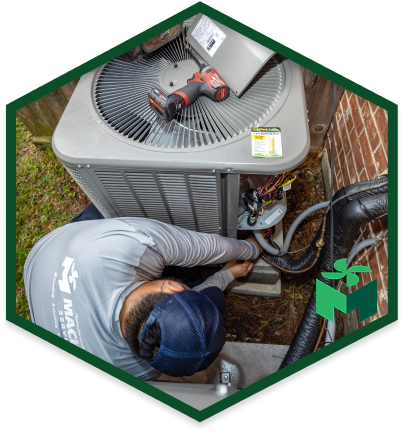
Tailored Solutions Today: From Assessment to Implementation
When you schedule an IAQ service, the goal is to implement a system that works passively to clean your air 24/7. We do not rely on portable units that only address single rooms; we focus on whole-home solutions integrated directly into your central heating and cooling system.
Whole-Home Dehumidification Systems
High humidity is the enemy of indoor air quality. While your air conditioner removes some moisture, it is not designed to handle the heavy latent load of a Texas summer. A dedicated whole-home dehumidifier works in conjunction with your HVAC system to maintain relative humidity levels between 30% and 50%. This prevents the proliferation of dust mites and mold, which thrive in environments above 50% humidity. We size these units based on the square footage of your home and the specific infiltration rates of your building envelope.
Advanced Media Air Cleaners
Standard one-inch filters are designed primarily to protect your furnace, not your lungs. We install high-efficiency media air cleaners that provide a significantly larger surface area for filtration. These systems capture much smaller particles, including pollen, pet dander, and fine dust, without restricting airflow to the point of damaging your HVAC equipment. The installation involves modifying the return drop of your ductwork to accommodate the larger cabinet required for these thick, pleated media filters.
UV Germicidal Lights
To address biological growth that accumulates on the damp surfaces of your AC coil, we install ultraviolet (UV) germicidal lights. These are mounted inside the air handler or ductwork. The UV-C energy attacks the DNA of mold spores, bacteria, and viruses, rendering them unable to reproduce. This technology is particularly effective in preventing the “dirty sock syndrome” smell that often plagues systems in humid climates.
Air Scrubbers and Ionizers
For homes with issues related to odors, smoke, or VOCs, active air purification is necessary. We install air scrubbers that utilize catalytic processes to release oxidizers into the air. These oxidizers travel through the ductwork and into the living space, attacking contaminants in the air and on surfaces. This technology actively reduces surface bacteria on countertops and doorknobs, providing a higher level of sanitation than filtration alone.
Our Process: Assess, Remediate, and Prevent Future Issues
Implementing a robust IAQ strategy is a technical process that requires precision to ensure it does not negatively impact the static pressure or efficiency of your HVAC system. We follow a strict protocol to ensure your system is installed correctly and functions as intended.
- First, we conduct a thorough evaluation of the existing HVAC system and ductwork. We measure static pressure to determine how much resistance your system can handle. This step is critical because installing high-efficiency filters or bypass dehumidifiers on a system with restricted airflow can cause compressor failure or frozen coils.
- Next, we select the appropriate equipment location. For UV lights, this means positioning them for maximum exposure to the evaporator coil without degrading internal wiring or drain pans. For dehumidifiers, we identify the optimal tie-in points for the supply and return ducts to ensure proper air mixing.
- Then, we perform the mechanical installation. This includes cutting into the sheet metal plenum, sealing all connections with mastic to prevent air leakage, and running dedicated electrical circuits if required by code. We also ensure proper drainage for dehumidification units, often tying them into existing condensate lines with safety float switches.
- Afterward, we integrate the new components with your thermostat or install dedicated controls. Modern IAQ systems can often be monitored via smart thermostats, allowing you to see real-time humidity levels and filter life status.
- Finally, we verify the system operation. We test airflow, measure the pressure drop across the new components, and verify that UV lamps are functioning. We walk you through the maintenance requirements, such as how often to change media filters or replace UV bulbs.
Assessment Results: When to Upgrade Your IAQ Solutions
Homeowners often struggle to decide between servicing their current setup or investing in new IAQ technology — see current specials today. Knowing when to upgrade is a matter of evaluating the severity of your symptoms and the age of your current equipment.
Persistent Health Symptoms
If you or your family members experience relief from allergy symptoms when you leave the house but symptoms return immediately upon coming home, your current system is failing. Standard filtration is not capturing the particulate matter triggering these reactions. In this scenario, upgrading to a HEPA-grade or MERV 11+ media filter system is not just an option; it is a necessary step for health.
Visible Mold or Moisture Issues
If you detect mold growth on your vents, around the air handler, or on the drywall near supply registers, repairs are insufficient. This indicates a humidity control failure. Mackey Services recommends installing a dedicated whole-home dehumidifier in these instances. Simply cleaning the mold without addressing the moisture source guarantees the problem will return.
Odors That Won’t Go Away
Cooking smells, pet odors, or chemical smells that linger for days indicate poor ventilation and a lack of active purification. If air fresheners and open windows do not solve the problem, it is time to install an air scrubber. These devices actively neutralize odor-causing particles rather than masking them.
Equipment Age and Efficiency
If your existing air cleaner or humidifier is over 10 years old, it is likely technologically obsolete or functioning at reduced capacity. Older electronic air cleaners often emit ozone, which can be a lung irritant. Modern systems are ozone-free and far more effective at capturing microscopic particles. Replacing these legacy units with modern media filters or UV systems improves performance and reduces maintenance hassles.
League City-Specific IAQ Considerations and Regulations
Operating in League City requires a specific understanding of the local climate and regulatory environment. The Gulf Coast weather patterns dictate specific requirements for indoor air quality that differ significantly from drier regions.
Handling Extreme Humidity
From May through October, the dew point in our area remains oppressive. This “wet season” forces air conditioners to run constantly to remove heat, but they often cycle off before they have removed enough humidity. This results in a “cold and clammy” feeling indoors. We design our IAQ solutions specifically to combat this by decoupling humidity control from temperature control. This allows you to keep the humidity low even on days when the temperature isn’t high enough to trigger the AC.
Hurricane Season Preparedness
During the hurricane season from June to November, the risk of power outages and water intrusion increases. If your home experiences water entry or extended periods without AC, the risk of rapid mold growth skyrockets. We provide remediation-focused assessments to ensure that once power is restored, your air handling system is not spreading spores from hidden growth areas.
Permitting and Code Compliance
Installing hard-wired IAQ equipment like dehumidifiers and UV lights often involves electrical work that must adhere to local building codes. We ensure that all installations meet League City requirements, particularly regarding electrical safety and condensate disposal. Proper disposal of condensate is strictly regulated to prevent water damage and sewage issues. Furthermore, we adhere to ACCA Manual J and D standards to ensure that any modifications to your ductwork do not violate efficiency codes or void manufacturer warranties on your primary HVAC unit.
Why Choose Us? Certifications and Expertise
Selecting a service provider for indoor air quality is a decision that directly impacts the health and safety of your home environment. You need a team that understands building science, not just basic equipment change-outs.
- Certified Expertise: Our technicians hold certifications relevant to air quality assessment and HVAC system sanitation. We stay updated on the latest industry standards regarding filtration ratings (MERV) and purification technologies.
- Whole-Home Approach: We do not sell “band-aid” fixes. We analyze the entire building envelope, including ductwork integrity and insulation, to solve the root cause of air quality issues.
- Technical Precision: We use advanced diagnostic tools, including laser particle counters and airflow manometers, to provide data-backed recommendations. You see exactly what is in your air before and after our work.
- Safety First: All electrical and mechanical connections are performed to the highest safety standards. We ensure that UV lights are properly shielded to prevent eye damage and that ozone-generating devices are used strictly within safe limits or avoided entirely based on your preference.
- Manufacturer Partnerships: We work with top-tier manufacturers of IAQ equipment, ensuring that you receive genuine parts and valid warranties on all installed systems.
Improving the air you breathe requires professional intervention and a systematic approach. Do not let allergens, mold, and humidity dictate your comfort at home.