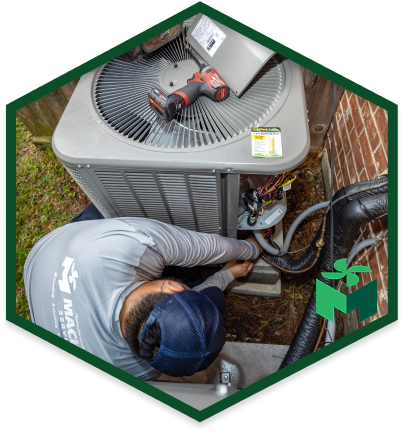
The Process of Restoring Healthy Air
Correcting indoor air quality is a precise process that requires technical expertise and specialized equipment. We do not guess when it comes to your health; we measure, analyze, and implement based on hard data.
- First, the process begins with a comprehensive Air Quality Assessment. Technicians use laser particle counters, hygrometers, and specialized sensors to detect the presence of VOCs, carbon dioxide buildup, and particulate matter density. This establishes a baseline and identifies the specific type of pollution affecting the home.
- Next, a visual inspection of the HVAC system is conducted. This includes checking the evaporator coil for biofilm buildup, inspecting the drain pan for standing water, and examining ductwork for leakage or disconnects. In many coastal homes, salt air corrosion can compromise system integrity, leading to air quality breaches.
- Then, a customized solution is proposed. Based on the data, we recommend the specific combination of equipment—such as UV lights or whole-home dehumidifiers—that will address the identified problems. We provide a clear explanation of how each component integrates with your existing HVAC setup.
- After that, installation is performed by certified technicians. This may involve modifying the return air plenum to accept larger filter cabinets, hardwiring dehumidifiers into the electrical system, or mounting UV lamps in the optimal position for sterilization.
- Finally, the system is calibrated and re-tested. We ensure that static pressure remains within safe limits for your blower motor and verify that the new equipment is actively reducing pollutant levels. We walk you through the operation and maintenance requirements, ensuring you know how to manage your new system.
Knowing When to Invest in IAQ Systems vs. Repairs
Homeowners often wonder if their air quality issues can be solved by simply repairing an old AC unit or cleaning the house more frequently. While maintenance is important, structural air quality problems usually require equipment upgrades or specific installations rather than simple repairs — view our specials today.
You should consider investing in dedicated IAQ systems rather than basic repairs when:
- Humidity levels remain high despite AC operation: If your home feels sticky or clammy even when the thermostat is satisfied, your air conditioner is short-cycling or is oversized. A repair cannot fix this; a whole-home dehumidifier is necessary to decouple moisture control from temperature control.
- Mold or mildew returns repeatedly: Cleaning surface mold is a temporary fix. If mold reappears on vents, furniture, or in the bathroom shortly after cleaning, the airborne spore count and moisture levels are too high. UV lights and dehumidification are required to stop the biological growth cycle.
- Odors persist: “Dirty sock” syndrome or lingering cooking and chemical smells indicate that VOCs and bacteria are trapped in the system. Standard filters cannot remove gases. Activated carbon filtration or air purifiers are the only effective solution for odor elimination.
- Health symptoms correlate with being home: If family members experience congestion, headaches, or eye irritation that improves when they leave the house, “Sick Building Syndrome” may be at play. This requires a comprehensive ventilation and purification strategy, not just a repair.
- Dust accumulates rapidly: If you find yourself dusting furniture daily, it indicates leaky ductwork or insufficient filtration. Sealing ducts and upgrading to a 4-inch or 5-inch media filter is more effective than repeated cleanings.
Managing Coastal Climate Challenges in Galveston
Operating in Galveston presents unique challenges that off-the-shelf advice often ignores. The coastal environment subjects homes to extreme humidity, salt-laden air, and occasional flooding events, all of which heavily impact indoor air quality.
- Extreme Humidity Load: The average relative humidity in this region frequently exceeds 80%. When outdoor air infiltrates the home, it brings this moisture with it. Standard air conditioners are designed to cool, with dehumidification being a secondary byproduct. In this climate, dedicated moisture removal is often a requirement, not a luxury, to keep indoor humidity below the mold-growth threshold of 50%.
- Salt Air Corrosion: Mackey Services understands that equipment longevity is a concern here. Salt accumulation on evaporator coils not only degrades the metal but also creates a rough surface where dirt and biological matter can stick, reducing air flow and breeding bacteria. We recommend coatings and filtration solutions specifically designed to protect equipment in coastal zones.
- Seasonality and Stagnation: During hurricane season or heavy storm periods, homes are often shuttered tight for days. If the power fails, the lack of air circulation causes rapid spikes in temperature and humidity, creating an incubator for mold. We assist homeowners in setting up systems that recover quickly once power is restored, purging the stale, contaminated air efficiently.
- Ventilation Codes and Standards: Modern building codes require specific ventilation rates to ensure fresh air exchange. However, bringing in fresh air in a hot, humid climate without treating it first is counterproductive. We ensure all ERV and ventilation installations meet local building codes while pre-conditioning the air to prevent moisture overload.
Why Homeowners Trust Us for Air Quality
There is a significant difference between a general handyman changing a filter and a professional HVAC contractor designing an air quality system. Our focus is on building science—understanding how air pressure, thermal dynamics, and moisture interact within the specific footprint of your home.
We utilize distinct protocols to ensure the job is done right:
- Proper Sizing: We do not guess the size of dehumidifiers or purifiers. Undersized units run constantly without solving the problem, while oversized units waste energy. We calculate the exact load based on your home’s square footage and envelope tightness.
- Holistic Approach: We look at the house as a system. Installing a powerful fan without checking duct sizing can cause pressure imbalances that suck more dust in from the attic. We assess the entire airflow path to ensure improvements in one area do not cause deficits in another.
- Technical Certification: Our team is trained on the latest IAQ technologies, from bipolar ionization to HEPA filtration standards. We stay updated on manufacturer best practices to ensure your warranty remains valid and the equipment performs as advertised.
Effective indoor air quality management is an investment in your property and your long-term health. By controlling moisture and removing contaminants, you protect the structural wood and drywall of your home while creating a sanctuary from the outdoor elements.
Mackey Services is ready to help you breathe easier with proven solutions and expert installation — contact us today.