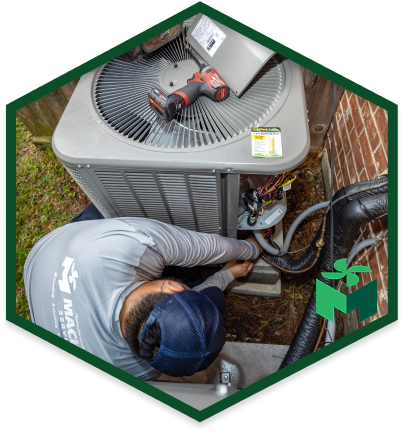
The Installation and Replacement Process
Replacing a central air conditioning system, furnace, or main electrical panel is a significant investment that requires precise planning and execution. The process begins with accurate load calculations. For HVAC systems, this means performing a Manual J calculation to determine exactly how much cooling and heating power your specific home structure requires. Guessing on size leads to short-cycling, humidity issues, and increased utility bills. Similarly, for electrical upgrades, a load calculation ensures your panel can handle modern appliances, EV chargers, and high-efficiency HVAC units without risk of overload.
Once the correct specifications are determined, the installation process follows a strict protocol:
- Site Preparation and Protection
The workspace is prepared to protect your flooring and personal property. Technicians disable power sources safely and verify that all circuits are dead before removal begins. In the case of HVAC, old refrigerant is recovered according to EPA standards to prevent environmental contamination.
- System Removal and Disposal
Existing units, wiring, or panels are disconnected and removed. This step often involves inspecting the immediate area for rot, mold, or previous code violations that were hidden by the old equipment. Proper disposal of old units is handled entirely by the service provider.
Before the new unit goes in, necessary upgrades are made. This may include sealing ductwork to prevent air leaks, upgrading the copper line set, or replacing frayed service entrance cables. A solid foundation is essential for the new equipment to function at its rated efficiency.
The new equipment is set in place, leveled, and secured. Electrical connections are tightened to specific torque settings to prevent arcing or overheating. For HVAC, the system is brazed with nitrogen to prevent oxidation inside the pipes, then evacuated to a deep vacuum to remove moisture before being charged with refrigerant.
- Commissioning and Testing
The job is not complete when the unit turns on. Technicians perform a full commissioning procedure. This involves measuring voltage and amperage draw, checking temperature splits across the coil, and testing safety switches. Only after the system meets all manufacturer benchmarks is the installation considered complete.
Deciding Between Repair and Replacement
Homeowners often face the difficult decision of whether to pour more money into an aging system or invest in a new one. Making the right choice depends on a combination of financial logic and performance data. The most common metric used is the age of the unit combined with the cost of repair. If your air conditioner or heat pump is over 10 to 12 years old and the repair cost approaches 50% of the market value of the system, replacement is generally the more prudent financial decision.
Efficiency loss is another critical factor. As HVAC systems age, their SEER (Seasonal Energy Efficiency Ratio) degrades. An AC unit that was efficient 15 years ago likely operates at a much lower standard today, resulting in significantly higher electricity bills. In the hot climate of Arcola, where systems run heavily for most of the year, the energy savings from a modern, high-efficiency system can often offset the monthly cost of financing a new unit. If you notice a steady climb in energy usage despite normal habits, the equipment is likely nearing the end of its useful life.
Reliability and safety are the final determining factors. If a system requires frequent “band-aid” repairs—such as replacing capacitors, contactors, or fan motors multiple times a year—it is signaling a major component failure is on the horizon. For electrical systems, signs like flickering lights, buzzing sounds from the panel, or outlets that feel warm to the touch are immediate red flags. In these cases, repair is often insufficient to guarantee safety, and a full upgrade is necessary to bring the home up to current safety codes.
Navigating Local Requirements and Climate Factors
Operating HVAC and electrical systems in the Houston Metro area requires specific attention to environmental challenges. The extreme humidity levels common in this region mean that air conditioners must do more than just cool the air; they must actively dehumidify the home. Systems that are oversized will cool the room too quickly without running long enough to remove moisture, leading to a clammy indoor environment and potential mold growth. Properly sizing equipment and utilizing two-stage or variable-speed compressors helps maintain lower humidity levels, protecting both the home’s structure and the occupants’ health.
Local building codes and permit requirements also play a major role in how services are delivered. In Texas, significant electrical work and HVAC replacements generally require permits to ensure the work meets safety standards. This includes adherence to the National Electrical Code (NEC) and local municipal amendments.
- Permit Acquisition: Professional providers handle the administrative burden of pulling necessary permits before work begins.
- Code Compliance: Technicians ensure that breaker box labeling, grounding rods, and disconnect switches meet current legal requirements.
- Inspection Coordination: Following installation, third-party inspections are often required to close out the permit, verifying that the work is safe and up to code.
Furthermore, the regional power grid can be subject to fluctuations and surges, especially during peak summer demand or winter storms. Integrating whole-home surge protection at the main panel or at the HVAC disconnect is a critical step for local homeowners. This protects the sensitive electronic control boards found in modern appliances from being fried by voltage spikes, a common occurrence during storm season.
Importance of Indoor Air Quality and Maintenance
In a region where windows stay closed for the majority of the year due to heat and humidity, indoor air quality (IAQ) becomes a paramount concern. Dust, pollen, pet dander, and biological growth can accumulate within the ductwork and circulate throughout the living space. Standard fiberglass filters are often insufficient to trap smaller particulates that affect respiratory health. Integrating advanced filtration solutions, such as media cabinets or electronic air cleaners, directly into the HVAC system ensures that the air remains clean and breathable.
Preventative maintenance is the only way to ensure these systems continue to operate efficiently. A neglected system works harder to achieve the same results, driving up costs and increasing the risk of breakdown. Regular maintenance involves:
- Coil Cleaning: Dirty condenser coils cannot release heat effectively, causing the compressor to overheat and fail prematurely.
- Drain Line Flush: Algae and biological growth can clog condensate drain lines, leading to water damage in attics or ceilings.
- Electrical Connection Tightening: Vibrations can loosen wires over time, creating resistance and heat that can melt insulation or ruin components.
- Capacitor Checks: Weak capacitors are the leading cause of compressor and fan failure; catching them early prevents expensive repairs.
Electrical maintenance is equally vital, though often overlooked. Annual thermal inspections of the breaker panel can identify loose connections before they cause power loss or fire. Testing GFCI (Ground Fault Circuit Interrupter) and AFCI (Arc Fault Circuit Interrupter) breakers ensures that safety mechanisms are ready to trip in the event of a fault.
Why Professional Execution Matters
The difference between a functioning system and a high-performing system lies in the expertise of the service provider. Licensed professionals do not cut corners. They utilize digital gauges for precise pressure readings, micron gauges for vacuum verification, and combustion analyzers to ensure furnace safety. This technical rigor ensures that warranties remain valid, as manufacturers often deny claims if equipment was not installed or maintained by a licensed contractor.
Professional service also encompasses the respect shown to the home. Technicians wear shoe covers, use drop cloths, and clean up the workspace thoroughly upon completion. They take the time to educate the homeowner on the operation of new thermostats, the location of reset switches, and the proper schedule for filter changes. This educational aspect empowers homeowners to take better care of their investment and recognize early warning signs of potential issues.
By choosing a provider that handles both HVAC and electrical needs, homeowners benefit from a unified approach to home infrastructure. There is no finger-pointing between different trades; the technician understands how the electrical load supports the mechanical equipment. This integrated knowledge base is essential for troubleshooting complex issues where electrical faults manifest as mechanical symptoms.