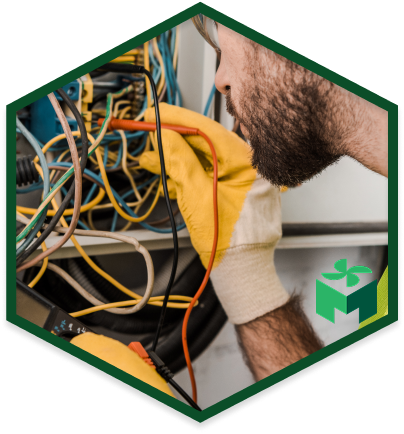
Your Wiring Installation Process, Explained
A professional wiring project involves coordination, precision, and adherence to strict safety protocols. We manage the entire lifecycle of the project to minimize disruption to your daily routine while ensuring the highest quality results.
Initial Assessment and Safety Audit
The process begins with a physical inspection of your existing electrical system. We examine the condition of the insulation, the connections at the panel, and the grounding system. We identify any code violations or immediate hazards that must be addressed. Following this audit, we provide a transparent scope of work detailing the necessary upgrades.
Permitting and Regulatory Compliance
Electrical work in Texas requires adherence to the National Electrical Code (NEC) as adopted by local municipalities. We handle the administrative burden of pulling all necessary permits before work begins. This ensures that the installation is legal, safe, and will not cause issues should you decide to sell your home in the future.
The Rough-In Phase
For new construction or major remodels, the “rough-in” phase involves running the new wiring through studs, joists, and ceilings before the walls are closed up.
- We drill holes through framing members and pull the appropriately sized wire (Romex) to all device locations.
- We install boxes for outlets, switches, and fixtures.
- We secure all cabling with staples to prevent movement and potential damage.
The Trim-Out Phase
Once the walls are finished, or if we are performing a surface-level upgrade, we proceed to the “trim-out.” This is where the visible components are installed.
- We connect switches, receptacles (outlets), and light fixtures.
- We install GFCI and AFCI protection devices where required by code.
- We label the electrical panel clearly so you know exactly which breaker controls which room.
Final Inspection and Energization
Before the job is considered complete, we conduct our own rigorous testing to ensure continuity, proper polarity, and grounding. Following our internal checks, a city inspector will review the work to certify it meets all safety codes. Only after passing these inspections do we fully energize the system and walk you through the operation of your new components.
Deciding Between Electrical Repair or Complete Rewiring
Homeowners often struggle to determine if a simple repair will suffice or if the entire system needs an overhaul. While repairs are suitable for isolated issues, continuing to patch a failing system can be more costly and dangerous in the long run.
When to Choose Repair
Repair is the logical choice when the electrical infrastructure is sound, but a specific component has failed.
- Isolated Outlet Failure: If a single outlet stops working but the wiring leading to it is healthy, a simple device replacement is needed.
- Fixture Malfunction: If a light fixture is broken or a switch is faulty, but the circuit breakers rarely trip, repair is appropriate.
- Recent Wiring: If your home was wired within the last 15-20 years and meets modern grounding standards, minor modifications are usually sufficient.
When to Invest in Rewiring
Rewiring is a capital improvement that adds value and safety. It is necessary when the existing system cannot support your lifestyle or poses a safety threat.
- Persistent Breaker Tripping: If using the microwave and the toaster simultaneously constantly trips the breaker, your circuits are overloaded and likely need rewiring to separate the loads.
- Presence of Aluminum Wiring: Homes built between the mid-60s and early 70s may contain aluminum branch wiring, which expands and contracts with heat, leading to loose connections and fire risks. This warrants immediate replacement.
- Ungrounded Outlets: If your home has two-prong outlets throughout, it indicates a lack of a ground wire. Modern electronics require grounding for protection.
- Insulation Degradation: If you see cracked, crumbling, or discolored insulation on wires in the attic or basement, the physical wire is compromised and must be replaced.
- Major Remodels: If you are opening walls for a kitchen or bath renovation, it is the most cost-effective time to upgrade the wiring to meet current code requirements, which likely demand dedicated circuits for appliances — view our specials today.
Navigating Local Electrical Codes and Seasonal Considerations
Electrical work in League City and the Gulf Coast region requires specific attention to environmental factors and local regulations. The climate here puts unique stressors on electrical components that do not exist in milder regions.
Managing Heat and Electrical Load
Texas summers frequently see temperatures exceeding 100°F. This heat increases the ambient temperature in attics where wiring is often run, affecting the “ampacity” (current-carrying capacity) of the conductors. Mackey Services sizes wires specifically to account for these high-temperature environments, ensuring they do not overheat under heavy AC loads. We also ensure your main panel is rated to handle the continuous draw of air conditioning systems running 24/7.
Preparing for Storms and Freezes
The region is susceptible to hurricanes in the summer and severe freezes in the winter. Reliability is paramount.
- We recommend and install whole-home surge protection at the main panel to defend against voltage spikes from lightning or grid switching during storms.
- We configure wiring to easily integrate portable or standby generators. This involves installing transfer switches that allow you to safely power critical circuits (heating, refrigeration, medical devices) during an outage without back-feeding the grid, which is illegal and dangerous for utility workers.
Permit and Code Nuances
Local amendments to the National Electrical Code can vary between jurisdictions. Requirements for AFCI (Arc Fault Circuit Interrupter) protection in bedrooms and living areas are strictly enforced to prevent electrical fires. Similarly, GFCI (Ground Fault Circuit Interrupter) protection is non-negotiable in wet areas like kitchens, bathrooms, garages, and outdoor spaces. We navigate the specific permit application processes for League City, ensuring your project is not delayed by bureaucratic red tape.
Why Choose Us: Verified Excellence in Electrical Services
Selecting the right contractor is the difference between a quick fix and a long-term solution. We prioritize technical accuracy and customer safety above all else.
- Licensed and Insured Professionals: Our team holds active licenses with the Texas State Board of Electrical Examiners. We carry full liability insurance to protect your property during every phase of the project.
- Upfront, Transparent Pricing: We provide clear, itemized quotes before work begins. You will never be surprised by hidden fees or unexpected labor charges.
- Code Compliance Guarantee: We do not cut corners. Every installation is performed to meet or exceed current safety standards, ensuring your home passes inspection the first time.
- Safety-First Methodology: We treat your home as if it were our own. We utilize drop cloths, wear shoe covers, and leave the workspace cleaner than we found it.
Your home’s electrical system is its lifeline. Do not leave its reliability to chance or unqualified handlers. Secure your investment and ensure the safety of your family with professional wiring services.