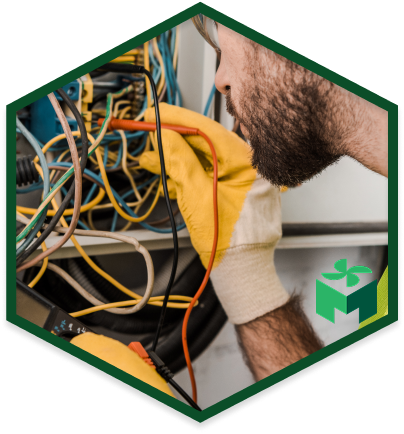
The Process of Electrical Wiring Installation and Replacement
Homeowners often hesitate to address wiring issues because they fear the process will be intrusive and messy. While rewiring is a significant undertaking, working with experienced professionals ensures the project follows a structured, streamlined path that minimizes disruption to your daily life in Galveston.
We utilize a systematic approach to ensure every wire, connection, and breaker is installed correctly and safely.
- Initial Load Calculation and Inspection:
- The process starts with a calculation of your home’s total electrical load. Technicians evaluate your current usage and projected future needs (such as adding a hot tub or a new HVAC unit).
- We inspect existing conduit, insulation, and the main service drop to identify points of failure or corrosion caused by the humid salt air.
- Permitting and Layout Planning:
- Before any physical work begins, we acquire the necessary permits from local building departments. This ensures the work is legal and will pass inspection if you ever sell the home.
- A detailed layout is created, mapping out circuits to ensure loads are balanced evenly across the panel.
- The Rough-In Phase:
- This involves running the new cabling throughout the walls, ceiling, and floor joists.
- In finished homes, technicians use “fishing” techniques to pull wires behind drywall with minimal cutting. When cuts are necessary, they are surgical and strategic to allow for easy patching.
- New boxes for outlets, switches, and fixtures are mounted securely to the framing.
- The Trim-Out Phase:
- Once the wires are run, the “trim-out” involves connecting the actual devices. Switches, outlets, and light fixtures are terminated and installed.
- The main electrical panel is organized, with every circuit clearly labeled and breakers torqued to manufacturer specifications.
- Testing and Final Inspection:
- Technicians perform rigorous testing, including megohmmeter testing to check insulation integrity and polarity checks on all outlets.
- A final walkthrough with a city inspector is scheduled to close out the permit and certify that the home meets all safety codes.
Repair vs. Replace: Making the Right Decision
Determining whether to repair a specific circuit or invest in a full system replacement is a common dilemma. While repairs are cheaper upfront, patching a failing system can be more expensive in the long run due to repeated service calls and potential damage to appliances.
There are specific indicators that shift the decision from a simple repair to a necessary replacement.
- Presence of Aluminum or Knob-and-Tube Wiring:
If your home was built between the late 1960s and mid-1970s, it may have aluminum wiring, which expands and contracts with heat, leading to loose connections and fire hazards. Knob-and-tube wiring, found in pre-1950s homes, lacks a ground wire. In these cases, repair is rarely a viable option; replacement is a safety necessity.
- Persistent Burning Smells or Scorch Marks:
If you notice discoloration around outlets or a faint smell of burning plastic, the internal wiring insulation has likely degraded. Spot repairs cannot fix the underlying issue of heat buildup within the walls.
Some older electrical panels (such as Federal Pacific or Zinsco) have known design flaws where breakers fail to trip during an overload. If you have one of these panels, no amount of repair will make it safe; the entire unit must be swapped out.
If you are remodeling a kitchen or bathroom, current codes require dedicated circuits for appliances like microwaves and refrigerators. Old wiring layouts often share circuits across multiple high-draw devices. To pass inspection for your renovation, new wiring is almost always required.
Many insurance carriers will refuse to write new policies or renew existing ones for homes with outdated wiring types. Upgrading the system is often a prerequisite for obtaining coverage, especially in coastal zones where risk assessment is strict.
Local Considerations for Electrical Work
Operating in the Gulf Coast region requires specific knowledge of environmental factors and local regulations. A standard installation that works inland may fail prematurely here due to the aggressive environment. Mackey Services understands these nuances deeply.
- Corrosion and Salt Air:
- The saline humidity in the air accelerates the oxidation of copper and aluminum. External meter cans, service entry cables, and outdoor disconnects must be rated for high corrosion resistance (NEMA 3R or 4X enclosures) to prevent failure.
- Connections often require anti-oxidant compounds to maintain conductivity and prevent overheating at the termination points.
- Hurricane and Flood Resilience:
- Local codes often dictate that electrical panels and main disconnects be elevated above base flood elevation levels.
- Wiring in lower levels of the home may need to be run from the ceiling down (drops) rather than through the floor, ensuring that minor flooding does not destroy the entire circuit.
- Permitting and Code Enforcement:
- Electrical work in Texas is strictly regulated by the Texas Department of Licensing and Regulation (TDLR) and local municipal amendments.
- Work performed without a permit can result in heavy fines and the inability to sell your property. Professional electricians handle the administrative burden of filing permits and scheduling inspections with the city, ensuring you remain compliant.
- Power Stability Issues:
- The local grid can be susceptible to brownouts and surges during peak summer heat when AC usage is high.
- Local recommendations often include installing whole-home surge protection to guard against grid fluctuations that occur even when there is no storm.