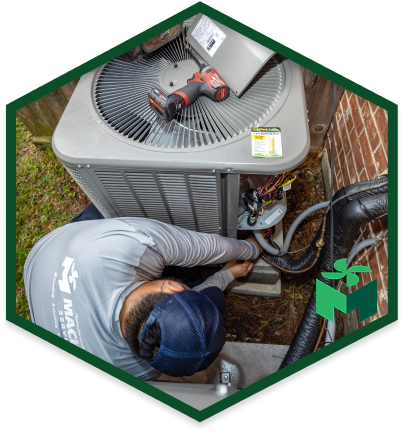
What You Can Expect From Our Service Today
When you request service, the goal is to resolve the immediate crisis while assessing the overall health of your systems. A technician arrives equipped to handle a wide spectrum of heating, cooling, and electrical tasks. This dual capability means you do not need to coordinate between multiple contractors to fix a thermostat wiring issue or install a dedicated circuit for a new HVAC unit.
Upon arrival, the focus shifts to a thorough evaluation. For HVAC systems, this involves checking refrigerant levels, inspecting ductwork for leaks, and testing the thermostat calibration. For electrical concerns, the process includes load testing the main panel, inspecting wiring for corrosion or heat damage, and verifying that all grounding meets current safety codes.
- AC and Heating Diagnostics: We identify why a system is short-cycling, blowing warm air, or making unusual noises. This includes checking capacitors, contactors, and blower motors.
- Electrical Safety Inspections: We examine your home’s electrical backbone, looking for aluminum wiring risks, outdated fuse boxes, or overloaded circuits that pose fire hazards.
- System Maintenance and Tune-Ups: Proactive cleaning of condenser coils and tightening of electrical connections to prevent future breakdowns during peak usage months.
- Emergency Repairs: Rapid replacement of critical components like circuit breakers, fan motors, or control boards to restore functionality immediately.
- Air Quality Improvements: Assessment of humidity levels and installation of dehumidifiers or air purifiers to combat the heavy moisture typical of the region.
Our Straightforward Repair & Installation Process
Navigating home repairs should be clear and predictable. We utilize a structured workflow that keeps you informed from the initial diagnosis to the final safety check. This eliminates guesswork and ensures that every repair or installation adheres to strict quality standards.
- Initial Assessment and Troubleshooting: The technician begins by listening to your description of the problem and performing a hands-on inspection. Advanced diagnostic tools are used to pinpoint electrical faults or mechanical failures within the HVAC system.
- Clear Explanation and Quoting: Once the issue is identified, you receive a detailed explanation of the problem. You are presented with options ranging from basic repairs to comprehensive upgrades. A transparent quote is provided before any work begins, ensuring you understand the costs involved.
- Execution of Work: Upon approval, the technician proceeds with the repair using high-quality parts. Whether replacing a start capacitor or upgrading a sub-panel, the work is performed efficiently and cleanly, respecting your property.
- System Testing and Validation: After the repair or installation is complete, the system is rigorously tested. For HVAC, this means measuring temperature splits and airflow. For electrical work, circuits are tested for proper voltage and polarity.
- Final Walkthrough: The technician demonstrates that the system is working correctly, explains any new controls or features, and provides maintenance advice to prolong the lifespan of the equipment.
Deciding Between Repair and Full Replacement
One of the most difficult decisions homeowners face is whether to pour more money into an aging system or invest in a replacement. This decision is particularly relevant for HVAC units and electrical panels that have been subjected to the corrosive salt air and humidity common in coastal Texas. Making the right choice depends on a specific set of variables regarding age, efficiency, and cost.
The 50 percent Rule
A common industry standard used to guide this decision is the 50 percent rule. If the cost of the necessary repair approaches or exceeds 50 percent of the value of a new system, replacement is generally the more financially sound option. Putting a massive investment into a dying unit often leads to diminishing returns as other components fail shortly after.
Age and Efficiency
HVAC systems in this region typically last between 10 to 15 years due to the heavy workload. If your unit is over 12 years old and requires a major repair, such as a compressor replacement, investing in a new, high-efficiency SEER2-rated unit will likely lower your monthly utility bills enough to offset the installation cost over time. Similarly, if your home still utilizes a fuse box or an electrical panel rated below 100 amps, a “repair” is often impossible; a full heavy-up (panel upgrade) is required to meet modern safety standards and insurance requirements.
Frequency of Breakdowns
Consider how often you have called for service in the last two years. Mackey Services technicians often find that repeated minor repairs add up to more than the cost of a modern replacement. If you are frequently resetting breakers or adding refrigerant, the system is signaling the end of its reliable service life.
Comfort and Safety
If your current AC cannot maintain a temperature below 75°F on a hot day, or if your lights dim whenever the refrigerator turns on, the equipment is undersized or failing. In these cases, replacement improves quality of life and eliminates fire risks associated with overloaded electrical systems.
Understanding Local HVAC Requirements and Rebates
Operating in Hitchcock and the surrounding coastal areas involves specific considerations regarding codes, permits, and climate resilience. The proximity to the Gulf of Mexico means that equipment must be resilient against corrosion and high humidity levels. Standard equipment often rusts prematurely if not treated with coastal-grade protection or maintained rigorously.
Permitting and Safety Codes
Electrical and HVAC work involves significant interaction with municipal codes. Any major installation, such as replacing a central air unit or upgrading a main electrical panel, requires a permit to ensure the work meets the National Electrical Code (NEC) and local building standards. Professional providers handle the permitting process entirely, coordinating inspections to ensure your home is compliant. This is crucial for insurance purposes and future home sales.
Utility Incentives
Local utility providers, such as CenterPoint Energy, often offer incentives for upgrading to energy-efficient infrastructure. High-efficiency heat pumps, modern air conditioners, and smart thermostats may qualify for rebates that reduce the upfront cost of installation. These programs are designed to reduce the load on the grid during peak summer months.
Climate-Specific Maintenance
The local climate dictates a stricter maintenance schedule. The heavy rainfall in May and September can lead to drainage issues in HVAC systems, causing water damage if condensate lines are not cleared. Furthermore, high humidity requires air conditioners to run longer cycles to dehumidify the home effectively. Ensuring your system is correctly sized—not too big, not too small—is vital for humidity control. An oversized unit will cool the air too quickly without removing moisture, leading to a clammy indoor environment.
Why Choose Mackey Services: Our Commitments to You
Selecting a service provider for your home’s critical systems is a decision based on trust and technical capability. We differentiate ourselves by offering a dual-trade expertise that covers the complete spectrum of home comfort and safety. You do not need a separate electrician to wire the disconnect box for your new AC unit; we handle the entire project from start to finish.
- Technical Excellence: Our team undergoes continuous training to stay ahead of evolving HVAC technologies and electrical codes. We diagnose complex issues that others might miss, ensuring the fix is done right the first time.
- Comprehensive Warranties: We stand behind our workmanship. New installations come with robust manufacturer warranties, and we offer guarantees on our labor to provide you with peace of mind.
- Local Understanding: We understand the specific challenges of the coastal Texas environment. We recommend products and solutions specifically designed to withstand heat, humidity, and salt air, protecting your investment for the long term.
- Respect for Your Home: Technicians arrive in uniform, use drop cloths, and clean up the workspace thoroughly. We treat your property with the same care we would our own.