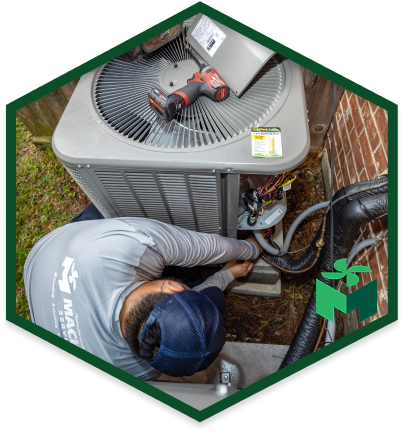
The Installation and System Replacement Process
A successful installation relies on physics and precise calculation, not guesswork. Replacing an HVAC unit or an electrical panel requires adhering to strict procedural standards to ensure the new equipment operates at its rated efficiency and safety levels. We manage the entire lifecycle of the project, from the initial load calculation to the final municipal inspection.
HVAC Installation Standards
Simply swapping out a unit for one of the same size is often a mistake. Over time, home insulation values change, windows are replaced, and tree cover shifts. We utilize industry-standard Manual J load calculations to determine the exact heating and cooling requirements for your specific home layout.
- Site Assessment and Load Calculation: We measure square footage, insulation levels, window orientation, and local climate data to size the unit perfectly. An oversized unit will short-cycle and fail to dehumidify, while an undersized unit will run continuously without reaching the set temperature.
- Ductwork Modification: If the existing plenum or ductwork restricts airflow, we modify the sheet metal to accommodate the new system’s requirements. This ensures the blower motor does not overheat and the system delivers quiet airflow.
- System Charging and Calibration: Once the unit is physically installed, we braze refrigerant lines using nitrogen to prevent oxidation. The system is then vacuumed to remove moisture and charged to the precise subcooling or superheat targets specified by the manufacturer.
- Commissioning: The final step involves testing all modes of operation, measuring temperature splits, and verifying thermostat integration to ensure total system synchronization.
Electrical Panel and Circuit Installation
Upgrading electrical infrastructure is often necessary to support new appliances, EV chargers, or simply to replace obsolete panels that pose fire risks. This process is heavily regulated to ensure safety.
- Permitting and Code Review: Before work begins, we secure necessary permits from the city. This ensures that all work meets the current National Electrical Code (NEC) and local amendments applicable to Hedwig Village.
- Service Entrance Coordination: If a service upgrade (e.g., 100 amp to 200 amp) is required, we coordinate with the local utility provider to disconnect power safely and reconnect once the new meter base and riser are installed.
- Circuit Identification and Labeling: A new panel is only as good as its organization. We trace and clearly label every breaker so you know exactly which circuit controls which area of your home.
- Whole-Home Surge Protection: Given the frequency of storms in the region, we often integrate surge protection directly into the panel to shield all downstream appliances from voltage spikes.
Determining When to Repair or Replace Your Systems
Deciding between repairing an aging system or investing in a new one is a financial and logistical calculation. There is a tipping point where the cost of continued repairs outweighs the benefits of keeping an old unit running. We provide the data you need to make an informed decision based on efficiency, warranty status, and safety.
HVAC Decision Criteria
Air conditioners and furnaces generally have a lifespan of 10 to 15 years, depending on maintenance and usage intensity.
- The 50% Rule: If the cost of the repair approaches 50% of the value of a new system, replacement is usually the smarter financial move.
- Refrigerant Type: If your older unit utilizes R-22 (Freon), which has been phased out, repair costs for refrigerant leaks will be astronomical. upgrading to a system that uses R-410A or newer refrigerants is necessary for long-term viability.
- Energy Efficiency Ratios: Older units may have SEER ratings of 10 or 12. Modern standards require higher efficiency (SEER2), which can significantly lower monthly utility bills. The savings on energy can often offset the monthly cost of financing a new installation. View current specials today.
- Comfort Consistency: If your current system struggles to maintain consistent temperatures or fails to remove humidity, a new unit with variable-speed technology will provide a tangible improvement in living quality.
Electrical Decision Criteria
Electrical systems do not have a defined “efficiency” rating like HVAC, but safety and capacity are the primary drivers for replacement.
- Panel Obsolescence: Certain electrical panel brands installed decades ago (such as Federal Pacific or Zinsco) have known design flaws that prevent breakers from tripping during a fault. These should be replaced immediately for safety, regardless of their current operational status.
- Capacity Limitations: If you are unable to run the microwave and a hairdryer simultaneously without tripping a breaker, your panel likely lacks the amperage capacity for modern living.
- Wiring Condition: Homes with aluminum wiring or deteriorating cloth-insulated wiring require remediation or rewiring to reduce fire risk.
- Renovation Requirements: Major home renovations often trigger requirements to bring the entire electrical system up to current code, necessitating panel and circuit upgrades.
Mackey Services offers honest assessments of your equipment’s condition, providing you with a clear comparison of repair costs versus replacement benefits so you can choose the path that fits your budget and future plans.
Navigating Local Climate Factors and Building Codes
Operating in Hedwig Village requires specific attention to environmental factors that influence how systems are designed and maintained. The local humid subtropical climate places unique stress on residential infrastructure, demanding specialized solutions.
Managing Humidity and Heat Load
The combination of high ambient temperature and high humidity creates a heavy “latent load” on air conditioning systems. Standard AC units cool the air, but they may shut off before they have removed enough moisture, leaving the home feeling clammy.
- Dehumidification Strategies: We often recommend whole-home dehumidifiers or two-stage AC systems that run longer at lower speeds. This extends the cycle time to extract more moisture without overcooling the space.
- Insulation and Ventilation: Proper attic ventilation is critical to prevent heat buildup that radiates into the living space. We assess attic conditions to ensure your HVAC system isn’t fighting a losing battle against radiant heat.
- Drainage Solutions: Condensate production is high in this region. We ensure drain lines are insulated to prevent sweating and routed correctly to avoid water damage to ceilings or floors.
Electrical Resilience and Storm Safety
The region is subject to intense thunderstorms and occasional tropical weather events. This reality makes electrical resilience a priority for homeowners.
- Standby Generator Integration: For homeowners concerned about power outages, we design electrical interlocks and transfer switches that allow for the safe connection of portable or standby generators.
- Water Mitigation: Electrical components, particularly outdoor compressor units and ground-level outlets, must be protected from potential flash flooding. We ensure outdoor electrical gear is mounted at appropriate elevations and rated for wet locations.
- Permitting and Inspections: Local regulations regarding electrical work are strict to ensure safety. We handle all interaction with city planning departments, pulling the required permits for panel changes, circuit additions, and major HVAC installs. This ensures your home insurance remains valid and your property value is protected.
Licensed Expertise and Warranty Protection
Your home’s mechanical and electrical systems are too important to trust to unlicensed handymen. The risks of improper installation include fire, water damage, and voided manufacturer warranties. Professional service ensures that liabilities are covered and the job is done right the first time.
- Licensing and Certification: Our technicians hold the necessary state licenses to perform HVAC and electrical work. This signifies a mastery of code requirements and safety protocols.
- Insurance and Bonding: We carry full liability insurance and bonding. This protects your property and assets in the unlikely event of an accident during the service call.
- Manufacturer Warranty Compliance: Manufacturers of HVAC equipment will often void warranties if the equipment is not installed by a licensed professional. We register your equipment and provide the documentation needed to keep your warranty active.
- Labor Guarantees: Beyond the parts warranty, we stand behind our workmanship. If an issue arises related to our installation or repair, we return to correct it.