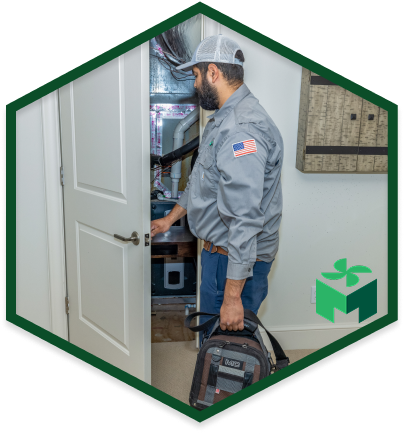
How Our Team Ensures Your Installation is Seamless
We understand that having a work crew in your home can be disruptive. Our process is designed to minimize downtime and intrusion while maximizing safety and quality. We follow a strict operational checklist that keeps the project on track and ensures no steps are skipped.
- Initial Consultation and Sizing: We arrive to assess your current system and discuss your heating preferences. This is where we determine whether a gas furnace, electric furnace, or heat pump is the best fit for your specific infrastructure.
- Proposal and Financing: You receive a clear, transparent quote detailing the scope of work. If you require financing, we assist with the application process to get immediate approval so work can begin without delay.
- Permitting and Logistics: Before the truck arrives, we pull the necessary mechanical permits required by the city. This ensures your installation is legal, insurable, and up to code.
- Installation Day: Our technicians arrive within the scheduled window. We communicate the timeline clearly so you know exactly how long the water, gas, or power might be impacted.
- Commissioning and Testing: After physical installation, we enter the commissioning phase. We run the system through a full heating cycle, measuring temperature rise and airflow.
- Walkthrough and Education: We do not leave until you are comfortable operating your new system. We show you how to change filters, operate the thermostat, and recognize alert codes.
Deciding Between Repair and Replacement: A Simple Guide
Homeowners often struggle with the decision to repair an aging unit or invest in a replacement. While a repair might seem cheaper upfront, it is often a sunk cost if the unit is nearing the end of its useful life. In our region, where heating systems sit idle for long summers and then must perform instantly during cold snaps, older components are prone to failure.
Use the following criteria to determine if replacement is the smarter financial move:
- The 50% Rule: If the cost of the repair approaches 50% of the cost of a new system, replacement is generally the better option. A new system offers a warranty and higher efficiency, whereas a repaired old system is still an old system liable to break again.
- Age of the Unit: Most furnaces and heat pumps have a lifespan of 10 to 15 years. If your unit is over 12 years old and requires a major repair—such as a blower motor or heat exchanger—it is time to replace.
- Rising Energy Bills: As heating systems age, they lose efficiency. If you have noticed a steady increase in your heating costs despite normal usage, your unit is working harder to produce the same amount of heat. A modern system can lower these costs significantly.
- Uneven Heating: If some rooms are freezing while others are hot, or if the unit runs constantly without reaching the set temperature, the internal components are likely worn beyond reasonable repair.
- Safety Concerns: Rust on the heat exchanger or strange smells can indicate safety hazards like carbon monoxide leaks. In these cases, replacement is mandatory for the safety of your household.
Local Codes and Efficiency Programs: What You Need to Know
Installing a heating system involves navigating a complex web of building codes and efficiency standards. In League City and the surrounding areas, these regulations are in place to ensure occupant safety and energy conservation. Ignoring these codes can lead to fines, voided insurance policies, and complications when you eventually sell your home.
We ensure full compliance with all regional requirements.
- Permitting: All heating installations require a mechanical permit. This triggers a third-party inspection to verify that the gas piping, venting, and electrical work meet safety standards. We handle the application and scheduling of these inspections.
- SEER2 and AFUE Standards: The Department of Energy has updated efficiency minimums. We install systems that meet or exceed the current SEER2 (for heat pumps) and AFUE (for furnaces) ratings required for the southern region. This ensures you are not installing obsolete technology.
- Condensate Management: High-efficiency furnaces and heat pumps produce condensate. Local codes dictate how this water must be drained to prevent property damage and mold growth. We install appropriate drain lines, traps, and safety switches to manage moisture effectively.
- Rebate Eligibility: Many high-efficiency systems qualify for federal tax credits or rebates from local utility providers. We provide the necessary documentation and AHRI certificates to help you claim any available financial incentives.
Choosing the Right System for Subtropical Climates
The heating needs in a humid subtropical climate differ vastly from those in the northern United States. Here, we do not face sub-zero temperatures for months on end, but we do deal with high humidity and sharp temperature drops. The equipment selected must handle these specific conditions.
- Heat Pumps: These are incredibly popular in our area because they handle both heating and cooling. Since our winters are generally mild, a heat pump can efficiently transfer heat from the outside air into your home without burning fuel. They are highly efficient down to near-freezing temperatures.
- Gas Furnaces: For homeowners with access to natural gas, a furnace provides powerful, fast heat. This is often preferred during those rare deep freezes where a heat pump might rely on auxiliary electric heat strips. Modern gas furnaces also offer modulating gas valves that adjust the flame size to maintain a precise temperature without wasting fuel.
- Hybrid Systems: A dual-fuel system combines an electric heat pump with a gas furnace. The heat pump handles the mild cool days efficiently, and the gas furnace takes over when temperatures plummet. This offers the best of both worlds regarding efficiency and comfort.
We help you navigate these choices based on your existing utility connections (gas vs. electric), your budget, and your long-term comfort goals. We never push a one-size-fits-all solution; we match the technology to the home.
Our Commitment to Quality: Certifications and Performance
The difference between a system that lasts 10 years and one that lasts 20 years is often the quality of the installation. A top-tier brand installed poorly will fail sooner than a mid-tier brand installed perfectly. Our technicians are trained to adhere to the strictest industry standards, ensuring that tolerances for voltage, gas pressure, and airflow are met exactly.
We invest in continuous training for our team. Heating technology evolves rapidly, with new inverter-driven motors and smart thermostat integrations entering the market every year. Our installers are equipped with the knowledge to troubleshoot complex issues during installation, preventing callbacks and future breakdowns.
Furthermore, we respect your property. Our technicians wear shoe covers, use drop cloths, and clean up the workspace thoroughly upon completion. We believe that professional service encompasses not just technical skill, but also courtesy and respect for the homeowner.
When you choose us, you are choosing a partner who stands behind their work. We offer transparent labor warranties and responsive support should any questions arise after the installation is complete. You will never be left guessing how to operate your new system or who to call if you need assistance.