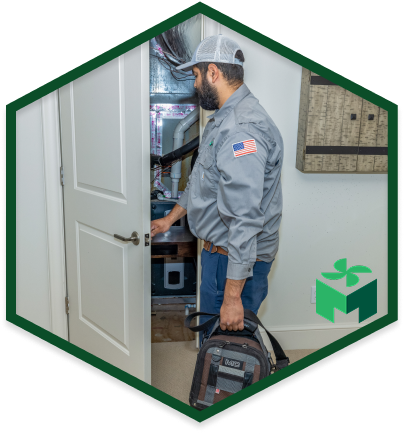
Our Installation Process From Start to Finish
A structured workflow is essential for a successful heating replacement. Mackey Services utilizes a systematic approach to ensure that no step is overlooked, guaranteeing that your new furnace or heat pump operates at peak performance from the moment it is powered on.
- Initial Assessment and Load Calculation:
The process begins with a technical evaluation of your home. Relying on the size of the previous unit is often a mistake, as many older homes have oversized systems that cycle too frequently. Technicians measure windows, insulation levels, and room dimensions to perform a load calculation. This determines the exact BTU output required to heat the home efficiently during a Texas winter.
Based on the assessment, you select the equipment that fits your energy goals and budget. Options typically include gas furnaces, electric air handlers, or heat pumps. This stage also involves discussing AFUE (Annual Fuel Utilization Efficiency) ratings, where higher percentages indicate less energy waste.
- Safe Removal of Existing Equipment:
The old unit is disconnected from the power source and fuel supply. If it is a gas furnace, the gas line is capped and checked for leaks before work continues. The equipment is then carefully removed from the attic, closet, or garage.
- Preparation of the Installation Area:
The area where the new unit will sit is cleaned and prepped. If the new unit has different dimensions, the return air box or supply plenum may need modification. This is a critical step to prevent airflow restrictions that can damage the heat exchanger over time.
- Equipment Installation and Connection:
The new unit is set in place. For gas systems, the flue pipe is connected and sealed to ensure carbon monoxide is vented safely outside. Electrical connections are tightened to torque specifications, and the gas line is reconnected with a sediment trap to protect the gas valve.
- Final Testing and Walkthrough:
Once installed, the system runs through a full heating cycle. Technicians measure the temperature difference between the supply and return air to verify the unit is heating correctly. Finally, the homeowner receives a walkthrough of the new system, including how to change filters and operate the thermostat.
When to Replace vs. Repair Your Heating System
Determining whether to pour more money into an aging system or invest in a new one is a common dilemma. While repairs are often feasible, there are specific thresholds where replacement becomes the more financially sound option.
Most furnaces and heat pumps have a lifespan of 15 to 20 years. If your system is approaching or has exceeded this age range, major components like the heat exchanger or compressor are at higher risk of failure. Replacing an aging unit preemptively avoids emergency situations during cold snaps.
A general industry guideline is the 50% rule. If the cost of a necessary repair approaches 50% of the cost of a new system, replacement is the better choice. Investing heavily in an old system often leads to diminishing returns as other parts begin to fail shortly after.
As heating systems age, they lose efficiency due to wear and tear. If you notice a steady increase in energy costs despite normal usage, the system may be working harder to produce the same amount of heat. Modern systems are significantly more efficient, often offsetting the monthly cost of a new installation through utility savings.
If you require service calls multiple times a year, the system has become unreliable. Frequent breakdowns indicate that the internal components are deteriorating. Continued repairs act as a temporary bandage rather than a permanent solution.
For gas furnaces, cracks in the heat exchanger are a critical safety hazard as they can leak carbon monoxide into the living space. If a heat exchanger is compromised, immediate replacement is the only safe option.
- Uneven Heating and Comfort Issues:
If some rooms in your Dickinson home are scorching hot while others remain cold, the system may be struggling to distribute air effectively. This can be caused by a failing blower motor or an undersized unit, often resolved best by installing a properly sized modern system.
Local Considerations for Dickinson and Texas Homeowners
Installing a heating system in Texas requires specific attention to regional factors. The climate, local building codes, and utility infrastructure all influence how a system should be selected and installed.
- Permitting and Code Compliance:
Dickinson and the surrounding Texas municipalities require permits for HVAC installations. This ensures that the work meets safety standards regarding electrical wiring, gas piping, and venting. Professional installers handle the permitting process, scheduling necessary inspections to certify that the installation is code-compliant. Attempting to bypass permits can lead to fines and issues when selling the home in the future.
- Gas vs. Electric Availability:
While many homes in the region utilize natural gas for heating due to its efficiency and heat output, others rely on electric heat pumps. The availability of natural gas infrastructure varies by neighborhood. If gas is not available, modern high-efficiency heat pumps are an excellent alternative, capable of handling the region’s winter temperatures effectively.
- Sizing for Texas Winters:
Texas weather is characterized by mild winters with occasional, severe freezes. It is crucial not to oversize the heating element based solely on the rare extreme freeze, as this causes the system to short-cycle during milder weather. Short-cycling reduces humidity control and increases wear on components. A properly sized system balances the need for heat during the 20°F nights with the more common 40°F to 50°F days.
- Ventilation and Air Quality:
Homes in this region are often built tightly to conserve cooling energy in the summer. When installing gas heating, ensuring proper combustion air and venting is vital to prevent back-drafting. Installers assess the confined space where the furnace is located to ensure there is enough oxygen for safe combustion.
While heating is the primary focus, the system also plays a role in humidity regulation. In humid climates like Southern Texas, integrating the heating system with proper filtration and potentially whole-home dehumidifiers ensures year-round comfort and prevents mold growth in ductwork.
Why Professional Sizing and Installation Matters
The most important day in the life of a furnace is the day it is installed. Even the highest-rated brand will fail prematurely if it is installed incorrectly. Professional installation ensures that the equipment delivers the efficiency and comfort promised on the manufacturer’s label.
- Correct Airflow and Static Pressure:
Ductwork systems in older homes may not be sized for modern, high-efficiency blowers. Professionals measure static pressure to ensure the new unit can move air quietly and effectively. High static pressure can burn out blower motors and reduce the lifespan of the heat exchanger.
Manufacturers strictly require that their equipment be installed by licensed professionals. DIY installations or work performed by unlicensed individuals typically void the equipment warranty. Professional installation ensures that the warranty remains valid, protecting your investment for up to 10 years or more.
Working with natural gas requires specialized knowledge of pressure testing and leak detection. Incorrectly sized gas lines can starve the furnace of fuel, leading to soot buildup and dangerous operation. Certified technicians ensure that the gas supply is adequate for the full load of the furnace and other appliances.
Modern heating systems rely on sophisticated circuit boards and sensors. Incorrect wiring can destroy these components instantly. Professionals ensure that the unit is properly grounded and that the circuit breaker is sized correctly to prevent fire hazards.
Heat Pumps vs. Furnaces: Making the Right Choice
For homeowners in this region, the choice between a heat pump and a furnace is a common decision point. Both have distinct advantages depending on the specific needs of the household and the fuel sources available.
Gas furnaces are powerful and can raise the indoor temperature quickly, regardless of how cold it is outside. They are ideal for homeowners who prefer the feeling of “hot” air coming from the vents. Furnaces generally have a longer lifespan than heat pumps because the heating components are only used for a few months out of the year.
Heat pumps are electrically powered and move heat rather than generating it. They are highly efficient in moderate climates like Texas. A heat pump serves as both the air conditioner in the summer and the heater in the winter. While the air coming from the vents may feel cooler than a gas furnace, they maintain a consistent, comfortable temperature.
For maximum efficiency and comfort, some homeowners opt for a dual fuel system. This pairs an electric heat pump with a gas furnace. The heat pump handles the heating duties during mild winter days (above 35°F), which is most of the winter season. When temperatures drop below freezing, the system automatically switches to the gas furnace for powerful, auxiliary heat. This hybrid approach offers the lowest operating costs.