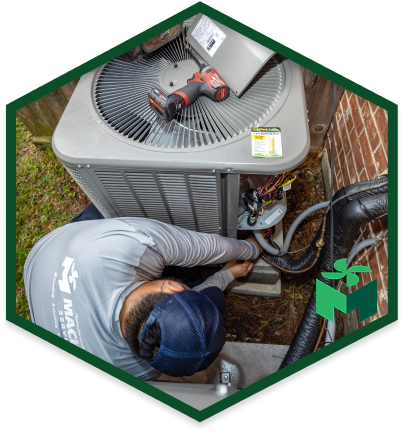
The Installation and Replacement Workflow
A proper installation determines the efficiency and lifespan of your heat pump. Cutting corners during this phase can lead to years of subpar performance and higher energy bills. The process follows a strict, technical sequence to ensure the system operates at its rated SEER2 (Seasonal Energy Efficiency Ratio) level.
- Site Assessment and Manual J Calculation
The process begins with a detailed evaluation of your home’s thermal envelope. Technicians measure windows, insulation levels, and square footage. This data feeds into a Manual J load calculation, which dictates exactly how much cooling and heating capacity is required. Guessing based on square footage alone often leads to oversized units that short-cycle and fail to remove humidity.
- Safe Removal and Disposal
The existing unit is disconnected from the electrical supply and refrigerant lines. Certified technicians capture and recycle old refrigerant according to EPA regulations to prevent environmental contamination. The old equipment is removed from the property, ensuring a clean workspace for the new installation.
- Equipment Positioning and Connection
The new outdoor condenser is placed on a level pad, elevated if necessary to protect against local ground conditions or flooding risks. The indoor air handler is secured, and the refrigerant lines are brazed using nitrogen purging to prevent oxidation inside the copper tubing.
- Electrical and Control Setup
High-voltage wiring is connected with appropriate disconnect boxes and fuses. Low-voltage control wiring is routed to the thermostat. Technicians verify that the reversing valve is energized correctly for cooling or heating, depending on the manufacturer’s logic (energize to cool vs. energize to heat).
- System Commissioning and Testing
A deep vacuum is pulled on the refrigerant lines to remove moisture and non-condensables. The factory charge is released, and the system is fine-tuned. Static pressure tests measure airflow resistance to ensure the blower motor is not overworking. Finally, the system runs through a complete cycle to verify temperature splits and dehumidification performance.
Determining When Replacement Beats Repair
Homeowners often struggle with the decision to repair an aging unit or invest in a new system. While repairs can solve immediate issues, there is a mathematical tipping point where replacement becomes the more financially sound decision. This decision framework helps clarify the best path forward based on asset age, condition, and operational costs.
The 50% Rule
A common industry standard is the 50% rule. If the cost of the repair approaches 50% of the value of a new system, replacement is generally the smarter investment. This is particularly true if the current unit is out of warranty. Spending thousands on a compressor for a 12-year-old unit is rarely improved capital allocation, as other components are likely to fail soon.
Frequency of Breakdowns
If your heat pump requires professional attention more than once a year, the system has likely reached the end of its reliable service life. “Nickel and diming” on capacitors, fan motors, and contactors adds up quickly. A new system eliminates these recurring costs and provides the peace of mind of a fresh manufacturer warranty.
Refrigerant Type and Availability
Older systems typically utilize R-22 refrigerant, which has been phased out due to environmental regulations. Supplies are dwindling, and the cost per pound is exorbitant. If an older R-22 unit develops a leak, repairing it is often cost-prohibitive compared to installing a modern system that uses R-410A or newer, compliant refrigerants like R-32 or R-454B.
Rising Energy Bills
Heat pumps lose efficiency as they age due to coil corrosion and compressor wear. If your utility bills are creeping up despite normal usage, the equipment is likely consuming more electricity to do the same amount of work. Modern inverter-driven systems can be significantly more efficient than units installed just a decade ago, offering a return on investment through monthly savings.
Local Factors Affecting Heat Pump Operations
Operating HVAC equipment in a coastal, humid environment introduces specific challenges that generic installation manuals do not always address. Mackey Services tailors every installation and repair to the specific demands of the local geography.
Salt Air and Corrosion
Proximity to the Gulf means that outdoor units are constantly exposed to salt spray. This accelerates the corrosion of aluminum fins and copper tubing, leading to leaks and reduced heat transfer efficiency.
- We recommend units with enhanced coil protection or epoxy coatings to resist salt damage.
- Routine maintenance must include rinsing coils to remove salt deposits that eat away at the metal.
Humidity Management
In this climate, sensible cooling (lowering temperature) is often secondary to latent cooling (removing water from the air).
- Systems must be sized precisely. An oversized unit will cool the air too quickly and shut off before it has removed the humidity, leaving the home feeling cold and clammy.
- Variable-speed air handlers are essential for running at lower speeds to maximize moisture removal.
Permitting and Regulatory Compliance
Local building departments require permits for HVAC replacements to ensure safety and energy code compliance.
- Electrical connections must meet current NEC standards, often requiring upgrades to disconnect boxes or wire gauges during a replacement.
- New SEER2 standards dictate minimum efficiency levels for the southern region. Installing non-compliant equipment can result in failed inspections and potential fines.
Electrical Infrastructure
Heat pumps rely heavily on electrical stability. The transition from gas heating to an electric heat pump, or upgrading to a more powerful unit, may require an assessment of your electrical panel.
- Auxiliary heat strips (emergency heat) draw significant amperage.
- Technicians verify that the breaker panel can handle the startup, and running, amperage of the new equipment.
Why Professional Execution Matters
The difference between a high-performing heat pump and a problematic one often lies in the installation quality rather than the brand of the equipment — read our reviews to verify our quality. Technical precision during the setup phase dictates the long-term reliability of the system.
Proper Refrigerant Charge
An incorrect refrigerant charge drastically reduces efficiency and can damage the compressor. Undercharged systems freeze up; overcharged systems run high pressures that shorten component life. Professional tools measure sub-cooling and superheat to within a fraction of a degree to ensure the thermodynamic cycle functions as intended.
Airflow Balance
A heat pump cannot transfer heat if air is not moving across the coils effectively. Professionals measure static pressure to ensure the ductwork supports the equipment. If the ducts are too small or restrictive, the blower motor will fail prematurely, and the system will be noisy and inefficient.
Brazing and Leak Prevention
The refrigerant loop must be a hermetically sealed system. Poor brazing techniques introduce contaminants like soot (oxidation) into the lines, which clogs metering devices. Professionals use nitrogen flowing through the lines while brazing to keep the interior pipes clean, a step often skipped by low-quality installers.
Warranty Preservation
Manufacturers require proof of professional installation and regular maintenance to honor warranties. DIY attempts or unlicensed work will void these protections immediately. Professional service ensures that all documentation is filed correctly and that the unit is registered, securing parts and labor coverage for the future.
Your comfort and the structural integrity of your home depend on controlling the indoor climate effectively. Ignoring signs of failure or delaying necessary replacements leads to higher costs and reduced air quality. Ensure your heat pump is ready to handle the demands of the season.