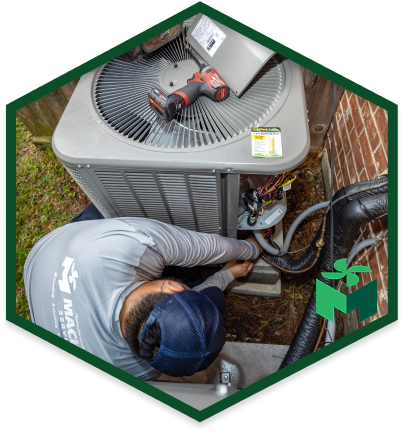
What You Get Today: Service Speed and Process
When you book a service appointment, you need clarity on what happens next. The service process is designed to be efficient, thorough, and respectful of your time and property. The focus is on identifying the root cause of the issue rather than just treating the symptom.
- Comprehensive System Diagnostics:
The technician performs a full electrical and mechanical audit of the heat pump. This includes checking refrigerant levels, testing the compressor’s amp draw, and verifying that the reversing valve actuates correctly.
Once the issue is identified, you receive a detailed explanation of the failure. The technician outlines the necessary repairs, the parts required, and the total cost. There is no guesswork or open-ended hourly billing.
- Immediate Repair Capabilities:
Most common heat pump issues, such as failed capacitors, contactors, or fan motors, can be resolved during the initial visit. If a specific part needs to be ordered, you are provided with a clear timeline for completion.
Before leaving, the technician verifies that all safety controls are functioning. This includes high and low-pressure switches and auxiliary heat strips, ensuring the unit operates safely.
How Heat Pump Installation and Replacement Works
Installing a heat pump in Friendswood requires precision. Because of the high humidity, an oversized unit will cool the house too quickly without removing moisture, leading to a cold but clammy home. Conversely, an undersized unit will run continuously, driving up utility bills without reaching the set temperature. A professional installation follows a strict protocol to ensure efficiency and longevity.
The process begins with a Manual J load calculation. This assessment considers the square footage of your home, insulation levels, window orientation, and local weather data to determine the exact BTU capacity required.
A high-efficiency heat pump cannot function correctly with leaky or undersized ducts. The existing ductwork is inspected for leaks, disconnects, and proper airflow static pressure. Adjustments are made to ensure the air distribution system matches the new unit’s requirements.
The outdoor pad is leveled and cleared of debris. In areas prone to heavy rain or standing water, the unit may be elevated on a stand or taller pad to protect it from flooding and allow for proper drainage during the defrost cycle.
- Refrigerant Line Set Installation:
New copper line sets are installed or existing ones are flushed and tested. The lines are brazed with nitrogen flowing through them to prevent oxidation, which protects the compressor from future damage.
- System Charging and Testing:
Once the unit is mechanically installed, it is vacuumed to remove moisture and non-condensables from the lines. The refrigerant charge is then weighed in precisely according to manufacturer specifications. The system is tested in both heating and cooling modes to verify performance.
When Replacement Beats Repair: The Decision Guide
Deciding between repairing an aging unit or investing in a new system is a significant financial decision — view current specials. While repairs are often the lower upfront cost, they can be more expensive in the long run if the unit is nearing the end of its lifespan. Industry standards and financial logic provide a clear framework for making this choice.
Multiply the age of your equipment by the estimated cost of the repair. If the total exceeds $5,000, replacement is generally the smarter financial move. For example, a 12-year-old unit requiring a $500 repair (12 x 500 = 6,000) is a prime candidate for replacement.
If your current heat pump utilizes R-22 (Freon), it is obsolete. R-22 is no longer produced, making repairs involving refrigerant leaks prohibitively expensive. Upgrading to a system that uses R-410A or newer refrigerants like R-454B ensures future serviceability and compliance with environmental regulations.
If you have required repairs more than twice in the last two years, the system is likely entering a cascade of failures. Investing in a new unit stops the cycle of paying for band-aid fixes on a dying machine.
Modern heat pumps have significantly higher SEER2 (Seasonal Energy Efficiency Ratio) and HSPF2 (Heating Seasonal Performance Factor) ratings compared to units from just ten years ago. Replacing a 10 SEER unit with a 16 SEER2 system can reduce cooling costs by 30% or more, helping the new system pay for itself over time.
Local Notes: Considerations for Friendswood Homeowners
Operating HVAC equipment in Friendswood presents unique challenges due to the specific climate and regulatory environment. A standard installation that might work in a drier climate will fail here. Understanding these local factors is essential for a long-lasting installation.
With annual rainfall averaging 50 inches and high ambient humidity, your heat pump acts as a dehumidifier. Variable-speed compressors are highly recommended for this region because they can run at lower speeds for longer periods, extracting more moisture from the air without overcooling the space.
- Hurricane and Wind Protection:
During the Atlantic hurricane season, outdoor units are vulnerable to high winds. Local codes and best practices often dictate that the condenser unit be securely strapped to the concrete pad to prevent it from tipping or becoming a projectile during a storm.
While not directly on the beach, the proximity to the coast means the air can still be corrosive. Choosing units with special coil coatings or epoxy protection can extend the life of the aluminum and copper components that are prone to oxidation.
- Permitting and Compliance:
Friendswood has specific building codes regarding HVAC installations. This includes requirements for electrical disconnects, working space around the unit, and condensate drain management. Professional service ensures that all work is permitted and passes inspection, avoiding issues when you eventually sell your home.
Heat pumps produce a significant amount of water during the cooling cycle and the defrost cycle in winter. Given the flat terrain and heavy rainfall, ensuring the condensate line drains properly away from the foundation—and has safety float switches installed to prevent attic overflow—is a critical installation detail.
Proof and Differentiators
Choosing a service provider involves looking for technical competence and operational stability — read our reviews. Your heat pump is a complex piece of machinery that integrates electrical, mechanical, and thermodynamic systems. Improper handling can reduce efficiency by up to 20% and void manufacturer warranties.
Technicians undergo rigorous training to stay current with the latest heat pump technology, including inverter-driven compressors and communicating thermostat systems. This expertise ensures that sophisticated equipment is installed and serviced correctly.
Dealing with manufacturer warranties can be complex. Professional service includes handling the registration of new equipment and managing the paperwork for parts warranties on repairs, ensuring you receive the coverage you are entitled to.
Full licensing protects the homeowner from liability. All work meets or exceeds state and local electrical and mechanical codes. This adherence to standards is not just about compliance; it is about safety and performance reliability.
- Focus on Total Home Comfort:
The approach is holistic. It isn’t just about the box outside; it is about the airflow, the thermostat programming, and the insulation. This ensures that the temperature you set is the temperature you feel in every room of the house.
Reliable heating and cooling are non-negotiable in Texas. Whether you are facing an emergency breakdown or planning a proactive replacement, you need a partner who values precision and speed. Mackey Services delivers the expertise required to handle the humidity and heat of Friendswood.