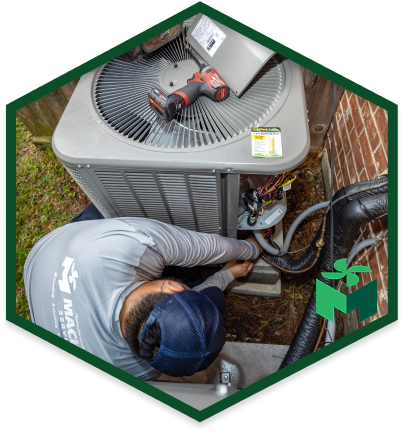
What Our Service Includes: Efficiency, Reliability, and Expertise
When you request service, you are paying for a systematic restoration of your home’s critical systems. We do not simply swap parts; we verify performance against manufacturer specifications. Our diagnostic and repair protocol is designed to minimize downtime and maximize energy efficiency.
Comprehensive HVAC Diagnostics and Repair
For heating and cooling systems, our service visit focuses on restoring the precise balance of airflow and refrigerant.
- System Analysis: Measure static pressure, airflow volume, and refrigerant levels to ensure the system operates within manufacturer design parameters.
- Component Testing: Test capacitors, contactors, motors, and control boards to identify components that are weak or failing.
- Leak Detection: Use electronic leak detectors to locate breaches in coils or line sets before recharging the system.
- Air Quality Check: Inspect ductwork for separation or collapse, which can lead to energy loss and poor humidity control.
Electrical Troubleshooting and Service
Electrical work requires absolute precision to prevent fire hazards and code violations.
- Load Calculation: Assess your electrical panel to ensure it can handle modern appliances, EV chargers, and HVAC units without tripping breakers.
- Circuit Tracing: Trace circuits to identify short circuits, ground faults, or loose connections hidden behind walls.
- Safety Inspections: Inspect grounding systems and GFCI/AFCI protection to meet current National Electrical Code (NEC) standards.
Our Straightforward Process: From Call to Completion
We adhere to a rigid workflow that prioritizes clear communication and technical accuracy. We understand that inviting a technician into your home requires trust, which is why we have standardized our process to ensure consistent, high-quality results for every Fresno resident.
- Initial Consultation and Dispatch: Gather details regarding your emergency. Dispatch a fully stocked truck capable of handling most repairs on the first visit. Receive a notification when the technician is en route.
- On-Site Assessment: Perform thorough evaluation. For HVAC, check temperature differentials and electrical draw. For electrical work, test voltage drops and inspect panel integrity.
- Upfront Options: Present a detailed report of findings with options ranging from immediate repairs to comprehensive system upgrades, including total costs.
- Execution of Work: Begin approved solutions immediately. Use drop cloths and shoe covers to protect your property.
- Final Testing and Walkthrough: Test the system under load, explain new equipment operation, and ensure the workspace is clean.
Deciding Between Repair vs. Replacement: A Quick Guide
Determining whether to invest in a repair or commit to a full system replacement is a financial and logistical calculation. We help you make this decision based on data, equipment age, and long-term efficiency goals.
When to Repair
If your system is relatively new and the cost of repair is reasonable, restoration is usually the best path.
- The 50% Rule: Repair cost is less than 50% of a new system and unit is not near end of lifespan.
- Minor Component Failure: Capacitors, sensors, or single breakers are routine fixes that do not compromise the entire system.
- Warranty Coverage: Facilitate parts replacement under manufacturer warranty to minimize out-of-pocket costs.
When to Replace
There are specific thresholds where continuing to repair a unit becomes a sunken cost.
- System Age: HVAC systems generally last 10–15 years. Older units have reduced efficiency and higher risk of failure.
- R-22 Refrigerant: Repairs involving R-22 refrigerant are often cost-prohibitive due to phase-outs.
- Outdated Electrical Panels: Fuse boxes or brands known for safety failures should be upgraded to modern breaker panels.
- Frequency of Breakdowns: More than two service visits in the last year may indicate replacement is more cost-effective.
Navigating Local Permits and Utility Rebates in Fresno
Operating in Fresno and surrounding areas involves specific regulatory and environmental considerations. We handle compliance so you avoid fines or resale complications.
Permitting and Code Compliance
- Electrical Permits: Panel upgrades, generator installations, or rewiring require permits and inspection; we manage applications and inspections.
- HVAC Change-outs: Condenser or furnace replacement meets local energy codes and safety regulations.
Climate-Specific Considerations
- Humidity Control: Two-stage or variable-speed compressors remove more moisture than standard single-stage units.
- Surge Protection: Install whole-home surge protection to shield electronics and HVAC boards from lightning strikes and grid surges.
Efficiency Rebates
- SEER2 Ratings: Install high-SEER2 rated systems qualifying for local and federal rebates.
- Heat Pumps: Incentives for switching from electric resistance heating to efficient heat pump technology.
Why Choose Us? Trusted Local Service for Over 20 Years
Your home’s mechanical and electrical systems are too important to trust to general handymen or unlicensed contractors. You need a partner who understands modern equipment and environmental stressors of the Texas Gulf Coast.
- Dual-Trade Expertise: Dedicated specialists for HVAC and electrical problems ensure mastery of each craft.
- Local Knowledge: Understand local grid fluctuations, soil conditions, and heat loads to recommend lasting solutions.
- Guaranteed Satisfaction: If a repair fails or installation underperforms, we return to make it right at no cost to you.
We are committed to keeping your lights on and your home cool. When you choose Mackey Services, you choose a partner dedicated to the safety, efficiency, and comfort of your living space.