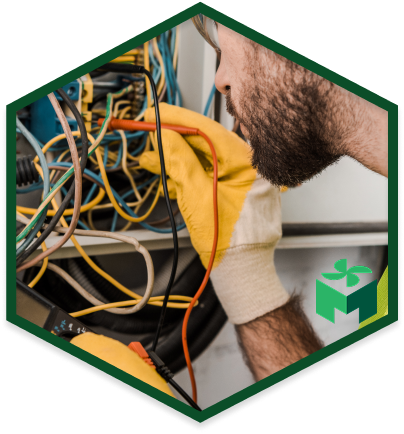
Our EV Charger Installation Process Explained
A structured installation process ensures that your vehicle is ready to charge immediately upon completion. We follow a rigorous technical protocol to ensure every component meets the National Electrical Code (NEC) and local building standards.
- Load Calculation and Site Assessment
First, we perform a load calculation on your home’s electrical system. This determines if your 100-amp or 200-amp panel has sufficient overhead to support a dedicated EV circuit. If the panel is at capacity, we identify the need for load management devices or a heavy-up service upgrade. We also inspect the proposed charger location for Wi-Fi signal strength and physical accessibility.
Next, we handle the necessary paperwork. Electrical work of this magnitude requires a permit in almost every municipality. We submit the load calculations and diagrams to the city to ensure the work is registered and approved. We then plan the conduit run—the path the wire will take from the panel to the car—to minimize visual impact on your home’s exterior or interior aesthetics.
Then, the physical work begins. We install the conduit and pull the heavy-gauge copper conductors. This step is critical; using undersized wire can lead to voltage drop and overheating. We install a new, dedicated circuit breaker in your main panel. If a disconnect switch is required by code due to the location of the charger, it is installed at this stage.
After the wiring is in place, we mount the EVSE (Electric Vehicle Supply Equipment) to the wall studs or a pedestal. We strip the wires and terminate them into the charger’s terminals. Precise torque tools are used here; loose connections are a primary cause of electrical fires, so we tighten every screw to the exact inch-pounds specified by the manufacturer.
- Testing and Commissioning
Finally, we energize the circuit and test the voltage levels. We simulate a charging session to ensure the unit is delivering the correct power flow without tripping the breaker. We assist you in pairing the charger with your smartphone, setting up charging schedules to take advantage of time-of-use utility rates, and demonstrating how to interpret the LED status lights on the unit.
Deciding Between a New Installation and an Upgrade
Many EV owners start with the mobile connector cable that comes with the car, plugging it into a standard 120-volt outlet. This “Level 1” charging adds only 3 to 5 miles of range per hour, which is often insufficient for daily commuters. Deciding to move to a Level 2 installation is the most common upgrade, but there are nuances to consider regarding existing high-voltage outlets versus dedicated hardwired units.
If you already have a NEMA 14-50 outlet (commonly used for dryers or welders) in your garage, you might assume you are ready to charge. However, standard household receptacles are not rated for the continuous high load of EV charging. EV chargers draw maximum power for hours at a time, which can melt standard receptacles. Replacing an existing outlet with an industrial-grade receptacle or removing the receptacle entirely to hardwire the station is often necessary for safety and longevity.
Another decision point arises when adding a second EV to the household. If your panel cannot support two separate 50-amp circuits, you do not necessarily need a costly panel upgrade. We can install chargers with load-sharing capabilities. These units communicate with each other, splitting the available power when two cars are plugged in and delivering full power when only one is charging.
Mackey Services recommends evaluating your long-term vehicle plans during the initial installation. Installing a 60-amp circuit now, even if your current car only accepts 32 amps, “future-proofs” your garage for the next generation of EVs that may charge at faster rates. Hardwiring is generally preferred over plug-in installations for outdoor setups or for vehicles capable of charging at 48 amps, as NEMA plugs are capped at 40 amps of continuous draw.
Understand Local Requirements: Permits and Rebates
Texas presents specific environmental and regulatory factors that influence how EV chargers should be installed. The intense heat experienced during the summer months impacts both battery management systems and the charging equipment itself. If your charger is installed outdoors, it must be rated NEMA 3R or NEMA 4 to withstand not just rain, but also the extreme UV exposure and ambient temperatures found in the region. We ensure that conduit and enclosures used for exterior installations are UV-rated to prevent cracking and degradation over time.
Local utilities in the area often have specific initiatives regarding EV infrastructure. While some homeowners attempt unpermitted work to save time, utility providers may deny rebates or incentives if the installation is not inspected and approved by the city. Furthermore, unpermitted electrical work can void home insurance policies in the event of an electrical fire.
Compliance involves more than just pulling a permit. It involves adhering to local amendments to the National Electrical Code. For instance, recent code cycles require GFCI protection for all outlets in garages and exterior locations. However, some EV chargers have internal GFCI monitoring that conflicts with GFCI breakers, causing “nuisance tripping.” We understand how to navigate these code requirements to satisfy inspectors while ensuring your charger operates reliably without constant interruptions.
Grid stability is another local consideration. Some utilities offer time-of-use plans that significantly lower the cost of electricity during the night. We configure your equipment to align with these windows, ensuring that your vehicle pulls power only when rates are lowest, effectively reducing the “fuel” cost of your vehicle.
Why Choose Us: Certifications and Customer Satisfaction
Selecting the right contractor for high-voltage electronics is a decision that impacts the safety of your home and the lifespan of your vehicle’s battery. General handymen or non-specialized electricians may lack the specific training required for EVSE (Electric Vehicle Supply Equipment). Incorrect wire sizing or improper grounding can damage the onboard charger of the vehicle, leading to expensive repairs that car warranties may not cover if the home infrastructure was at fault.
We maintain certifications with major EV hardware manufacturers. This status is earned through rigorous training on specific product lines, ensuring that we understand the distinct requirements of different brands, from Tesla Wall Connectors to universal J1772 chargers. Being a certified installer often means that the manufacturer’s warranty on the hardware is extended or prioritized because the unit was installed by a verified professional.
Our approach prioritizes a “right the first time” methodology. We do not cut corners on materials; we use commercial-grade wire and conduit that exceeds minimum code requirements. We handle the logistical burden of the installation, from the initial load calculation to the final inspection coordination with local building departments. This turnkey service allows you to enjoy the benefits of EV ownership without managing the technical complexities of electrical construction.
Reliability is our metric for success. An EV charger is a critical appliance; if it fails, you cannot get to work the next day. We provide thorough post-installation support and warranties on our workmanship. If a breaker trips or a connection fault occurs, we resolve the issue promptly. Trust Mackey Services to power your journey with professional, compliant, and efficient charging solutions.