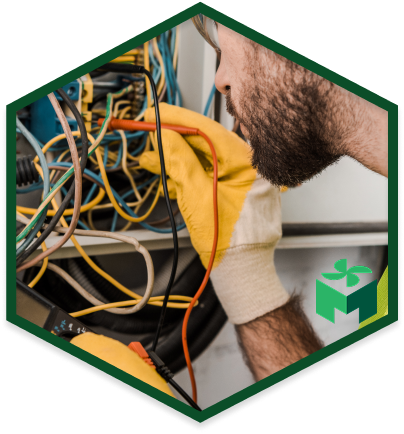
Today’s Installation: What to Expect
When you schedule an installation, the goal is to have a fully operational charging station by the end of the day. The process begins with a thorough assessment of your existing electrical panel. EV chargers are high-draw appliances, often requiring 40 to 60 amps of dedicated power. We verify that your panel has the physical space for a new double-pole breaker and the electrical capacity to handle the additional load without exceeding the service rating of your home.
The scope of work generally includes the following components:
- Site Assessment: We identify the optimal location for the charger based on your parking habits and the location of the charge port on your vehicle.
- Circuit Installation: A dedicated 240-volt circuit is installed directly from your main panel to the charger location. This ensures the charger draws power independently of other household appliances.
- Conduit Run: We run durable conduit to protect the wiring. In many garage setups, this involves surface-mounted conduit that is bent cleanly and secured firmly to the wall for a professional aesthetic.
- Connection Type: You decide between a hardwired unit or a plug-in unit. Hardwired units typically offer higher charging speeds and are more weather-resistant, while plug-in units offer portability.
- Safety Torque: All connections are torqued to manufacturer specifications to prevent loose connections, which are a primary cause of electrical arcing and heat buildup.
If your current electrical panel is full or outdated, the scope may extend to include a panel upgrade or the installation of a sub-panel. This ensures your home remains code-compliant and safe. We provide a clear outline of these requirements before work begins so you understand exactly what is being installed and why.
EV Charger Installation: Step-by-Step
A safe installation follows a rigid technical protocol. Our technicians adhere to a specific sequence to ensure every safety check is passed and the system performs efficiently for years to come.
- Load Calculation
- Before touching a wire, we perform a load calculation to determine the remaining capacity of your home’s service.
- This calculation adheres to NEC Article 220, ensuring that adding a continuous EV load will not overload your main breaker.
- If the calculation shows limited capacity, we discuss load management systems that allow charging only when other appliances are not in use.
- Permitting and Code Compliance
- We pull the necessary electrical permits required by the city of Galveston and local municipalities.
- This step is mandatory for insurance purposes and future home sales.
- We ensure compliance with local amendments to the National Electrical Code, particularly regarding GFCI protection for garage outlets.
- Breaker and Wire Sizing
- We select the wire gauge based on the distance of the run and the amperage of the charger.
- Voltage drop calculations are performed for long runs to ensure the vehicle receives consistent power.
- We install a dedicated breaker sized at 125% of the charger’s continuous load rating, as required by code for continuous duty devices.
- Conduit and Wiring Installation
- Technicians run the conduit from the panel to the mounting location, navigating obstacles like shelving or drywall.
- We use appropriate conduit types (EMT, PVC, or MC cable) based on whether the installation is indoors, outdoors, or exposed to physical damage.
- Copper conductors are pulled through the conduit, ensuring no insulation damage occurs during the process.
- Mounting and Termination
- The charging unit or NEMA receptacle is securely mounted to a stud or masonry wall using heavy-duty hardware.
- Wires are stripped and terminated at the charger and the panel.
- We apply anti-oxidant compound to aluminum connections if applicable, though copper is standard for the final connection points.
- System Testing and Commissioning
- Once powered on, we measure voltage levels to ensure they fall within the acceptable range (typically 208V–240V).
- We connect a test vehicle or a simulator to verify that the charger communicates correctly with the vehicle and initiates the charge cycle.
- For smart chargers, we assist in connecting the unit to your home Wi-Fi network for app-based monitoring and scheduling.
Choosing Installation Over Repair: A Quick Guide
Homeowners often ask if they can utilize existing 240V outlets (like those for dryers) or repair older outlets for EV use. In almost every scenario, a dedicated new installation is the superior and safer choice. Electric vehicle charging places a unique stress on electrical components that standard outlets were not designed to handle.
- Continuous Load Requirements
- Standard household outlets are designed for intermittent loads. An EV charger pulls maximum current for hours at a time.
- Reusing an old dryer outlet often leads to melting or burnout because the receptacle contacts are worn and cannot handle the heat generated by continuous charging.
- New installations use industrial-grade receptacles or hardwired connections specifically rated for EV duty cycles.
- Speed and Efficiency
- Older 240V outlets may be on 30-amp circuits, limiting your charging speed to 24 amps.
- A new installation allows for 50-amp or 60-amp circuits, enabling charging speeds up to 48 amps.
- This difference significantly reduces charging time, allowing you to recover full range in a few hours rather than overnight.
- Smart Features and Connectivity
- Older “dumb” chargers or simple outlets lack data connectivity.
- New installations allow for smart chargers that track energy usage, schedule charging during off-peak utility hours, and integrate with solar panel systems.
- Replacing an old setup with a smart hardwired unit provides granular control over your energy costs.
- Safety Upgrades
- Current code requires GFCI protection for outlets in garages and outdoor areas. Older outlets likely lack this protection.
- New installations incorporate necessary surge protection and ground fault monitoring to protect the vehicle’s sophisticated onboard electronics.
- If you notice discoloration around an existing outlet or if the breaker trips frequently, it is time to replace the circuit entirely rather than attempting a repair.
Local Installation Guidelines and Utility Incentives
Installing an EV charger in Galveston involves specific considerations regarding the local climate and utility regulations. The coastal environment introduces humidity and salt air, which accelerates the corrosion of electrical components. For outdoor installations, we utilize NEMA 3R or NEMA 4 rated enclosures that are specifically sealed against moisture and dust ingress. Standard indoor-rated equipment will fail prematurely in these conditions.
- Permitting: Galveston requires electrical permits for new circuits. This process involves a plan review and a final inspection by a city official. We handle this logistics chain completely.
- Code Adoption: Texas generally follows the NEC, but local jurisdictions may have specific amendments regarding disconnect switches and service disconnects. We ensure your installation passes inspection on the first attempt.
- Utility Requirements: CenterPoint Energy and other local providers have specific guidelines regarding meter clearance and service entry. If a service upgrade is required to accommodate your EV charger, we coordinate the disconnect and reconnect process with the utility provider.
Financial incentives play a major role in the decision to install. The federal government offers tax credits for the installation of EV charging hardware in residential properties. Additionally, Texas utility companies frequently offer rebates for installing Level 2 chargers or for enrolling in time-of-use (TOU) rate plans. These plans incentivize charging overnight when demand on the grid is lower. We can advise you on the documentation needed to claim these rebates, effectively lowering the total cost of your investment.
Why Choose Us: Our Commitment to Excellence
Selecting the right contractor for your EV charger installation is a decision that impacts the safety of your home and the reliability of your vehicle. We differentiate ourselves through specialization. While general handymen may offer to install a localized outlet, we provide a comprehensive electrical service designed specifically for the demands of electric vehicles — read our reviews.
- Licensed and Insured: We operate with full licensing and carry the necessary insurance to protect your property during the installation.
- Brand Agnostic Expertise: We are trained to install all major charger brands, including Tesla Wall Connectors, ChargePoint Home Flex, and ClipperCreek units. We recommend hardware based on your vehicle’s acceptance rate and your home’s electrical capacity.
- Future-Proofing: We size wiring and conduit to accommodate potential future upgrades. If you plan to buy a second EV or a truck with a larger battery, your infrastructure will be ready.
- Clean and Professional: We respect your home. Technicians use drop cloths, wear shoe covers, and ensure all drywall penetrations are sealed and finished. The conduit is run parallel to building lines for a neat appearance.
We believe that the transition to electric driving should be seamless. By handling the technical complexities, permitting, and inspection coordination, Mackey Services ensures that all you have to do is plug in.
Ready to upgrade your home charging experience? Secure your installation date today.