Our Electrical Services – What’s Included and When
A professional electrical repair service covers a vast array of components within your residential grid. We handle everything from minor fixture malfunctions to major system failures. Understanding the scope of what is included helps you know when to call for professional assistance — check our specials for current offers.
- Diagnostic and Troubleshooting: The most critical part of any electrical repair is the diagnosis. Wiring is mostly hidden behind drywall, making visual inspection difficult for the average homeowner.
- Advanced circuit tracing to locate breaks or shorts behind walls.
- Load testing to determine if a specific circuit is drawing too much power.
- Thermal imaging inspections to identify hot spots in panels or switches before they ignite.
- Voltage testing to ensure outlets are delivering consistent power.
- Circuit Breaker and Panel Repair: The electrical panel is the heart of your home’s power system. Issues here can affect the entire property.
- Replacement of worn-out or defective breakers that trip nuisance.
- Tightening of loose bus bar connections which can cause arcing and heat buildup.
- Repairing main lugs and neutral bars to ensure stable voltage delivery.
- Retrofitting older panels with modern safety mechanisms.
- Outlet and Switch Repair: Outlets and switches are the most frequently used components and wear out physically over time.
- Replacement of loose outlets that no longer hold plugs securely.
- Repairing Ground Fault Circuit Interrupter (GFCI) outlets that fail to reset in wet areas like kitchens and bathrooms.
- Fixing dimmer switches that cause lights to buzz or flicker.
- addressing Arc Fault Circuit Interrupter (AFCI) nuisance tripping.
- Lighting and Ceiling Fan Wiring: Lighting issues often stem from wiring faults rather than the bulb or fixture itself.
- Rewiring faulty chandelier or recessed lighting connections.
- Repairing ceiling fans that wobble, make noise, or fail to respond to speed controls.
- Troubleshooting outdoor lighting systems damaged by weather or moisture intrusion.
- Securing loose junction boxes that pose a physical falling hazard.
Understanding the Electrical Repair Process
Transparency in the repair process ensures that you are never left in the dark regarding the status of your home’s electrical system. We follow a structured workflow designed to maximize safety and efficiency while minimizing disruption to your daily routine.
- Initial Assessment and Safety Check: Upon arrival, the technician performs a safety check of the immediate area. This involves turning off power to the affected circuit to ensure a safe working environment. The technician listens to your description of the problem and visually inspects visible components for signs of damage, such as charring or melting.
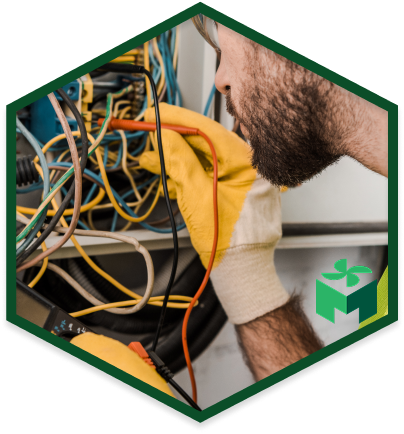
- In-Depth Diagnostics: Using specialized tools like multimeters and circuit analyzers, the technician tests the flow of electricity. This step isolates the issue to a specific wire, device, or breaker. If the issue is hidden, non-invasive methods are used first to locate the fault without cutting into drywall unnecessarily.
- Clear Explanation and Quote: Once the problem is identified, you receive a clear explanation of what failed and why. You are presented with repair options, ranging from a direct fix to a more comprehensive upgrade if necessary. A firm price is provided before any physical repair work begins, ensuring there are no surprises on the final invoice.
- Execution of Repairs: The technician proceeds with the approved repair. This may involves stripping and re-terminating wires, replacing damaged devices, or re-balancing the load on the panel. All work is performed according to the National Electrical Code (NEC) to ensure long-term compliance and safety.
- Final Testing and Cleanup: After the repair is complete, power is restored, and the system is stress-tested. The technician turns on appliances and lights to verify that the fix holds under load. The work area is cleaned, and any debris is removed. Finally, you receive a report detailing the work performed and any warranty information.
When to Consider Electrical Upgrades vs. Repairs
Deciding between repairing an existing component or upgrading the system is a common decision point for homeowners. While repair is often the most cost-effective immediate solution, there are scenarios where upgrading is the safer and more financial sound choice in the long run. At Mackey Services, we help you evaluate the condition of your system to make the right choice.
Age of the Wiring
Homes built prior to the 1970s may contain aluminum wiring or knob-and-tube wiring.
- Repair: Minor connections can be repaired using specific connectors, but this is often a temporary stopgap.
- Upgrade: If you experience frequent issues with older wiring, a partial or full rewire is recommended. Aluminum wiring expands and contracts differently than copper, leading to loose connections and fire hazards over time.
Panel Capacity
Modern homes consume significantly more power than homes from twenty years ago due to computers, HVAC systems, and electric vehicles.
- Repair: You can replace individual breakers, but if your panel is full (no slots left), a repair cannot add capacity.
- Upgrade: If your home operates on 60 or 100 amps, upgrading to a 200-amp panel is necessary to run modern appliances safely without overloading the system.
Frequency of Failure
Recurring problems indicate a systemic issue rather than a localized fault.
- Repair: Occasional tripping of a breaker due to running a vacuum and a hairdryer simultaneously is normal and can be managed.
- Upgrade: If a breaker trips daily or lights flicker constantly whenever the AC turns on, the circuit is likely undersized. Installing dedicated circuits for high-draw appliances is the correct solution.
Safety Device Availability
Older systems lack modern safety features required by current codes.
- Repair: Replacing a standard outlet with another standard outlet maintains the status quo.
- Upgrade: upgrading to GFCI outlets in wet areas and AFCI breakers in bedrooms adds a layer of protection against shock and electrical fires that older standard devices cannot provide.
Local Electrical Guidelines and Seasonal Considerations
Operating in League City and the greater Texas Gulf Coast region requires specific attention to environmental factors that influence electrical performance. The local climate is characterized by high humidity, salt air proximity, and intense storm seasons, all of which impact how electrical systems should be maintained and repaired.
- Humidity and Corrosion: Moisture is the enemy of electrical contacts. High humidity levels can lead to oxidation on copper wires and corrosion on breaker bus bars. This increases resistance, which generates heat and can lead to failure.
- We utilize anti-oxidant compounds on wire connections to prevent corrosion.
- Outdoor outlets and fixtures must use weather-resistant (WR) rated devices and “in-use” covers that protect the connection even when a cord is plugged in.
- Panel inspections often reveal rust or corrosion on the bottom of the enclosure if moisture is entering through the service cable; this requires immediate sealing and repair.
- Storm Preparedness and Surge Protection: Lightning strikes and grid fluctuations are common in this region.
- Standard repairs often include checking the grounding electrode system. A solid ground is your home’s primary defense against voltage spikes.
- We recommend and install whole-home surge protection devices at the panel level. While power strips protect individual TVs, a panel-level surge protector safeguards hardwired appliances like your AC unit, stove, and dishwasher from grid surges common during thunderstorms.
- Permits and Compliance: Electrical work in Texas is strictly regulated to ensure safety.
- Most significant repairs, such as panel replacements or running new circuits, require a permit from the local building department.
- Professional repairs ensure compliance with the latest adoption of the NEC. This is crucial not only for safety but also for insurance purposes and future home sales. Unpermitted work can complicate real estate transactions and may not be covered by homeowner’s insurance in the event of a fire.
Why Choose Us: Certifications and Customer Stories
Selecting the right contractor for electrical repair is a decision that impacts the safety of your home and family. The difference between a temporary patch and a permanent solution lies in the training and integrity of the technician — read our customer reviews.
Our team consists of fully licensed and background-checked electricians who undergo continuous training. The electrical industry evolves rapidly, with new technologies and code updates emerging regularly. We ensure our staff is up-to-date on the latest safety protocols and repair techniques. When a technician enters your home, they arrive in a marked vehicle, fully stocked with the parts needed to complete most repairs on the spot, respecting your time and property.
We do not believe in guesswork. Our diagnostic approach relies on precision equipment and proven methodologies. This ensures that you are not paying for unnecessary parts or labor. We stand behind our work with robust warranties on both parts and labor, giving you peace of mind long after the truck drives away. By strictly adhering to safety standards and focusing on clear communication, Mackey Services ensures your home is powered safely and reliably.
Don’t let electrical problems compromise your safety or comfort. Secure your home’s electrical system today. schedule your repair service