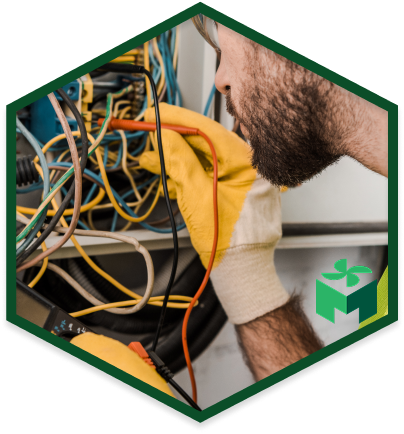
How Our Electrical Repair Services Work
We have streamlined the repair process to be as non-intrusive and efficient as possible. From the moment you notice a spark or a dead switch to the final safety check, every step is designed to restore power safely.
- Scheduling and Dispatch: First, you contact our dispatch team to report the issue. Based on the severity and symptoms described—such as burning smells, smoke, or total power loss—your call is prioritized. You receive a notification when the technician is en route to your home in Friendswood or the surrounding area.
- On-Site Safety Inspection: Upon arrival, the technician conducts a safety inspection of the immediate area. This ensures that the environment is safe to work in and prevents injury. The main breaker may need to be shut off temporarily to isolate the circuit in question.
- Root Cause Identification: Next, the technician troubleshoots the specific circuit or component. This goes beyond replacing a blown fuse; we investigate why the fuse blew in the first place. Whether it is a ground fault, a short circuit, or an overloaded neutral wire, we identify the underlying engineering failure.
- Execution of Repairs: Once you approve the quote, the repair work begins immediately. Mackey Services technicians use high-quality, code-compliant parts to replace damaged receptacles, wiring, or breakers. We ensure all connections are torqued to manufacturer specifications to prevent future loose connections, which are a leading cause of electrical fires.
- Validation and Cleanup: Finally, after the repair is complete, we re-energize the system and test the circuit under load to ensure stability. The work area is cleaned, and we walk you through exactly what was done, ensuring you are confident in the restoration of your power.
When to Opt for Replacement Over Repair
Homeowners often face the decision between repairing an existing component or upgrading to a newer model. While repair is often the most cost-effective route for minor issues, there are specific scenarios where replacement is the safer and more improved financial decision in the long run.
- Aging Electrical Panels: If your home still utilizes a fuse box or an electrical panel installed more than 25 years ago, repair parts may be obsolete or expensive. Furthermore, older panels often cannot handle the amperage draw of modern HVAC systems, electric vehicles, and high-definition electronics. If a panel is frequently tripping or buzzing, replacement is usually necessary to bring the home up to current capacity needs.
- Compromised Wiring Systems: Homes built during certain eras may contain aluminum wiring or knob-and-tube wiring. These systems are prone to loosening over time, creating high-resistance connections that generate heat and pose a significant fire risk. Repairing small sections of this wiring is often a temporary bandage. In these cases, rewiring or strategic replacement of circuits is recommended for safety.
- Recurring Surge Damage: Living in an area with high thunderstorm activity means your home is subject to frequent power surges. If you find yourself constantly replacing dimmer switches, GFCI outlets, or smart appliances due to “mysterious” failures, the issue may be a lack of whole-home surge protection. Installing a suppression system is more effective than continuously repairing individual fried components.
- Physical Damage and Corrosion: The humid subtropical climate can take a toll on outdoor electrical gear. Meter cans, weatherheads, and outdoor disconnects can suffer from corrosion and rust. Once moisture intrusion compromises an electrical enclosure, repair is rarely effective. The entire unit usually requires replacement to ensure a watertight seal and proper grounding.
Complying With Local Electrical Codes and Standards
Electrical work is heavily regulated for a reason: safety. Every repair performed must adhere to the National Electrical Code (NEC) as well as specific local amendments applicable to the region. Compliance is not optional; it is the baseline for ensuring your home remains insurable and safe for habitation.
- Permitting and Inspections: Certain repairs, such as replacing a main service panel or relocating a meter, require a permit from the city. This process involves a third-party inspection to verify the work meets all safety criteria. We handle the permitting process entirely, ensuring that all paperwork is filed correctly and that the work passes inspection on the first attempt.
- Grounding and Bonding Requirements: Proper grounding is essential for diverting stray voltage away from people and appliances. Over time, ground rods can degrade, or water pipe grounds can become disconnected during plumbing renovations. We verify that your electrical system’s grounding and bonding meet current standards, drastically reducing the risk of shock.
- GFCI and AFCI Protection: Modern codes require Ground Fault Circuit Interrupter (GFCI) protection in wet areas like kitchens, bathrooms, and garages, and Arc Fault Circuit Interrupter (AFCI) protection in living areas and bedrooms. If your home relies on standard breakers, we may recommend upgrading to these safety devices during a repair call to bring your home up to modern safety standards.
Common Electrical Issues We Resolve
Our team is equipped to handle a vast array of electrical malfunctions. We address the full spectrum of residential electrical problems, from the service entrance cable down to the individual device.
- Circuit Breaker Issues: Breakers that trip immediately upon resetting, emit buzzing sounds, or feel hot to the touch indicate serious overload or internal failure. We replace faulty breakers and balance panel loads.
- Lighting Failures:Flickering recessed lights, ballast failures in fluorescent fixtures, and broken three-way switches are common issues. We troubleshoot and repair lighting circuits to eliminate strobing and restore steady illumination.
- Outlet and Switch Repair: Loose outlets that cannot hold a plug, switches that crackle when toggled, and dead GFCI receptacles are not just annoyances; they are arcing hazards. We replace these devices with commercial-grade alternatives for longevity.
- Wiring Faults: Rodent damage, accidental nail punctures from hanging pictures, or insulation degradation can break the continuity of a circuit. We locate the break and repair the wiring within the walls with minimal disruption to drywall whenever possible.
- Ceiling Fan Malfunctions: Fans that wobble excessively, hum loudly, or fail to respond to speed controls often have capacitor issues or loose mounting brackets. We secure and repair fans to ensure quiet, safe operation.
Why Choose Us for Your Electrical Needs
Selecting an electrical service provider is a decision that impacts the safety of your property and your family. We operate with a philosophy that prioritizes technical excellence and transparent customer service.
- Fully Licensed and Insured: Every technician dispatched to your home holds the necessary state licensure and undergoes continuous training on code updates and new technologies. We carry full liability insurance and workers’ compensation, protecting you from any liability during the repair process.
- Upfront Pricing Model: You will never be surprised by the bill. We provide a flat-rate price for the repair after the diagnosis. This means the price does not change even if the job takes longer than anticipated. You pay for the solution, not the minutes on the clock.
- Satisfaction Guarantee: We stand behind the quality of our craftsmanship. If a repair fails or does not meet your expectations, we return to make it right. Our reputation is built on long-term relationships with homeowners who trust us to keep their lights on and their homes safe.
- Respect for Your Home: Electrical repair can be messy, involving drywall dust or insulation. Our technicians wear shoe covers, use drop cloths, and clean up the workspace thoroughly before departing. We treat your home with the same respect we would treat our own.