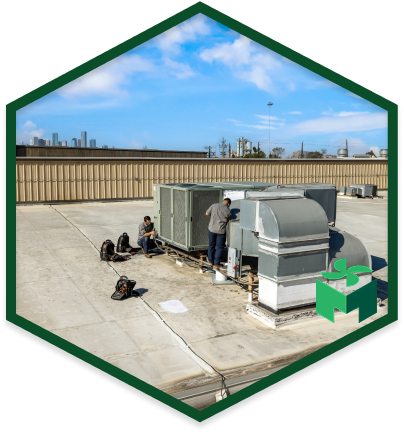
Comprehensive Services From Inspection to Installation
Businesses require a clear understanding of the scope and timeline of HVAC work to plan their operations effectively. Whether you manage a retail space, an office building, or a light industrial facility, the service process is designed to be transparent and minimally invasive.
The scope of service begins with a thorough site evaluation. For repairs, this means isolating the failed component—be it a seized compressor, a faulty contactor, or a refrigerant leak. Once the issue is identified, you receive a clear explanation of the failure mode and the necessary steps for rectification. There is no guesswork; diagnostics are performed using advanced metering and pressure testing tools to ensure accuracy.
For installations and replacements, the focus shifts to load matching and logistics. A unit that is too large will short-cycle, leading to humidity issues—a critical failure in the humid Texas climate—while a unit that is too small will run continuously without achieving the setpoint. The service includes:
- Site Assessment: Evaluating current ductwork integrity, electrical capacity, and structural support for rooftop units.
- System Selection: Identifying equipment that meets specific IEER (Integrated Energy Efficiency Ratio) standards for commercial zones.
- Logistics Planning: coordinating crane lifts, road closures if necessary, and safety protocols to protect your staff and customers during the work.
- Commissioning: A distinct phase where the system is started, tested, and balanced to ensure airflow meets design specifications before the job is marked complete.
Your Path to Improved HVAC Efficiency & Reliability
Investing in a new commercial HVAC system is a capital expenditure that should yield a return in the form of lower utility bills and reduced repair costs. The installation process is rigorous, following a specific sequence to ensure the equipment operates at peak manufacturer specifications from day one.
- Load Calculation: The process starts with a detailed heat load calculation. This accounts for the square footage, window exposure, insulation values, and internal heat gains from lighting, equipment, and occupancy. This data dictates the tonnage required for the facility.
- Ductwork and Airflow Analysis: Even the most efficient unit will fail if the air distribution system is compromised. Technicians inspect existing ductwork for static pressure issues, leaks, or design flaws that restrict airflow. Modifications are made to plenums and drops to ensure balanced air delivery to all zones.
- Equipment Placement and Securing: Proper leveling and vibration isolation are critical for commercial units. Rooftop curbs are inspected and sealed to prevent roof leaks. Ground-mounted units are set on concrete pads with appropriate clearance for airflow and service access.
- Refrigerant and Electrical Integration: Refrigerant lines are brazed under nitrogen flow to prevent oxidation inside the copper. The system is then pressure-tested and evacuated to remove moisture before being charged with refrigerant to the exact subcooling or superheat target. Electrical connections are torqued to spec to prevent hot spots.
- System Commissioning: The final step involves setting up thermostats or building automation systems. Technicians verify the sequence of operation, checking that economizers open correctly to bring in fresh air when conditions allow and that backup heat sources engage during rare freezing events.
Deciding Between HVAC Repair or Full System Replacement
One of the most difficult decisions for a facility manager is determining when to stop repairing an aging unit and approve a replacement. Mackey Services assists in this decision-making process by providing data-driven recommendations rather than sales pressure.
Several factors influence this decision. The “50% Rule” is a common industry benchmark: if the cost of the repair approaches 50% of the value of a new system, replacement is generally the wiser financial move. However, other variables play a crucial role.
- System Age: Commercial HVAC units typically last 15 to 20 years. If your equipment is nearing the end of this window, major components like compressors and heat exchangers are more likely to fail. Investing in a major repair on a system at the end of its life cycle often results in diminishing returns.
- Frequency of Breakdowns: If your maintenance logs show repeated service calls for the same unit over a short period, the system has likely become unreliable. Frequent downtime disrupts business operations and incurs cumulative repair costs that could have funded a new, warrantied system.
- Energy Efficiency Ratings: Older units often utilize phased-out refrigerants like R-22 and have significantly lower efficiency ratings compared to modern equipment. Replacing a 10 SEER unit with a modern, high-efficiency system can result in substantial monthly energy savings, effectively offsetting a portion of the installation cost over time — view current specials today.
- Comfort Complaints: If the system can no longer maintain consistent temperatures or humidity levels despite repairs, it is no longer serving its purpose. In Dickinson, where humidity control is vital for preventing mold and ensuring comfort, a failing system can lead to indoor air quality liabilities.
Adhering to Texas Codes and Maximizing Seasonal Efficiency
Operating in Dickinson and the greater Texas region requires strict adherence to local building codes and an understanding of specific climate challenges. Commercial HVAC work involves permitting processes to ensure safety and compliance with energy conservation standards.
Local regulations dictate specific requirements for ventilation, energy efficiency, and refrigerant management. Professional technicians navigate these codes to ensure your facility remains compliant, avoiding fines and issues during property inspections or sales. This includes adhering to the Department of Energy’s updated efficiency standards, which impact which units can be legally installed in the region.
Seasonality in Texas presents unique challenges.
- Summer Readiness: The cooling season is long and demanding. Systems must be prepared to handle sustained temperatures above 100°F. This requires clean condenser coils to reject heat effectively and verified refrigerant charges.
- Transitional Weather: Spring and fall can see wide temperature swings. Systems with economizers can utilize cool outdoor air for free cooling, significantly reducing compressor runtime and energy usage during these months.
- Winter Protection: While winters are generally mild, cold snaps can be severe. Ensuring gas furnaces or electric heat strips are functional is a safety necessity to prevent frozen pipes and maintain a habitable workspace.
Proper insulation and sealing are also emphasized. In commercial buildings, positive building pressure is maintained to prevent the infiltration of unconditioned, humid outdoor air. This protects the building envelope and reduces the latent load on the AC equipment.
Why Choose Us: Certifications, Reviews, and Case Studies
Selecting a commercial HVAC provider is a decision based on trust and technical capability. The right partner understands the nuances of commercial mechanical systems and the urgency of business continuity.
Technical certification is non-negotiable. Technicians undergo rigorous training to stay current with the latest technology, from variable refrigerant flow (VRF) systems to smart building controls. This expertise ensures that diagnostics are accurate and repairs are performed according to manufacturer specifications, preserving equipment warranties.
Safety is paramount in commercial environments. Adherence to OSHA standards and proper protocols regarding electrical safety, ladder usage, and refrigerant handling protects your property and personnel during service visits. Transparency in pricing and process ensures that you are never caught off guard by the scope of work or the final invoice.
We utilize commercial-grade diagnostic tools and maintain a stocked inventory of universal parts to increase the likelihood of a first-visit fix. Whether managing a single storefront or a multi-building campus, the goal remains the same: efficient, reliable climate control that supports your business operations.
When you need a partner who values your time and understands the critical nature of your mechanical systems, look to Mackey Services. We deliver the expertise required to keep your commercial space comfortable and compliant, regardless of the weather outside.
Secure the comfort and safety of your commercial facility today. Contact Us Now for Immediate Service or Consultation