How the Repair and Restoration Process Works
The repair process is designed to be systematic and transparent, ensuring you know exactly what is happening with your facility’s equipment. The objective is to restore heat with minimal intrusion into your daily business operations. Commercial technicians are trained to work discreetly and safely, adhering to OSHA standards while on your property.
The typical workflow moves from dispatch to validation:
- Dispatch and Arrival: A qualified technician arrives at your facility with a fully stocked vehicle containing common commercial parts. They check in with your facility manager to understand the specific symptoms and access requirements.
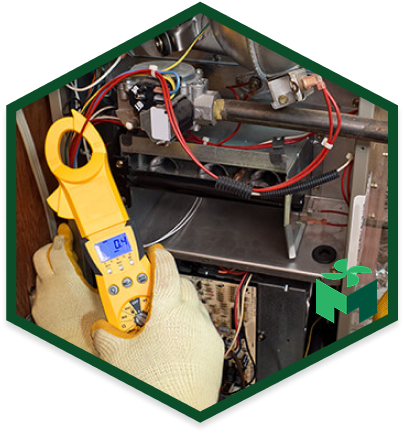
- System Diagnosis: The technician performs a static pressure test, electrical multimeter readings, and a visual inspection. They isolate the faulty component, whether it is a seized motor, a blown capacitor, or a fractured heat exchanger.
- Proposal and Approval: You receive a detailed report explaining the failure. This includes a clear explanation of the necessary repairs, the parts required, and the estimated time for completion. No work proceeds without your direct approval.
- Execution of Repair: The technician performs the repair. This may involve brazing refrigerant lines, rewiring control boards, or physically replacing mechanical parts. If specific non-stock parts are needed, expedited ordering processes are initiated.
- System Calibration: Once the part is installed, the system is not just turned on; it is calibrated. Gas pressure is adjusted to manufacturer specifications, and airflow is balanced to ensure even heat distribution.
- Validation and Reporting: The system is run through a full operational cycle to verify the repair. You receive a final service ticket detailing the work performed, providing documentation for your building maintenance records.
Determining When to Repair vs. Replace
Deciding between repairing an existing commercial unit or investing in a replacement is a financial and operational calculation. While repairs are often the fastest solution to an immediate crisis, there are specific thresholds where replacement becomes the more prudent business decision. This analysis prevents you from sinking capital into a “money pit” asset that will fail again shortly.
The industry standard for making this decision often relies on the age of the equipment multiplied by the cost of repair. However, in a commercial context, you must also consider tax implications, energy efficiency, and tenant comfort requirements.
Consider replacement if the following conditions apply:
- The 50% Rule: If the cost of the current repair approaches 50% of the cost of a new unit, replacement is generally the better long-term investment.
- System Age: Commercial RTUs typically last 15 to 20 years. If your unit is over 15 years old and requires a major component like a heat exchanger or compressor, repair is rarely cost-effective.
- Frequency of Breakdowns: If you have required multiple service calls in the last 12 months, the system has likely reached the end of its reliable service life. Reliability is a tangible asset in business; constant repairs erode that asset.
- Efficiency Ratings: Older units often operate at significantly lower SEER and AFUE ratings compared to modern equipment. upgrading can reduce monthly utility overhead by a substantial margin, offsetting the installation cost over time — view current specials for upgrades.
- R-22 Refrigerant: If your older system utilizes R-22 refrigerant (Freon), which has been phased out, repair costs involving refrigerant will be exorbitant. Transitioning to a system that uses R-410A or newer refrigerants is necessary for future-proofing.
Conversely, repair is the right choice when:
- The system is under 10 years old and generally well-maintained.
- The issue is an isolated electrical component or minor mechanical part.
- The unit is still under a manufacturer’s parts warranty, significantly reducing your out-of-pocket expense.
- You have short-term lease obligations that make capital expenditure unnecessary.
Mackey Services can provide a comparative analysis, showing you the projected energy savings of a new unit versus the cumulative costs of maintaining the old one, empowering you to make a data-driven decision.
Regional Considerations for HVAC in Friendswood
Operating a commercial facility in Friendswood, Texas, presents unique challenges that standard HVAC advice often misses. The local climate is characterized by high humidity and a “shoulder season” that can last for months, where mornings are cold and afternoons are hot. This requires a heating system that can cycle effectively without short-cycling, which causes excessive wear and tear.
Humidity Control is Critical
In this region, heating isn’t just about temperature; it is about moisture management. Even in cooler months, humidity levels in Friendswood can remain high. A properly functioning commercial HVAC system must modulate effectively to prevent “clammy” indoor environments. If your heating system is oversized or short-cycling, it will satisfy the temperature setting too quickly without running long enough to remove moisture, leading to mold growth risks and discomfort.
Winter Storm Preparedness
While Texas winters are generally mild, the threat of deep freezes is real. Commercial systems must be equipped with freeze protection stats and properly insulated condensate lines. During a hard freeze, RTUs are exposed to the elements. If the condensate trap freezes, the unit will shut down to prevent water damage, leaving your building without heat. Local technicians understand how to insulate these vulnerable points to maintain operation during unexpected cold snaps.
Permitting and Regulatory Compliance
Commercial HVAC work in Friendswood often requires adherence to specific building codes. Major repairs involving gas lines or unit replacements necessitate permits to ensure safety and code compliance. Unauthorized work can lead to fines and issues with insurance claims if a fire or safety incident occurs. Professional providers handle the permitting process with the City of Friendswood or relevant county offices, ensuring that all modifications to the building’s mechanical systems meet current safety standards.
Utility Infrastructure
Understanding the local utility landscape is also important. Whether your facility relies on electrical heat pumps or gas-fired furnaces supported by local gas providers, the system must be matched to the available infrastructure. Fluctuations in power quality during high-demand periods can damage sensitive HVAC control boards. Installing phase monitors and surge protectors is a recommended local practice to safeguard expensive commercial equipment against grid instability.
Differentiators in Commercial Service
Choosing a service provider for commercial heating is about risk mitigation. You need a partner who views your HVAC system as a critical business asset. The difference between a general handyman and a dedicated commercial HVAC specialist lies in the diagnostic approach and the capability to handle heavy-duty systems.
Specialized commercial technicians utilize advanced diagnostic tools, such as combustion analyzers and thermal imaging cameras, to see what is happening inside the equipment. This allows for predictive maintenance, identifying “hot spots” in electrical panels or uneven heat distribution in heat exchangers before they result in a catastrophic failure.
Safety is another non-negotiable differentiator. Commercial heating repairs often involve high-voltage electricity, natural gas, and working at heights on rooftops. Professional teams carry liability insurance and follow strict lockout/tagout procedures to protect your property and their personnel.
Furthermore, transparency in billing and scope is essential. You should receive a clear explanation of what failed, why it failed, and how the repair prevents recurrence. There should be no mystery charges or vague labor fees. A professional partner provides clear documentation that you can use for tax deductions on building maintenance and for reporting to building owners or stakeholders.