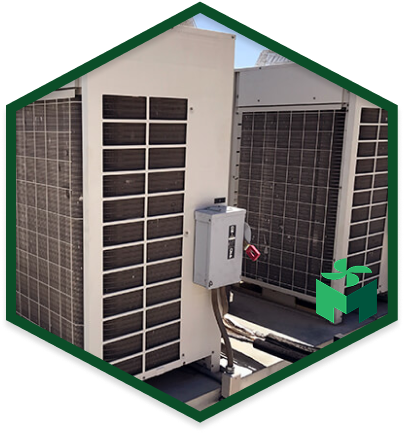
The Commercial AC Repair Process
Restoring a complex commercial HVAC system requires a methodical, technical approach. Unlike residential units, commercial systems often involve three-phase power, intricate zoning controls, and larger capacities that demand specialized handling. We do not guess; we test, measure, and verify.
The repair workflow is designed to be efficient and transparent:
- Initial Assessment and Safety Check: Upon arrival, the technician conducts a site safety analysis and speaks with the facility manager to understand the specific symptoms, such as uneven cooling, strange noises, or error codes.
- System Diagnostics: Using advanced multimeters and pressure gauges, we test electrical components, measure refrigerant pressures, and analyze airflow across the evaporator and condenser coils. This isolates whether the failure is mechanical, electrical, or airflow-related.
- Root Cause Identification: We look beyond the symptom. For example, if a compressor has failed, we investigate why it failed—checking for issues like liquid slugging or overheating—to prevent the new part from failing again.
- Proposal and Approval: You receive a detailed explanation of the findings and a clear quote for the repair. No work begins without your explicit approval.
- Execution of Repairs: The technician performs the necessary repairs, such as replacing contactors, brazing leak points, or swapping out blower motors, adhering to all safety protocols.
- Performance Verification: After the repair, the system is run through a full operational cycle. We measure temperature splits (delta T) and amp draws to ensure the unit is running at manufacturer specifications.
- Site Cleanup and Reporting: The work area is cleaned, and a detailed service report is provided for your maintenance records.
Diagnosing Common Commercial Cooling Failures
Commercial systems in Texas work harder than in almost any other region. The combination of extreme ambient temperatures and high internal heat loads puts immense stress on critical components. Understanding what went wrong helps in planning for future maintenance and capital expenditures.
Electrical Component Failure
The most common cause of sudden breakdown involves the electrical system. Capacitors, contactors, and relays wear out due to frequent cycling and voltage fluctuations. Loose connections can cause overheating, leading to burnt wires and system shutdown. Regular inspection of these components often catches failure before it stops the system, but when they fail, immediate replacement is required to restore power to the compressor and fans.
Refrigerant Leaks and Charge Issues
A system low on refrigerant cannot absorb heat effectively. In commercial units, leaks often develop in the evaporator or condenser coils due to vibration or corrosion. Simply adding refrigerant is not a solution; the leak must be located, repaired, and the system recharged to factory specifications. Running a system with low charge strains the compressor, leading to overheating and expensive failures.
Airflow Restrictions
Dirty filters, slipping belts, or blocked ducts restrict airflow, causing the evaporator coil to freeze. In a commercial setting, this can lead to water damage from melting ice and a complete loss of cooling capacity. We check belt tension and filter conditions as part of every repair visit to ensure the system can breathe.
Deciding Between Repair and System Replacement
One of the most difficult decisions a facility manager faces is determining when to stop repairing an aging unit and when to invest in a replacement. This decision impacts both current cash flow and long-term operational costs. Mackey Services provides honest, data-driven assessments to help you make this choice.
Consider the following factors when evaluating the future of your HVAC assets:
- The 50% Rule: If the cost of the repair approaches 50% of the value of a new system, replacement is generally the wiser financial move. Investing heavily in an old unit often leads to diminishing returns.
- System Age: Commercial AC units typically last 15 to 20 years. If your equipment is nearing the end of this lifespan, parts availability may decrease while the frequency of breakdowns increases.
- Frequency of Repairs: If your business has required multiple service calls in the last 12 months, the system is likely unreliable. The cumulative cost of frequent minor repairs often exceeds the monthly financing cost of a new, reliable unit.
- Energy Efficiency (SEER Ratings): Older units often have significantly lower efficiency ratings compared to modern standards. Upgrading to a high-efficiency system can result in substantial utility savings, which helps offset the installation cost over time — check our specials today.
- Comfort and Humidity Control: If the current unit runs but cannot maintain the desired temperature or humidity levels, it may be undersized or mechanically compromised beyond reasonable repair.
Addressing Dickinson’s Unique Climate Challenges
Operating HVAC equipment in Dickinson requires specific attention to environmental factors. The local climate is characterized by high humidity and long, hot summers, which creates a specific load profile for commercial buildings.
Managing Latent Heat and Humidity
Air conditioning is not just about lowering temperature; it is about removing moisture. In our region, the “latent load” (humidity) is often just as high as the “sensible load” (heat). If a system is short-cycling or not operating correctly, it fails to dehumidify the air. This leads to a clammy indoor environment, potential mold growth, and discomfort for occupants. Repairs often involve adjusting refrigerant charges and airflow to maximize moisture removal.
Corrosion and Coastal Influence
Proximity to the Gulf Coast means that commercial units are often exposed to salt air, which accelerates corrosion on aluminum fins and copper tubing. This leads to premature coil failure and refrigerant leaks. We inspect for signs of corrosion during every repair and can recommend protective coatings or specific maintenance protocols to extend the life of the metal components.
Regulatory Compliance and Permits
Commercial HVAC work in Texas is subject to specific building codes and regulations. Major repairs or replacements often require permits to ensure safety and energy compliance. Additionally, the handling of refrigerants is strictly regulated by the EPA. Professional service ensures that all work is documented, compliant with local codes, and that environmental protocols for refrigerant recovery are strictly followed.
Technical Expertise and Operational Excellence
Choosing a service provider for commercial AC repair is about minimizing risk. You need a partner who understands the complexity of commercial loops, building automation systems, and three-phase electrical power.
We prioritize technical certification. Technicians are NATE-certified, ensuring they have demonstrated real-world working knowledge of HVAC systems. This expertise translates to faster diagnosis and fewer callbacks. We also carry adequate insurance to protect your property and our staff during onsite operations.
Furthermore, we understand that your business may have specific hours of operation. We coordinate repairs to minimize noise and interference with your customers or workflow. Whether it is a retail space, an office building, or a manufacturing floor, the focus remains on restoring the environment to optimal conditions swiftly and safely.