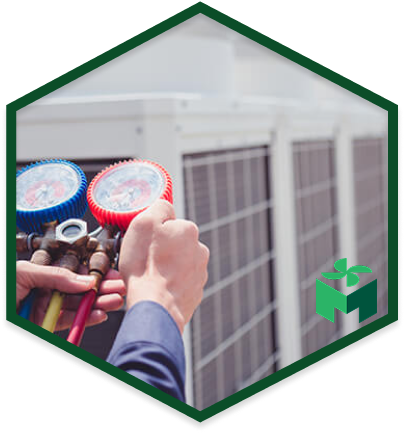
Our Full Range of AC Services—Available 24/7
Commercial HVAC needs vary wildly depending on the building type, from retail storefronts to large warehousing facilities. The scope of service must match the operational hours and specific load requirements of the business. We provide a complete suite of services designed to address every stage of a cooling system’s lifecycle, ensuring that help is available whenever a critical failure occurs.
- Emergency Repair and Diagnostics: Breakdowns rarely happen at convenient times. Whether it is a server room overheating at midnight or a retail floor losing cooling during a Saturday rush, immediate response capabilities restore order. We utilize advanced diagnostic tools to pinpoint electrical faults, refrigerant leaks, or airflow restrictions instantly.
- Preventative Maintenance Agreements: Scheduled care is the primary defense against unexpected capital expenditures. These agreements include coil cleaning, belt adjustments, lubrication of moving parts, and rigorous testing of safety controls.
- System Retrofitting and Upgrades: As technology advances, older units become liabilities. We assist in upgrading components to variable speed motors or modern thermostats that integrate with building automation systems for better control.
- Air Quality Solutions: In a sealed commercial environment, indoor air quality is paramount. We service and replace high-efficiency filters and inspect ductwork for potential contaminant buildup that could affect occupant health.
- Refrigerant Management: Proper charge is essential for efficiency. We detect leaks, repair the source, and recharge systems according to strict environmental protocols.
How We Ensure Your AC System’s Optimal Performance
Achieving peak performance in a commercial HVAC system requires a methodical, engineering-based approach. It is not enough to simply ensure the unit turns on; the system must remove heat and humidity at the rate for which it was designed. Our process follows a strict protocol to ensure every component functions in harmony with the rest of the mechanical loop.
- Comprehensive Site Assessment: The process begins with a full evaluation of the building’s current load. We analyze how the space is used, identifying hot spots or areas with poor airflow. This includes checking static pressure in the ductwork to ensure the blower motor is not being overworked.
- Deep Cleaning of Heat Exchange Surfaces: The evaporator and condenser coils are the heart of the heat transfer process. In Friendswood, these coils can easily become coated with dust, pollen, and industrial grime. We perform deep cleaning to maximize surface area contact with the air, ensuring rapid heat rejection.
- Electrical and Mechanical Calibration: Loose connections cause voltage imbalances that burn out compressors and motors. We tighten all electrical connections, measure voltage and amperage draw against manufacturer specifications, and check contactors for pitting or wear.
- Condensate Drain Management: In a high-humidity environment, an AC unit removes gallons of water from the air daily. We clear condensate lines and treat drain pans to prevent algae growth, blockages, and potential water damage to the building infrastructure.
- Refrigerant Charge Verification: Using subcooling and superheat calculations, we verify the refrigerant charge is exact. An overcharged or undercharged system wastes energy and places immense strain on the compressor.
- Performance Testing and Reporting: Finally, we run the system through a full operational cycle. We measure temperature differentials (delta T) across the coils to confirm cooling capacity. You receive a detailed report outlining what was done and flagging any components that are nearing the end of their service life.
Deciding Between AC Repair or Replacement: What You Need to Know
Facility managers and business owners often face the difficult decision of whether to authorize a costly repair or invest in a new system. This decision should not be based on guesswork but on data and financial projections. Continuing to patch a failing system can sometimes be more expensive in the long run than a strategic replacement.
- The 50% Rule: A general guideline in commercial HVAC is that if the cost of the repair approaches 50% of the value of the system, replacement is the more prudent financial choice. This is especially true if the unit is out of warranty.
- System Age and ASHRAE Standards: Commercial units generally have a lifespan of 15 to 20 years. If your equipment is nearing this age, finding replacement parts will become difficult and expensive. Newer units also comply with updated energy codes that older units cannot meet.
- Frequency of Breakdowns: If service calls have become a monthly or quarterly occurrence, the system has likely lost its reliability. The cost of repeated service calls, combined with business downtime, often outweighs the monthly financing cost of a new unit.
- Energy Efficiency Ratios (SEER and EER): Older systems may have SEER ratings of 10 or lower. Modern commercial units offer significantly higher efficiency. Replacing an obsolete unit can result in immediate utility savings that help offset the installation cost.
- Changes in Building Use: If your business has expanded, added more staff, or installed heat-generating equipment (like servers or manufacturing machinery), the old unit may simply be undersized. No amount of repair will fix an undersized system; replacement is the only viable option to maintain comfort.
Understanding Texas HVAC Requirements and Weather Impact
Operating a commercial HVAC system in Texas requires adherence to specific regional codes and an understanding of the unique weather patterns. The Friendswood area presents distinct challenges that generic maintenance plans often overlook. Ignoring these local factors can lead to code violations, premature equipment failure, and uncomfortable indoor environments.
- Humidity Control is Critical: In the Gulf Coast region, air conditioning is as much about dehumidification as it is about cooling. High indoor humidity can lead to mold growth, “sweating” ducts, and a clammy environment for customers. Mackey Services prioritizes checking the latent cooling capacity of your units to ensure they are effectively pulling moisture from the air.
- Salt Air Corrosion: For businesses located near the coast, salt air can accelerate the corrosion of aluminum fins and copper tubing in condenser coils. We recommend and apply protective coatings and perform more frequent coil rinsing to combat galvanic corrosion and extend the life of the unit.
- IECC and Local Building Codes: Texas follows the International Energy Conservation Code (IECC). Commercial HVAC work, particularly replacements, often requires permits and must meet specific efficiency standards. This includes requirements for economizers on larger units and programmable thermostats. We handle the logistical burden of ensuring all work is permitted and inspectable by local authorities.
- Extreme Heat Load: During July and August, the heat gain on a commercial roof can be extreme. Rooftop units (RTUs) are exposed to ambient temperatures far higher than ground-level units. We check that all insulation on refrigerant lines is intact and that electrical components are rated to withstand the extreme thermal environment on the roof.
- Ventilation Standards: Commercial codes require specific rates of fresh air intake (ventilation) for the health of occupants. We calibrate dampers and economizers to ensure your building meets fresh air requirements without bringing in excessive humidity that the system cannot handle.