Your Installation Journey: From Assessment to Enjoying Cool Air
The path to a new commercial air conditioning system follows a rigorous, logical sequence designed to ensure quality and safety. Understanding this workflow helps facility managers and business owners plan their operations around the installation.
- Site Assessment and Load Calculation: The process starts with a physical inspection of the existing ductwork, electrical capacity, and structural supports. Technicians perform a load calculation to determine the exact tonnage required. Installing a unit that is too large causes short-cycling and humidity issues, while a unit that is too small will run continuously without reaching the set temperature.
- System Selection and Procurement: Based on the assessment, the correct equipment is selected. This might involve a packaged rooftop unit, a chiller system, or a VRF (Variable Refrigerant Flow) system depending on the zoning needs of the property.
- Safe Removal of Old Equipment: Certified technicians recover the old refrigerant according to EPA guidelines to prevent environmental contamination. The old unit is disconnected, dismantled, and removed from the premises.
- Site Preparation: Before the new unit is set, the mounting curb (for rooftop units) or the concrete pad (for ground units) is inspected and repaired if necessary. Ductwork connections are cleaned and sealed to prevent air leakage.
- Installation and Connection: The new unit is hoisted into place and secured. Technicians connect the refrigerant lines, electrical wiring, and condensate drainage systems. This stage also involves installing new thermostats or integrating the unit into a Building Automation System (BAS).
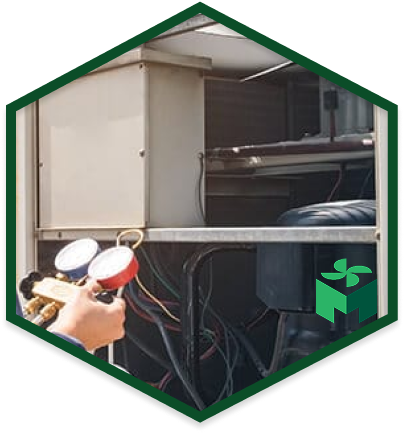
- System Start-Up and Commissioning: Once connected, the system is not just turned on; it is commissioned. This involves checking refrigerant pressures, measuring airflow, and verifying that all safety controls are functioning.
- Final Walkthrough: The installation team demonstrates the operation of the new system, explains maintenance requirements, and ensures the client is satisfied with the cooling performance.
Deciding on AC Replacement vs. Repair: A Quick Guide
Business owners often grapple with the decision of whether to repair a faltering unit or invest in a full replacement. While repairs may seem cheaper upfront, they can be deceptive regarding long-term costs. Mackey Services recommends evaluating the “50% Rule”: if the cost of the repair approaches 50% of the value of a new system, replacement is generally the smarter financial move.
- Age of the Equipment: Commercial AC units typically last between 15 and 20 years. If your system is nearing the end of this lifespan, major component failures (like compressors) are likely to become frequent. Investing in repairs for a unit that has exceeded its expected life is rarely cost-effective.
- Frequency of Breakdowns: If your maintenance log shows repeated service calls over the last 12 months, the system has likely become unreliable. Frequent downtime costs money in lost productivity and customer dissatisfaction, which often outweighs the cost of a new unit.
- Energy Efficiency Ratios: Older units often have much lower SEER (Seasonal Energy Efficiency Ratio) ratings. A 15-year-old unit may operate at 10 SEER or lower, while modern commercial units can exceed 18 or 20 SEER. The difference in electrical consumption can be substantial, often allowing the new system to pay for itself over time through energy savings alone.
- Refrigerant Type: Many older systems utilize R-22 refrigerant, which has been phased out due to environmental regulations. As supplies of R-22 dwindle, the cost to recharge a leaking system has skyrocketed. Replacing the unit with one that uses R-410A or newer refrigerants eliminates this expensive liability.
- Comfort and Humidity Issues: If the current unit runs but fails to remove humidity or creates hot and cold spots throughout the building, it is likely no longer mechanically capable of meeting the building’s demands. Replacement allows for the installation of correctly sized equipment that resolves these comfort issues permanently.
Understanding Local Regulations and Seasonal Challenges
Operating HVAC equipment in Galveston presents unique challenges due to the coastal environment. The combination of high ambient temperatures and salt-laden air creates a corrosive environment that accelerates the deterioration of outdoor equipment.
- Corrosion Protection: Standard condenser coils can corrode quickly in coastal areas. Commercial replacements in this region should often include specific anti-corrosion coatings on the coils and cabinet to extend the life of the unit. This protects the aluminum and copper components from the destructive effects of salt spray.
- Humidity Management: The Gulf Coast is notoriously humid. Commercial AC units must be sized not just for temperature control, but for moisture removal. An oversized unit will cool the air too quickly and shut off before it has removed the humidity, leading to a “clammy” indoor environment and potential mold growth. Proper sizing is critical for comfort and indoor air quality.
- Building Codes and Permits: Commercial HVAC installations are subject to strict local building codes. These regulations govern everything from the electrical connections to the structural integrity of rooftop supports. Permits are required for replacement work to ensure the installation meets safety standards.
- Windstorm Certifications: Given the location, outdoor equipment must be anchored properly to withstand high winds during severe weather events. Compliance with windstorm certification requirements is mandatory for insurance purposes and structural safety.
- Seasonal Maintenance: Because the cooling season is so long, commercial units run for extended hours. This necessitates a proactive maintenance schedule to clean coils, check belts, and clear condensate lines that can easily become clogged with algae due to the humidity.
Factors Influencing Commercial AC Costs
Budgeting for a commercial AC replacement involves understanding the various factors that drive the final cost. It is rarely a “one size fits all” price tag, as commercial buildings vary wildly in design and usage — check our specials for savings.
- Tonnage and Capacity: The primary cost driver is the size of the unit, measured in tons. A small retail shop may need a 5-ton unit, while a large office building or warehouse may require 20 tons or more. The higher the capacity, the higher the equipment cost.
- Efficiency Ratings: High-efficiency units cost more upfront but deliver lower operating costs. Systems with multi-stage compressors and variable-speed fans offer better precision and efficiency but require a larger initial investment.
- Ductwork Modifications: If the existing ductwork is damaged, undersized, or poorly designed, it may need to be modified or replaced to accommodate the new system. Connecting a high-efficiency unit to leaking ducts negates the benefits of the upgrade.
- Controls and Automation: Integrating the new AC into a Building Automation System (BAS) adds complexity and cost but provides facility managers with remote access, scheduling capabilities, and detailed energy reporting.
- Access and Logistics: The difficulty of the installation site affects labor costs. If a crane is required to lift a unit to a five-story roof, or if the unit is located in a tight mechanical room that requires disassembly for access, the installation costs will reflect these logistical challenges.
Why Technical Expertise Matters in Commercial HVAC
Commercial air conditioning is fundamentally different from residential cooling. The equipment is larger, the electrical voltages are higher (often 3-phase power), and the control systems are more complex. Choosing a provider with specific commercial experience is essential for a successful replacement.
Technicians must be certified to handle large volumes of refrigerant and possess the electrical knowledge to work safely with commercial power supplies. Furthermore, the ability to properly balance air distribution in a large commercial space requires specialized tools and training. An improperly balanced system will leave some offices freezing while others remain hot, regardless of the thermostat setting.
Safety is also paramount. Commercial projects often involve working at heights, dealing with heavy machinery, and navigating complex job sites. Professional service providers carry the necessary insurance and adhere to OSHA safety standards to protect their team and your property.
When you select a partner for your AC replacement, you are looking for long-term reliability. The quality of the installation determines the efficiency and lifespan of the equipment. A rushed or amateur installation can reduce a unit’s efficiency by up to 30% and lead to premature component failure.
Mackey Services brings this level of technical rigor to every project. By focusing on the details—from load calculations to the final commissioning—we ensure that your business receives a cooling solution that performs reliably year after year.