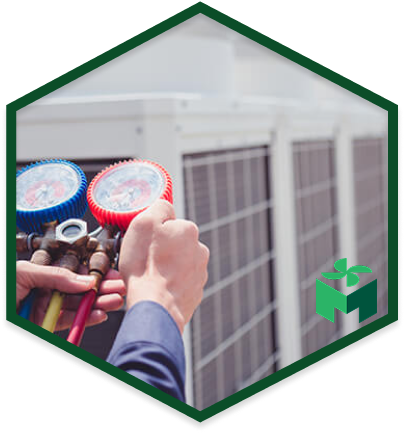
What to Expect from Our AC Maintenance Service
Commercial AC maintenance differs significantly from residential tune-ups. Business HVAC systems—whether rooftop units (RTUs), chillers, or complex split systems—involve intricate controls, economizers, and three-phase power supplies that require specialized attention. Our service is designed to cover every mechanical and electrical component of your system to ensure peak performance — check our current specials.
- System Performance Evaluation: We begin by establishing a baseline of how your current system is operating. This involves measuring static pressure, airflow volume (CFM), and temperature differentials across the evaporator coil. This data tells us if the unit is cooling effectively or if there are blockages inhibiting performance.
- Electrical Component Analysis: Loose connections and worn contacts are leading causes of motor failure. We tighten all electrical connections, measure voltage and amperage on motors, and inspect contactors for pitting or burning. This helps prevent sudden electrical failures during high-demand periods.
- Refrigerant Charge Verification: Incorrect refrigerant levels drastically reduce efficiency and can damage the compressor. We measure superheat and subcooling to ensure the charge is precise. If leaks are detected, they are identified for repair.
- Coil Cleaning and Debris Removal: Dirty condenser and evaporator coils act as insulators, preventing heat transfer. We chemically clean these coils to remove dust, grease, and biological growth, which restores the system’s ability to reject heat efficiently.
- Drainage System Clearance: A clogged condensate drain can lead to water damage and humidity issues. We flush and treat condensate lines and pans to prevent algae growth and ensure proper drainage, which is vital in humid climates.
- Moving Parts Lubrication: Friction causes heat and wear. We inspect bearings and motors, applying lubrication where necessary to ensure smooth operation and reduce the load on the system.
Your AC Maintenance Process: Step-by-Step Guide
A structured maintenance process ensures that no component is overlooked and that your commercial system meets the demands of your specific facility. We follow a rigorous protocol designed to uncover hidden issues before they disrupt your business.
- Initial Site Assessment and Safety Check: The technician arrives on-site and checks in with the facility manager to discuss any specific concerns or recent performance issues. A safety perimeter is established around the work area, particularly for rooftop units, to ensure safety while work is performed.
- Filter and Airflow Inspection: We inspect the condition of all air filters. Clogged filters are replaced to immediately improve airflow. We also check the blower assembly and drive belts. Loose or worn belts are adjusted or replaced to ensure the fan moves the correct volume of air.
- Thermostat and Control Calibration: We verify that the thermostat is reading temperature and humidity accurately. For systems with building automation or economizers, we test the controls to ensure the unit cycles on and off correctly and utilizes outside air when ambient temperatures allow for efficiency.
- Comprehensive Cleaning and Chemical Wash: Technicians apply specialized coil cleaners to the outdoor condenser coils. This removes the buildup of dirt, pollen, and cottonwood that accumulates over time. Indoor evaporator coils are inspected and cleaned if accessible, ensuring sanitary air delivery.
- Operational Testing and Diagnostics: With the system running, Mackey Services technicians monitor the refrigerant cycle. We check the operation of the reversing valve (if applicable), safety switches, and limit controls. This “stress test” ensures the unit operates safely under load.
- Final Reporting and Recommendations: Upon completion, we provide a detailed digital report. This includes photos of the work performed, readings taken during the inspection, and a prioritized list of any recommended repairs or proactive replacements. This documentation is essential for your facility maintenance records.
Assessing When to Repair or Replace: Our Expert Advice
Deciding between repairing an aging commercial AC unit or investing in a replacement is a significant financial decision for any business owner. While repairs often seem like the cheaper short-term solution, they can become a money pit if the system is nearing the end of its lifecycle. We help you make a data-driven decision based on the condition of your specific equipment.
- The 50% Rule: A common industry benchmark is the 50% rule. If the cost of the necessary repair approaches 50% of the value of the system (or the cost of a new unit), replacement is usually the wiser financial choice. Investing thousands into a compressor for a 15-year-old unit often results in throwing good money after bad, as other components are likely to fail soon.
- System Age and R-22 Phase-Out: Most commercial HVAC systems have a lifespan of 15 to 20 years. If your unit is over 15 years old, it likely uses R-22 refrigerant, which has been phased out and is incredibly expensive to source. Newer systems use R-410A or other modern refrigerants and offer significantly higher SEER ratings. Replacing an old R-22 unit often pays for itself through energy savings and avoided refrigerant costs.
- Frequency of Breakdowns: If your facility manager is calling for service multiple times a year, the system is unreliable. “Band-aid” repairs accumulate costs and result in repeated downtime. A chronic history of breakdowns indicates that the system can no longer handle the cooling load required by your business.
- Energy Efficiency and Utility Costs: Compare your energy bills from this year to the same months in previous years. A steady increase in energy consumption, despite similar usage patterns, indicates the system is losing efficiency. Modern commercial units come with variable frequency drives (VFDs) and multi-stage compressors that can lower electricity costs by 20% to 40%.
- Comfort and Humidity Control Issues:If the system runs constantly but never reaches the set temperature, or if the building feels clammy and humid, the unit may be undersized or the compressor may be failing. Inconsistent temperatures across different zones also suggest that the current system configuration is no longer adequate for your space.
Local HVAC Requirements & Seasonal Tips for League City
Operating a business in League City requires an HVAC strategy tailored to the specific climatic challenges of the Texas Gulf Coast. The proximity to water introduces high humidity and salt-laden air, both of which accelerate corrosion and degradation of outdoor equipment.
Humidity Management is Critical:
In this region, air conditioning is as much about dehumidification as it is about cooling. Excess humidity inside a commercial building can lead to mold growth in ductwork, warping of wood fixtures, and discomfort for occupants. Maintenance plans here must prioritize clearing condensate drains and ensuring evaporator coils are maximizing moisture removal. In some cases, installing supplemental dehumidification equipment is necessary.
Corrosion Protection for Outdoor Units:
The salt air can corrode aluminum fins on condenser coils, leading to rapid efficiency loss. We recommend and apply protective coatings to outdoor coils for businesses located nearer to the water. Regular rinsing of the outdoor unit, even between professional services, can help mitigate salt buildup.
Seasonal Preparation:
- Spring Start-Up: Before the intense heat of May and June arrives, systems must be fully inspected. This is the time to check refrigerant levels and clean coils to ensure the unit is ready for 24/7 operation.
- Fall Safety Checks: While winters are mild, heating is still required. Commercial units often use gas heating or electric strips. Inspecting heat exchangers for cracks (to prevent carbon monoxide leaks) and checking electrical heating elements is vital before the first cold snap.
Permitting and Code Compliance:
While standard maintenance does not typically require a permit, replacing a unit or significantly altering ductwork does. League City adheres to specific building codes regarding energy efficiency and installation standards. It is crucial to work with a provider who understands local code requirements to avoid fines or delays during equipment upgrades.
Why Choose Mackey Services: Our Commitment to Quality
Selecting a service provider for commercial HVAC needs is a partnership choice. You need a team that understands the urgency of commercial cooling and possesses the technical capability to handle complex systems — read our reviews.
- Commercial Specialization: We do not treat commercial units like large residential ones. We understand the specific intricacies of three-phase power, commercial controls, and building automation systems. Our technicians undergo continuous training to stay updated on the latest commercial HVAC technologies.
- Rapid Response Capability: We know that downtime costs money. Our logistics and dispatch teams are structured to prioritize commercial emergencies, ensuring that a qualified technician is on-site quickly to diagnose and resolve issues. We carry common commercial parts on our trucks to minimize the need for return trips.
- Transparent Communication: You will never be in the dark about the status of your equipment. We explain the problem, the proposed solution, and the associated costs clearly before any work begins. Our goal is to empower you to make the best decisions for your facility.
- Long-Term Reliability: Our maintenance plans are not just quick inspections; they are comprehensive tune-ups designed to extend the life of your equipment. We track the history of your system to predict potential failures and recommend preventative measures that save money in the long run.
Your business deserves a comfortable environment and a reliable HVAC partner. Do not wait for a complete system failure to address your cooling needs. Secure your facility’s comfort and efficiency today.