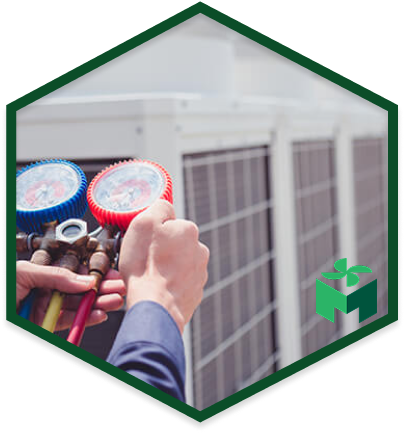
The Commercial Maintenance Process
Understanding the workflow helps facility managers plan for maintenance visits without disrupting daily operations. The goal is to provide a seamless service experience that prioritizes safety and transparency.
- Site Assessment and Safety Lock-Out: Upon arrival, the technician coordinates with the facility manager to identify all units requiring service. A strict lock-out/tag-out procedure is implemented to cut power to the units, ensuring the safety of the technician and the building occupants during the service.
- Visual and Auditory Inspection: Before tools are applied, the system is observed in operation. Technicians listen for irregular noises such as grinding bearings or rattling panels and look for visual signs of distress like oil stains (indicating leaks) or corrosion.
- System Cleaning and Calibration: The core maintenance tasks are performed. This includes the physical cleaning of cabinets, coils, and blowers. Calibrations are made to thermostats and building automation sensors to ensure the temperature reading on the wall matches the actual temperature in the space.
- Performance Testing: Once cleaning and adjustments are complete, power is restored, and the system is cycled on. Technicians monitor the system through a full cooling cycle to verify that startup is smooth, airflow is consistent, and the unit satisfies the thermostat call.
- Reporting and Asset Management: You receive a detailed report outlining the work performed on each unit. This report highlights any immediate repairs needed, upcoming capital expenditure recommendations, and the general health status of your HVAC assets. This documentation is vital for warranty claims and future budgeting.
Determining When to Replace vs. Repair
One of the most difficult decisions a facility manager faces is whether to authorize a costly repair or invest in a new system. Making the wrong choice can bleed the budget or result in repeated downtime. We help you navigate this decision using data, not guesswork. — check our specials today.
The 50% Rule
- A general industry standard is the 50% rule: if the cost of the repair approaches or exceeds 50% of the value of the equipment, replacement is usually the smarter financial move.
- This calculation also considers the age of the unit. Investing 50% of the value into a unit that has already exceeded its expected lifespan is rarely advisable.
Frequency of Breakdowns
- If a unit requires multiple service calls within a single season, it has become a liability. The cumulative cost of minor repairs, trip charges, and the associated business downtime often outweighs the monthly cost of financing a new, reliable system.
- “Nickel and diming” is a common trap. A compressor replacement followed by a fan motor failure and then a coil leak indicates a system in systemic decline.
Energy Efficiency and Technology Gaps
- Older commercial units often operate at significantly lower SEER (Seasonal Energy Efficiency Ratio) ratings than modern equipment.
- Replacing a 10-year-old unit with a modern, high-efficiency system can reduce energy consumption by 20% to 40%. In a commercial setting with high runtime hours, these energy savings can offset the installation cost over a few years.
Refrigerant Phase-Outs
- Older systems may utilize R-22 refrigerant, which has been phased out and is now prohibitively expensive to procure. If an R-22 system develops a significant leak, replacement is almost always the only viable option due to the cost and scarcity of the refrigerant.
- Newer systems use environmentally friendly refrigerants that are readily available and cheaper to service.
Navigating Local Climate and Regulations
Operating a business in the Dickinson area requires specific attention to environmental factors and local regulations that impact HVAC performance. The region’s specific climate profile dictates a maintenance schedule that is more aggressive than in milder parts of the country.
Managing High Humidity and Latent Heat
- The primary challenge in this region is humidity. Air conditioners must do double duty: lowering the temperature (sensible cooling) and removing moisture (latent cooling).
- If a system is dirty or short-cycling, it may cool the air quickly but fail to remove humidity, leading to a “clammy” indoor environment. High indoor humidity can damage inventory, peel wallpaper, and encourage mold growth in ductwork.
- Maintenance ensures the evaporator coil is clean and the airflow is set correctly to maximize moisture removal, keeping the indoor relative humidity within the ASHRAE recommended range of 40-60%.
Salt Air and Corrosion
- Proximity to the coast introduces salt air, which accelerates the corrosion of aluminum fins and copper tubing. This leads to “fin rot,” where the heat exchange surface effectively disintegrates.
- Commercial maintenance in this area includes inspecting for corrosion and applying protective coatings if necessary to extend the life of the condenser coils.
Permits and Commercial Codes
- Commercial HVAC work involves adherence to strict building codes. This includes regulations on ventilation rates (bringing in fresh outside air), fire damper testing, and electrical safety.
- When repairs involve structural changes or major component replacements, local permits may be required. Professional providers handle the permitting process, ensuring your facility remains code-compliant and avoids fines during inspections.
- Proper disposal of hazardous materials, such as recovered refrigerant and used compressor oil, is also a regulatory requirement that licensed services manage as part of the process.
Why Professional Maintenance Matters for Your Bottom Line
Deferred maintenance is a form of debt. While it may save money in the short term, the eventual cost is paid with interest in the form of emergency repairs, inflated energy bills, and premature equipment replacement. Mackey Services understands that your HVAC system is a critical business asset that impacts employee productivity and customer satisfaction.
Extended Equipment Lifespan
- Routine maintenance is the single most effective way to extend the life of your commercial AC equipment. By reducing friction, heat, and electrical resistance, you relieve stress on critical components.
- Well-maintained systems can last years longer than neglected ones, allowing you to maximize the ROI on your initial installation investment.
Improved Indoor Air Quality (IAQ)
- Commercial buildings are sealed environments. The HVAC system is the lungs of the building.
- Dirty filters and drain pans circulate dust, allergens, and odors throughout the workspace. Regular cleaning ensures that the air your employees and customers breathe is clean and healthy, reducing sick building syndrome and absenteeism.
Predictable Budgeting
- Emergency repairs are unpredictable and expensive. Planned maintenance agreements allow for fixed budgeting.
- You know exactly what your maintenance costs will be for the year, and the detailed reporting allows you to forecast capital expenditures for replacements, eliminating financial surprises.
Warranty Preservation
- Most commercial equipment manufacturers require proof of regular professional maintenance to honor their warranties.
- If a compressor fails under warranty but you cannot prove it was cleaned and serviced, the manufacturer may deny the claim, leaving you with a massive bill. Professional documentation protects your warranty coverage.