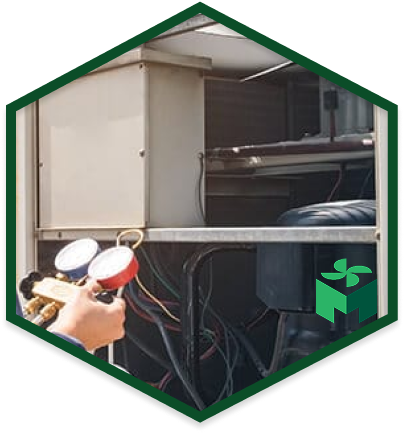
What to Expect from Our AC Installation Service
Choosing the right commercial HVAC partner means knowing exactly what is included in the quote and the scope of work. We do not believe in hidden fees or vague timelines. When we arrive at your facility, the objective is to implement a solution that offers long-term reliability and immediate relief from the heat.
- Site-Specific Engineering: Every building has a unique thermal footprint. We analyze windows, insulation levels, occupancy rates, and heat-generating equipment to ensure the new unit is perfectly sized.
- Ductwork Analysis: Installing a new high-efficiency unit onto compromised ductwork is a waste of capital. We inspect the air distribution system for leaks, static pressure issues, and insulation failures.
- Equipment Selection: We provide options ranging from standard efficiency units to high-SEER systems that qualify for local utility rebates. We help you balance upfront costs against long-term energy savings.
- Safety and Compliance: Commercial sites often have stricter safety protocols than residential jobs. We adhere to all OSHA regulations and local safety standards to protect your staff and our crew.
- Post-Installation Support: The job is not finished when the unit turns on. We verify performance through rigorous testing and provide a clear maintenance roadmap to protect the warranty.
Our Step-by-Step AC Installation Process
A systematic approach ensures that nothing is overlooked during the transition from your old unit to the new system. We utilize a proven workflow that mitigates risk and ensures quality control at every stage.
- Initial Consultation and Load Calculation: The process begins with a detailed assessment of your current infrastructure. We perform a commercial load calculation to determine the exact BTUs required. This prevents “short cycling” caused by oversized units or the inability to keep up caused by undersized units. We also review the electrical capacity to ensure the new system is compatible with your building’s power supply.
- System Design and Proposal: Based on the assessment, we present a detailed proposal outlining the recommended equipment, the scope of work, and a firm timeline. We explain the benefits of different SEER ratings and how they impact your monthly utility bills. Once approved, we order the equipment and schedule the installation at a time that works best for your business.
- Decommissioning and Disposal: On installation day, the crew safely disconnects the existing unit. We handle the recovery of old refrigerant according to EPA guidelines to prevent environmental contamination. The old unit is removed and transported away for proper disposal, ensuring your property remains clean and clutter-free.
- Preparation and Modification: Before the new unit is set, we inspect the curb adapter (for rooftop units) or the concrete pad (for split systems). If modifications are needed to fit the new equipment footprint, they are completed now. We also repair or modify the plenum connection to ensure airtight airflow.
- Installation and Connection: The new unit is lifted into place and secured. Our technicians connect the refrigerant lines, electrical wiring, and condensate drain lines. If the system is a split system, we ensure the line set is properly insulated and routed to prevent damage.
- System Charging and Calibration: Once connected, the system is pressure-tested with nitrogen to check for leaks. We then evacuate the system to remove moisture and charge it with the precise amount of refrigerant required by the manufacturer. We calibrate the thermostat and configure any building automation system controls.
- Final Air Balancing and Walkthrough: We measure airflow at the registers to ensure even distribution throughout the building. Finally, we walk you through the operation of the new system, explain the warranty details, and answer any questions regarding maintenance.
Determining If AC Replacement Is Right for Your Business
Deciding between another repair bill and a full system replacement is a financial calculation that every facility manager must face. While repairs can offer a short-term fix, there is a tipping point where a new installation yields a better Return on Investment (ROI).
- The 50% Rule: A common guideline in commercial HVAC is that if the cost of the repair approaches 50% of the value of the system, replacement is the smarter financial move. Investing heavy capital into a degrading asset often leads to diminishing returns.
- System Age and Reliability: Most commercial units in the Friendswood area have a lifespan of 15 to 20 years, depending on maintenance. If your system is over 15 years old and requiring frequent service calls, it is likely near the end of its useful life. Unplanned breakdowns cost more in emergency service fees and lost business than a planned replacement.
- Energy Efficiency and Operational Costs: Older units often utilize outdated technology and lower SEER ratings. Modern commercial systems are significantly more efficient. By upgrading, Mackey Services helps businesses reduce their monthly energy expenditure, which can offset the monthly cost of financing a new system.
- Refrigerant Availability: If your current system utilizes R-22 refrigerant, repair costs will continue to skyrocket due to the phase-out of this chemical. Upgrading to a system that uses R-410A or newer refrigerants ensures that future maintenance is affordable and parts are readily available.
- Comfort and Air Quality Issues: If certain zones of your building are always too hot while others are freezing, or if humidity levels are uncontrollable, the system may be improperly sized or failing. New installations allow for better zoning and humidity control, which is vital in our humid climate.
Adhering to Friendswood’s Building Codes and Weather Demands
Operating in the Gulf Coast region presents specific challenges that do not exist in other parts of the country. An installation in Friendswood must be built to withstand high heat, extreme humidity, and the potential for tropical storms.
- Permitting and Regulations: Commercial HVAC installations require strict adherence to local building codes. This includes obtaining the necessary mechanical and electrical permits before work begins. We handle the administrative burden of the permitting process, ensuring your installation passes all city inspections and avoids future fines or insurance issues.
- Hurricane Preparedness: Because we are located in a hurricane-susceptible zone, rooftop units and outdoor condensers must be properly anchored. We utilize hurricane-rated stands and tie-downs to ensure equipment remains secure during high-wind events. This protects not only the equipment but also the integrity of your roof.
- Humidity Control: In our subtropical climate, air conditioning is as much about dehumidification as it is about cooling. High humidity inside a commercial building can lead to mold growth, sick building syndrome, and damage to inventory or electronics. We install systems with appropriate latent cooling capacity to maintain humidity levels within a safe and comfortable range.
- Electrical and Drainage Codes: We ensure that all electrical connections meet the National Electrical Code (NEC) and local amendments. Furthermore, condensate drainage is critical; we install primary and secondary drain lines with safety switches to prevent water damage to ceilings or floors in the event of a clog.
Why Choose Us? Our Track Record Speaks
When selecting a contractor for your commercial AC installation, experience and reliability are the primary differentiators. You need a partner who understands the nuances of commercial applications, which differ vastly from residential work — see our reviews.
- Commercial Specialization: We are not just residential technicians trying to figure out commercial equipment. Our team is trained specifically on large-tonnage units, three-phase power, and complex control systems. This expertise translates to faster installations and fewer errors.
- Focus on Business Continuity: We plan our work around your schedule. We understand that noise, dust, and heat can disrupt your business. Our project managers work with you to find installation windows that have the least impact on your daily operations.
- Long-Term Partnership: We view the installation as the beginning of a relationship, not a one-time transaction. We offer comprehensive maintenance plans designed to extend the life of your new equipment and keep it running at peak efficiency.
- Warranty and Guarantees: We stand behind our workmanship. In addition to the manufacturer’s warranty on parts, we provide labor warranties that give you peace of mind. If an issue arises related to the installation, we return to fix it.